Is It Safe to Go to Xochimilco?
A local's honest read on Xochimilco safety: what the daytime canals are really like, the overcharging problem, alcohol on the water and the 2026 night rules.
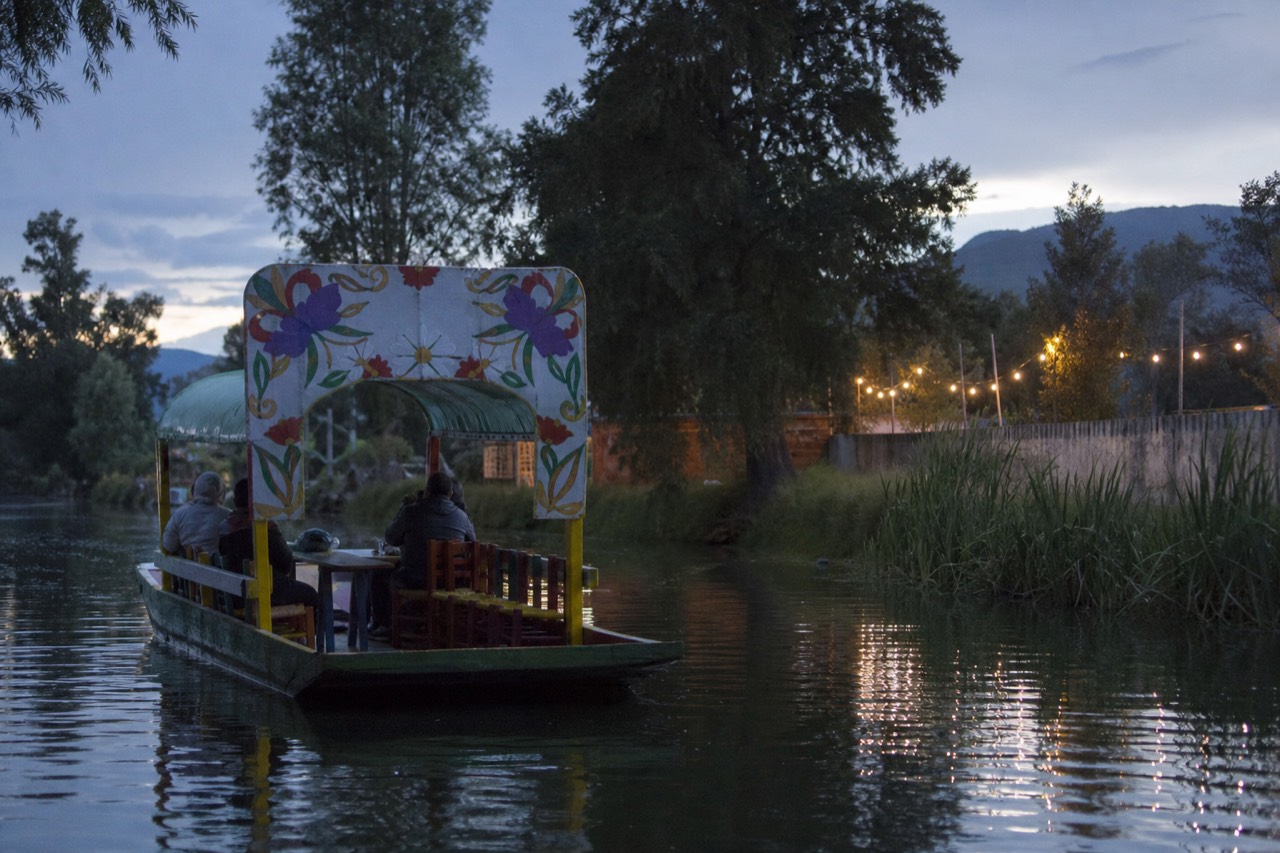
Yes, Xochimilco is safe to visit in daylight, and the canals on a Sunday are about as threatening as a public park full of grandmothers eating esquites. Mexico City as a whole sits at an "exercise increased caution" advisory level for petty crime, and the sensible habits you would use in any big city apply here too. What actually goes wrong on the canals is more mundane than crime: visitors get charged three times the posted rate, drink far too much in the sun, or arrive at five in the afternoon expecting the docks to run into the evening.
I have been coming to these canals since I was small, including plenty of nights, and the one thing I would tell a visitor before anything else is a number: 750 pesos an hour, per boat. Knowing it changes how the whole day goes.
How safe are the canals themselves?
Very. The water is shallow, the boats are poled at walking pace, and they spend most of the ride within a few metres of a bank. Falling in is the only real physical hazard, and it happens almost exclusively when someone has been drinking and stands up while boats are rafted together.
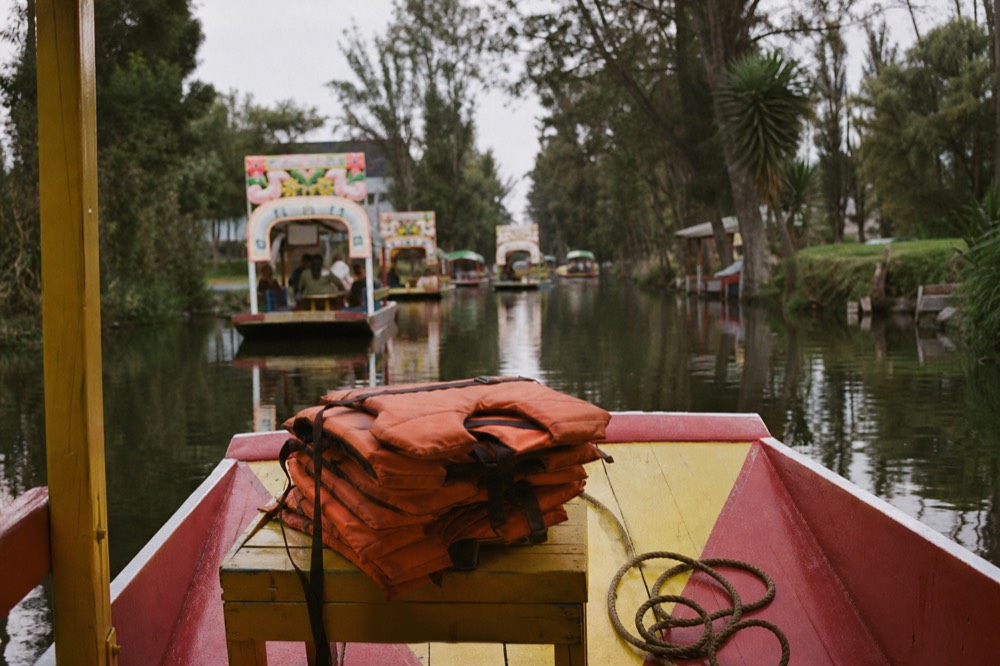
The trajineras have no engines. A poler stands at the stern and pushes, which means there is no wake, no speed and nothing to be thrown from. Boats do jostle at the junctions, especially when a mariachi boat ties alongside mid-song, so that is the moment to sit down. Life jackets are carried and children should wear them. And the water is not for swimming, for reasons that go beyond safety and into ecology, which the post on why you cannot swim in the canals sets out properly.
What are the actual risks?
Overcharging first, alcohol second, everything else a distant third. The tourist docks run on negotiation, and a visitor who does not know the tariff is an easy mark. Beyond that it is standard city sense: watch your phone in the dock crowds, keep your group together, plan the ride home.
| What travelers worry about | The real picture | What to do |
|---|---|---|
| Crime on the water | Not what these canals are known for; the boats are full of local families | Normal city habits at the dock crowds, phone away, no flashed cash |
| Being overcharged for the boat | By far the most common problem | The tariff is 750 MXN per hour per boat; agree hours and total before boarding |
| Falling in | Uncommon, almost always alcohol-related | Sit when boats raft up, life jackets on kids |
| The water itself | A working farm waterway, not a swimming spot | Hands and bottles out of it, wash before eating |
| Drinking too much | The genuine hazard on party boats | Eat as you go, pace it, stay with your group |
| Getting back after dark | Docks close around 18:00 | The light rail runs to midnight, or arrange a ride in advance |
None of that is unique to Xochimilco. It is the same list you would write for any waterfront market anywhere, with one local wrinkle: because the price is set by the borough rather than by the seller, the overcharging problem has an exact, checkable answer.
How do you avoid being overcharged?
Learn three numbers before you arrive. The boat is 750 MXN per hour for the whole vessel. A mariachi song runs about 300 pesos, a marimba or trío about 170. Confirm how many hours you are hiring and what the total will be before anyone steps aboard, and count your own group.
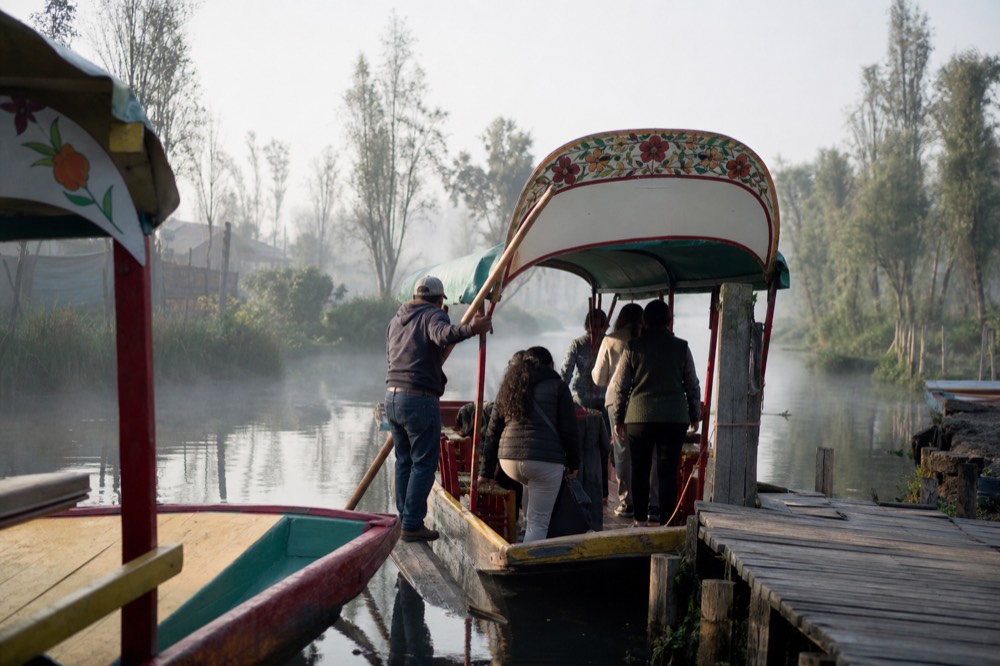
The scam, when it happens, is almost always the same one: a per-person quote. Somebody says four hundred pesos each, you have six people, and suddenly a two-hour ride that should cost 1,500 pesos for the boat costs 2,400 for one hour. The tariff is per boat and has been reported unchanged through 2025 and 2026, and posted limits run 18 to 20 people depending on the dock, so a boat comfortably holds a large group at that one rate. Vendor canoes are a separate economy and recent reporting puts norteño groups around 230 pesos and beers in the 40 to 50 range. The full price ladder lists what each extra runs.
Booking a seat sidesteps the negotiation entirely, which is the real safety argument for a guided boat rather than a rental: the price is settled before you leave your hotel and someone aboard speaks your language. If you would rather skip the haggling altogether, the guided boats compared side by side all price per seat, and you can check live availability on the sixteen-passenger version with a guide and food included.
Is Xochimilco safe at night?
Differently. Regular embarcadero service ends around 18:00, and night rides happen only by prior arrangement rather than by walking up. In 2026 the city's environment authority banned unauthorised night parties with alcohol and lighting rigs on trajineras, and alcohol restrictions followed the death of a young man on the water.
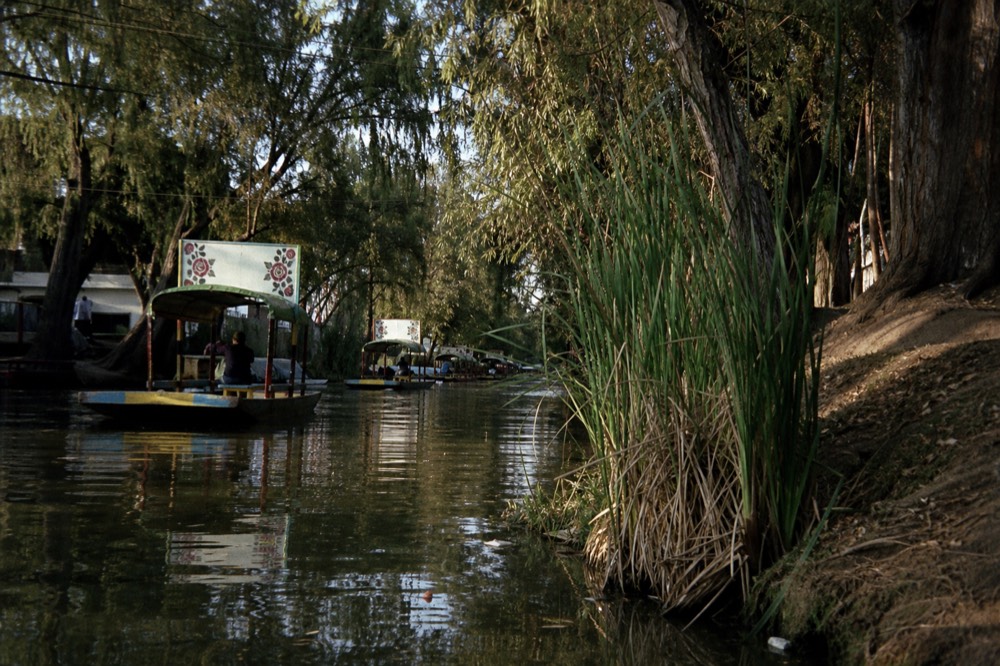
That is worth reading precisely rather than as a scare. Licensed daytime cruises are unaffected. The lunada tradition, a booked night ride with food and a guitar, continues by arrangement at the same hourly tariff. What was stopped is the improvised version: unlicensed boats running after-dark parties with sound and light rigs, which is what the environment ministry moved against, and the alcohol limits that followed the young man's death. If you want the canals after dark with everything above board, the night show at Cuemanco runs weekend performances through 22 November, and the party and night-ride guide explains which options are still open.
Is it safe for families and solo travelers?
For families, yes, and it is one of the easiest outings in the city with young kids: no walking, no queues once you are aboard, food delivered by canoe. Solo travelers are fine too, though a booked seat beats a lone rental on both cost and company.
The family case is straightforward. The boat is stable, the ride is slow, there is a table to sit at and something to look at constantly, and children who are bored on a museum day are usually delighted by a passing canoe full of corn. Keep life jackets on the small ones and keep the table clear of glass. For a family that would rather skip the dock scrum entirely, the private and eco trips include hotel transport, and you can see current departures for the whole-boat version.
For solo visitors the calculation is social rather than physical. Hiring a whole trajinera alone costs the same 750 pesos an hour it costs a group of fifteen, so you would be paying for empty benches and riding in silence. A seat on a shared boat puts you with a guide and other travelers for a fraction of that. If you would still rather do it independently, the independent route in detail walks through the train, the dock and the hiring conversation, and every bookable boat on the canals is listed with its group size so you can see who else will be aboard.
Is it safe to take a rideshare to Xochimilco?
Yes, and it is what most visitors do. Expect 200 to 365 pesos one way from the central neighborhoods and 45 to 90 minutes depending on traffic. Coverage at the docks can thin out late in the day, so if you finish near closing, either arrange the return ahead or take the light rail from Xochimilco terminal.
Can you drink alcohol on a trajinera?
On licensed daytime cruises, yes, and bringing your own on a standard daytime rental has long been normal practice. What changed in 2026 is the night side: unauthorised after-dark parties with alcohol and lighting rigs were banned, and restrictions on consumption followed a fatal incident. Booked cruises operate within those rules.
Which dock is the safest to use?
They are all official, so it is about crowds rather than danger. The largest tourist dock is the busiest and the most negotiation-heavy, while the quieter ecological docks give you a calmer arrival and a shorter queue. Our embarcadero comparison covers what each one is like on a weekend.