Can You Go to Xochimilco Without a Tour?
Yes, and locals do it every weekend. The light rail costs 3 pesos, the boat is 750 an hour, and here is the whole walk-up routine plus what you give up.
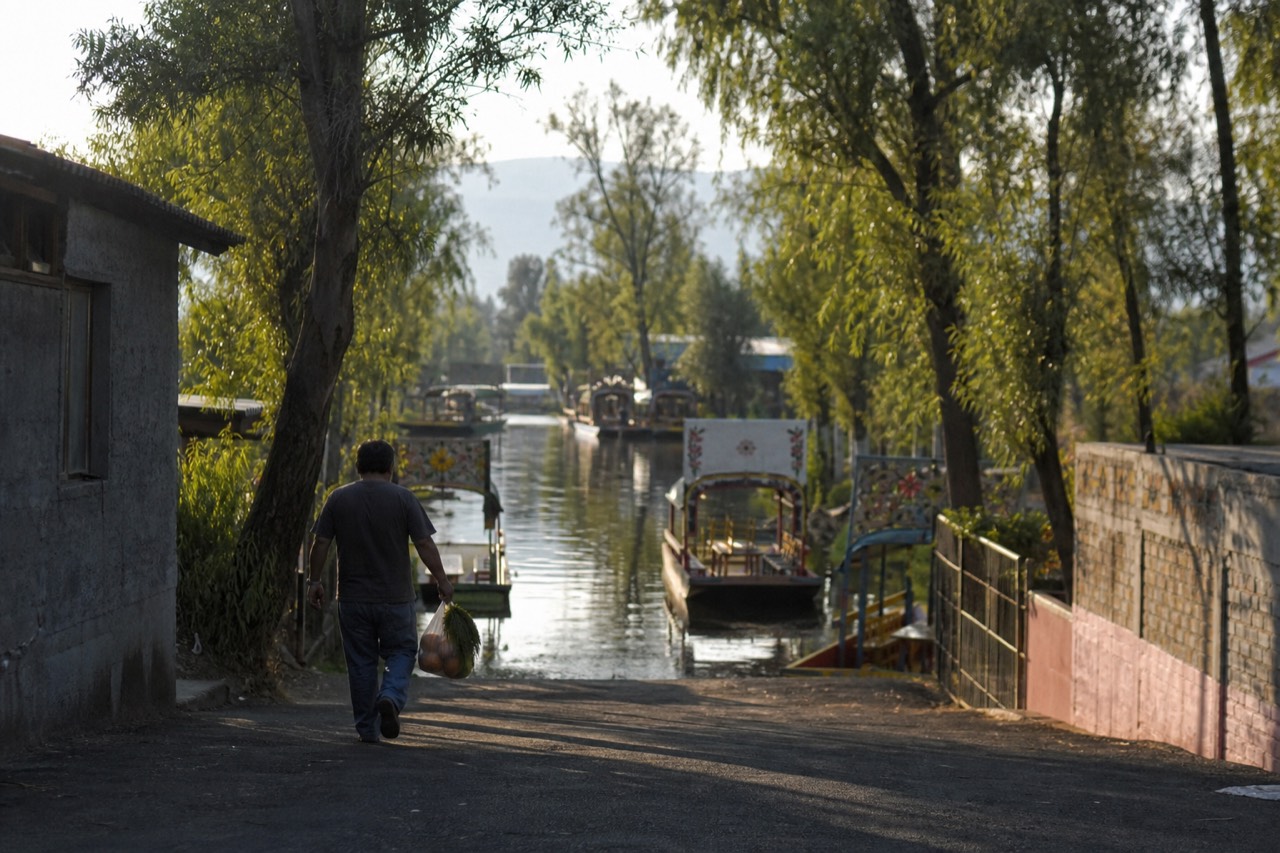
Absolutely you can, and on any given Sunday most of the people out on the water did exactly that. The independent version runs like this: metro to Tasqueña, light rail to Xochimilco for three pesos, a short hop to a dock, then hire a trajinera at the borough's posted rate of 750 pesos per hour for the whole boat. Bring your own food, your own beer, your own speaker if you must. There is no ticket to buy in advance and no tour to join.
This is how my family always did it, with tamales in a bag and an aunt arguing about how many hours to pay for. What the independent route costs you is not money. It is context, and the parts of the canal network you cannot reach on your own.
How do you get there on your own?
Two ways. Metro Line 2 south to Tasqueña, then the Tren Ligero to Xochimilco terminal: 3 pesos a trip with an MI card, 36 to 42 minutes, running from 5:00 on weekdays and until midnight daily. Or a rideshare from the central neighborhoods, 45 to 90 minutes and roughly 200 to 365 pesos.
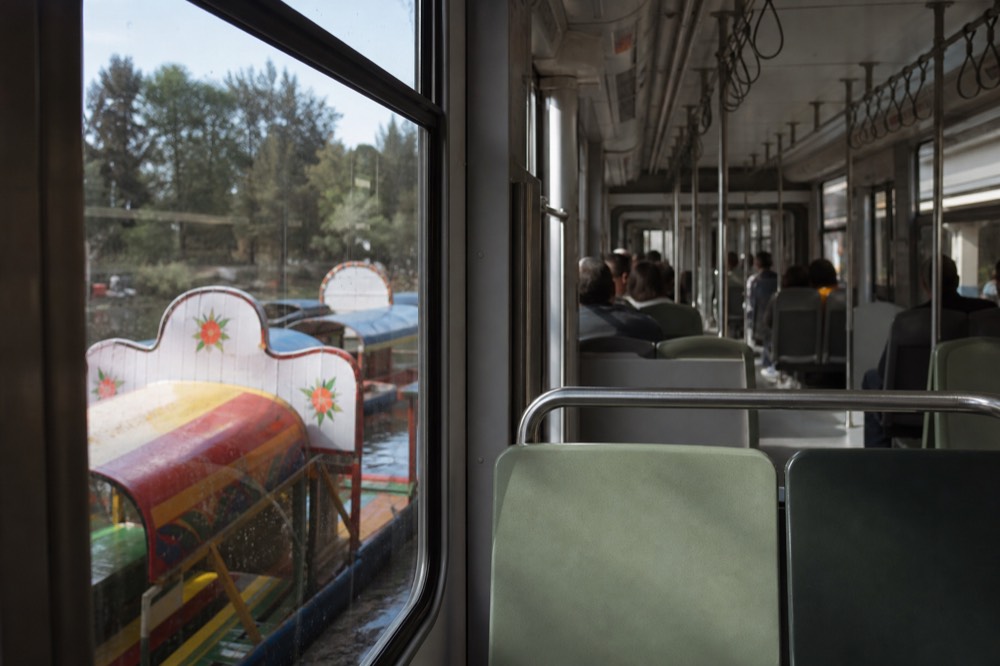
The train is the underrated option, because it is the only leg of this trip that traffic cannot ruin. It starts at 6:00 on Saturdays and 7:00 on Sundays, and from the Xochimilco terminal you are a short taxi or a long walk from the main docks. Coming from Coyoacán it is barely a journey at all: 11 to 13 kilometres, 15 to 36 minutes by car. Our transport guide covers the interchange and the last-mile options, and El Universal's list of the official docks is useful for deciding which one to aim at before you get in a taxi.
How does hiring a boat actually work?
You walk to the ticket kiosk, say how many hours you want, and pay 750 pesos per hour for the boat itself. Confirm the total out loud before anyone boards. Posted limits run 18 to 20 people depending on the dock, so the same rate covers two passengers or eighteen.
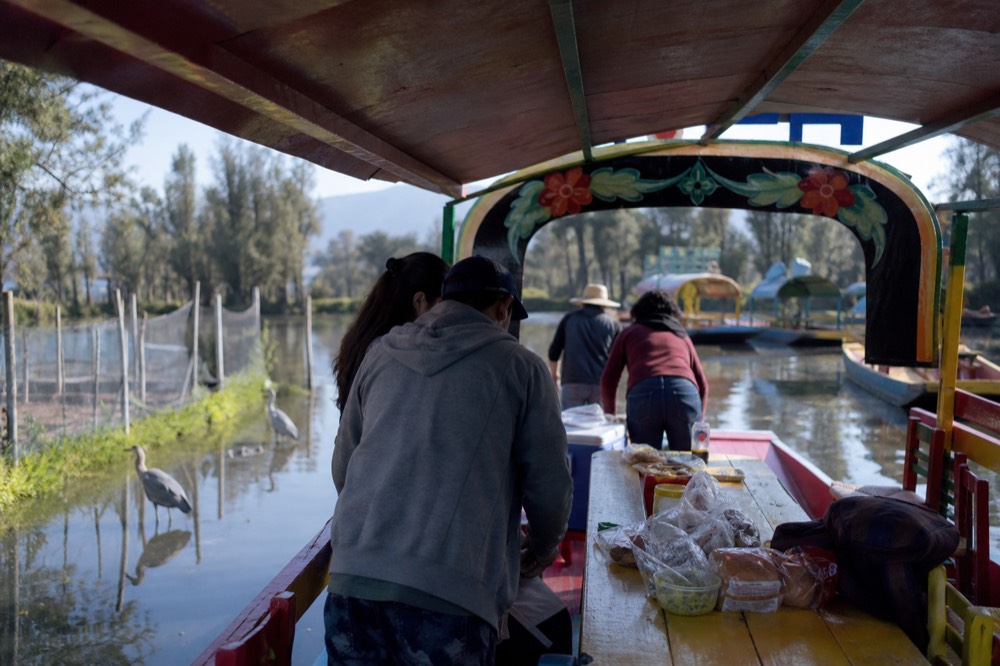
A few things that are obvious to locals and never to visitors. Bring cash, because the dock economy and the vendor canoes run on it, and the cash question has more to it than you would expect. Bringing your own food and drink on a daytime rental is normal and permitted, which is exactly why families arrive with coolers. Service runs roughly 8:00 to 18:00, so a five o'clock arrival is not a plan. And if anyone quotes you a per-person price, that is not the tariff: the rate is set per boat by the borough and has held through 2025 and 2026. The guide to the boats themselves covers how they are built, named and crewed.
What does a do-it-yourself day actually cost?
For a group, almost nothing. For two people, more than you would guess, because the boat costs the same whether you fill it or not. Ten friends splitting a two-hour rental pay about 186 pesos each before food. A couple doing the identical trip pays about 906 each.
| Line item | Party of two | Party of ten |
|---|---|---|
| Light rail both ways, 3 MXN a trip | 12 MXN | 60 MXN |
| Two hours of boat at 750 MXN an hour | 1,500 MXN | 1,500 MXN |
| One mariachi song at the rail | 300 MXN | 300 MXN |
| Food and drink carried in | your call | your call |
| Total before food | 1,812 MXN | 1,860 MXN |
| Per person before food | about 906 MXN | about 186 MXN |
That table is the entire argument, and it is why the same trip gets described online as both a bargain and a rip-off. Add the vendor extras and the gap narrows further for the big group and widens for the couple: recent reporting puts marimba and trío players around 170 pesos a song and beer in the 40 to 50 range, so a boat with more people to share the music cost comes out ahead again. Run the per-seat prices against your own party size in your own currency before you decide: the guided boats compared side by side start from $42, and you can check live availability on the traditional two-hour boat if the numbers point that way.
What do you give up by skipping the guide?
Three real things: the history, the far corners of the canal network, and the sanctuary stops. A poler is a boatman, not a narrator, and he will not explain the chinampa system, take you to a working farm, or get you anywhere near an axolotl tank.
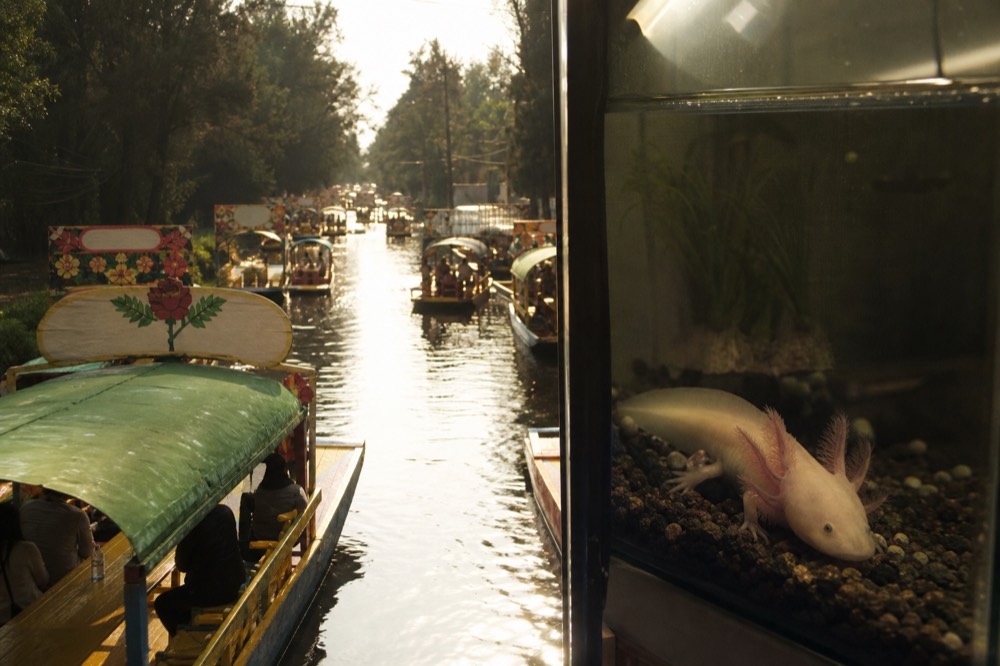
The axolotl point is the sharpest one. Wild density in these canals fell from about 6,000 per square kilometre in 1998 to 36 in the last published survey, so nobody spots one from a rented boat, and the only reliable way to see one is a sanctuary or ajolotario stop that independent visitors cannot simply drop in on. The axolotl story in full explains why, and Conservation International's account covers the wider decline. If seeing one matters to you, see the current dates for the chinampa and sanctuary day that builds one in.
Distance is the other limit. The doll island most visitors have heard of, Julián Santana's original, sits hours deep in the network and needs a dedicated charter of roughly 3,000 pesos per boat plus an entry fee, which is a different day entirely from a two-hour rental. The nearer doll island that the short tours visit is reachable, but you would need to know which channels to ask for, and most polers at the busy docks will steer you back toward the standard loop. The doll island comparison maps both.
So who should go independent?
Groups of six or more, anyone who speaks some Spanish, and anyone whose idea of a good afternoon is a table full of their own food. Couples, first-time visitors on a tight schedule and anyone who wants the farms, the sanctuaries or the far canals should book a seat instead.
There is a version of this trip that only works independently, and it is worth naming: a weekday morning, a quieter dock, two hours, a bag of tamales, nobody explaining anything. That is the Xochimilco I grew up with and no operator sells it, because there is no product in it. If that sounds like your kind of day, go, and go early. El Gráfico's visitor rundown covers the official prices and the practical advice in Spanish.
If instead you are two people with one free morning in a city of twenty million, the arithmetic in that table above has already made the decision for you. Comparing every bookable trip on the canals takes a couple of minutes, and a seat on a shared boat costs a fraction of what the empty benches would.
Do I need to speak Spanish to rent a trajinera?
It helps a great deal. The hiring conversation, the hours, the total and the vendor prices all happen in Spanish, and the docks are not set up for translation. You can manage with numbers and gestures, but the risk of paying above the 750 peso hourly tariff rises when you cannot argue the point.
Can I bring my own food and drink on a rented boat?
Yes, on standard daytime rentals that is completely normal and it is why local groups arrive with coolers and cake. The restrictions introduced in 2026 apply to unauthorised night parties with alcohol and lighting rigs, not to a family eating lunch on a boat in the afternoon.
Is a rental cheaper than a booked tour?
Only with numbers behind you. The boat costs 750 pesos an hour regardless of how many people are aboard, so a large group beats any per-seat price easily while a couple usually does not. Our price breakdown works through both routes with the vendor extras included.