Can you swim in the Xochimilco canals?
No, and not only because the water is dirty. The canals are a protected wetland with working farms, heavy boat traffic and an endangered native species.
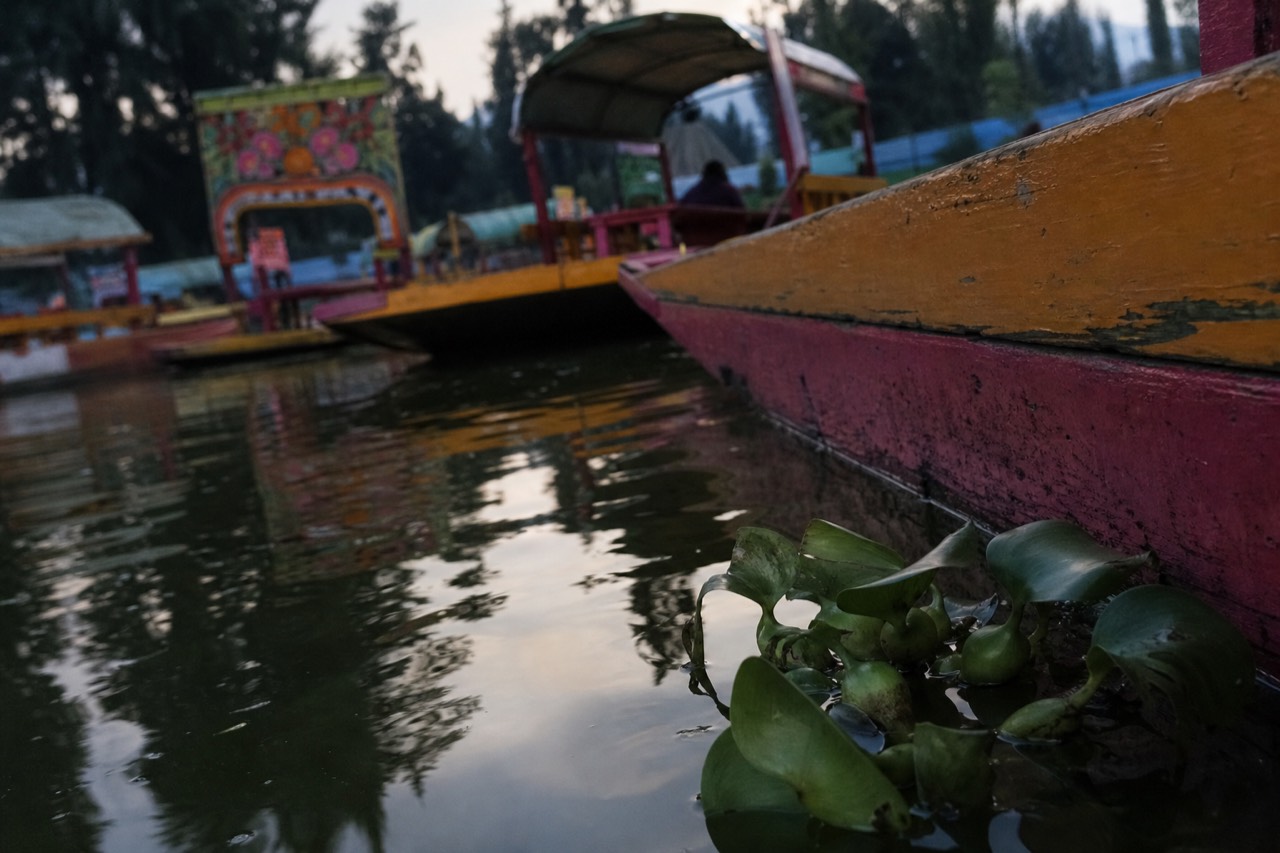
Every so often on a hot Saturday someone on a boat decides the green water looks inviting, stands up, and gets shouted down by their own family before they get a leg over the rail. The boatmen do not find it funny. Ask any of them and you will get the same flat answer I grew up hearing: nobody swims in Xochimilco.
No, you cannot swim in the Xochimilco canals, and you should not try. The water is a protected wetland fed by treated wastewater and farm runoff, boat traffic is constant and the hulls are heavy, the bottom is deep silt rather than sand, and the whole system is under active conservation for a species that is nearly gone from it. Boat operators will stop you.
Is swimming actually forbidden, or just a bad idea?
Both. The canals sit inside a protected natural area of roughly 2,500 hectares and form part of a UNESCO World Heritage property inscribed in 1987. It is not a swimming venue, no dock rents you a swim slot, and operators treat anyone entering the water as a safety incident, not a fun story.
The practical enforcement is simply the boatman. Trajineras are poled and pushed by a single person standing at the stern, and a passenger in the water in a busy channel is a serious problem for them: a loaded boat weighs several tonnes, has no brakes and very little steering when it is moving with the current of other traffic. On a peak weekend afternoon near the big docks the channels are so tight that boats scrape past each other. Falling between two of them is the scenario nobody wants to describe out loud.
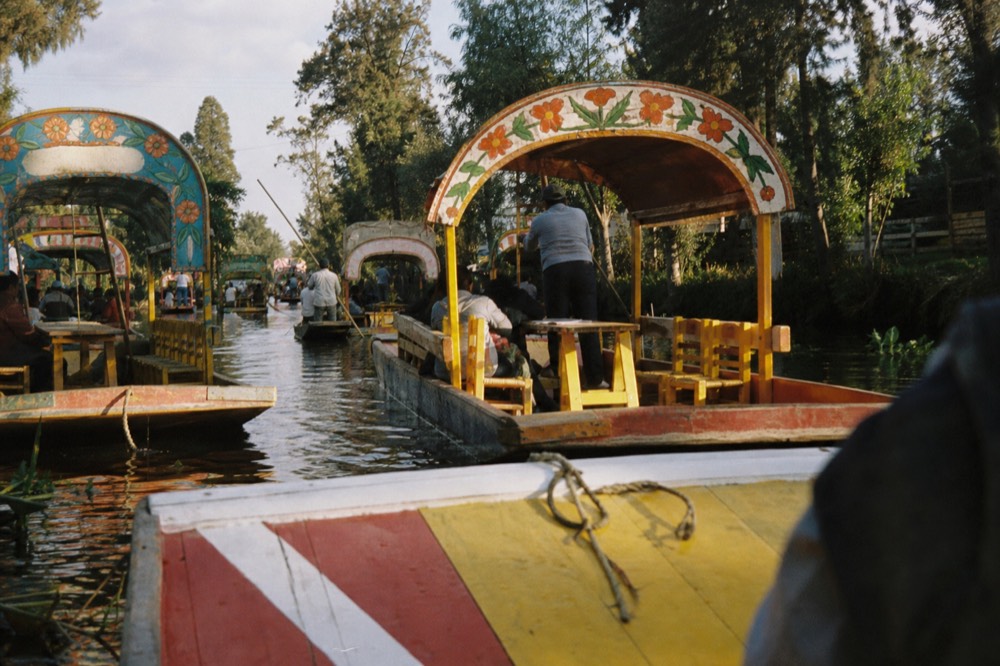
The heritage framing matters too. UNESCO lists the site as "Historic Centre of Mexico City and Xochimilco" under four separate cultural criteria, and the surviving canal network is treated as a cultural landscape kept alive by farming, not as recreation water. The history of the lake system and what remains of it explains how that shrank from an open lake to the channel grid you ride today.
What is actually in the canal water?
Water quality across the system has been persistently poor for decades: treated and untreated wastewater inputs, agricultural runoff from the chinampa beds, and dense invasive fish populations. Restoration projects are running, but the honest summary is that this is working farm water in a city of over twenty million people.
The two invasive species that get named most often are tilapia and carp, introduced decades ago and now dominant. They stir up sediment, keep the water cloudy, and eat the eggs and larvae of the native amphibian the canals are famous for. Conservation International's reporting on what has happened to the axolotl lays out how tightly the two problems are linked.
| The canal system, by the numbers | Figure |
|---|---|
| Canals remaining in the network | roughly 170 km |
| Protected natural area | about 2,500 hectares |
| UNESCO property size | 3,010.86 ha, with an 8,264 ha buffer zone |
| Year of UNESCO inscription | 1987 |
| Dominant fish species | introduced tilapia and carp, both invasive |
There is one more reason locals treat the water with respect. The caretaker whose dolls made the canals internationally famous, Julián Santana Barrera, is said to have died in the water beside his own chinampa in 2001, though accounts differ and some report a heart attack. Wikipedia's account of the island records both versions. The full story of how the dolls got there is a separate read, but the ending is why nobody on these canals treats the water as harmless.
What happens if you fall in?
Get out fast, get dry, and wash properly. The realistic risks are gastrointestinal infection from swallowing water, skin irritation, and cuts from submerged debris, plus the immediate danger of being in a channel with heavy boat traffic. There is no lifeguard, no ladder and no rescue service on the canals.
Boats sit low, which is what makes people think the water is closer to safe than it is. Getting back aboard a loaded trajinera with wet clothes, from silt you cannot stand on, is much harder than it looks from a seat. If it happens, the boatman will bring you to the bank rather than try to haul you over the side mid-channel. Anything else about staying comfortable and out of trouble on the water is covered in our honest read on how safe the canals actually are.
If the water is that bad, how do axolotls survive in it?
Barely. Wild density in the canals fell from about 6,000 per square kilometre in 1998 to 36 per square kilometre in the last full published survey in 2014. A new university-led count is underway with results still pending. You will not see a wild one from a boat rail, and no honest operator will promise you one.
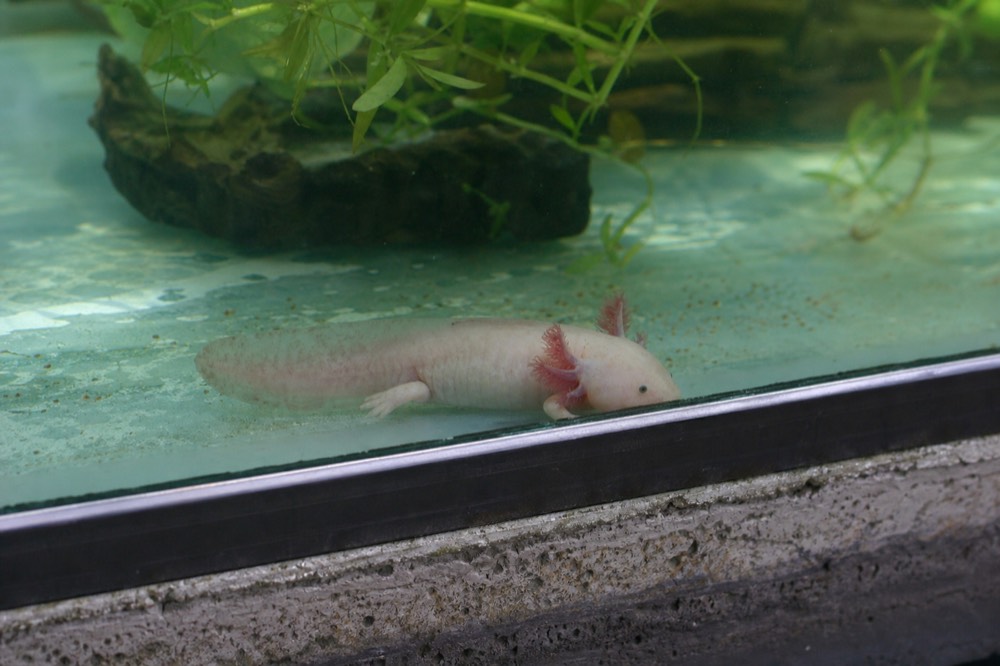
| Survey year | Wild axolotls per km² |
|---|---|
| 1998 | ~6,000 |
| 2003-2004 | ~1,000 |
| 2008 | ~100 |
| 2014 | 36 |
| 2026 | new survey running, results not yet published |
That collapse is the strongest argument against a swim, stronger than any warning about your stomach. Every restoration project on these canals is trying to rebuild water conditions the animal can breed in, and the flagship approach is a "chinampa refugio": a farm plot whose water is separated from the main channel by biofilters and kept free of invasive fish. Splashing around in the middle of that effort would be a bad look for a visitor.
How do you get close to the water without getting in?
Take a route that stops rather than one that only drifts. Farm visits let you walk the beds and drink water off a chinampa's own irrigation logic, and sanctuary stops put axolotls in front of you in tanks where they are visible and safe. That is the real version of getting close.
The pre-Hispanic farm and sanctuary format is the one built for this: a working chinampa, lunch grown on it, and an ajolotario stop where the animals are actually there rather than theoretically there. It runs long, five to six hours, and it is the most expensive thing on our list at from $216, but it is the only way to combine both without improvising. You can check current dates and pricing on the listing, and the rest of the private and eco-focused routes sit alongside it. If you would rather have the canals to yourself with a flexible schedule, the private trajinera runs four to five hours with transport included from $108 and you can see live availability there.
For the farming side of the story, how the chinampas are built and planted explains why the beds need the canal water exactly as it is, silt and all, and which tours actually include an axolotl stop sorts the honest offers from the vague ones. If you are still deciding on a format entirely, every boat we track is compared here.