La Llorona at Xochimilco: the Night Show on the Canals (2026)
The 2026 La Llorona season at Cuemanco runs to 22 November: 750 MXN a ticket, a floating stage on Laguna de Tlilac, and an audience watching from trajineras.
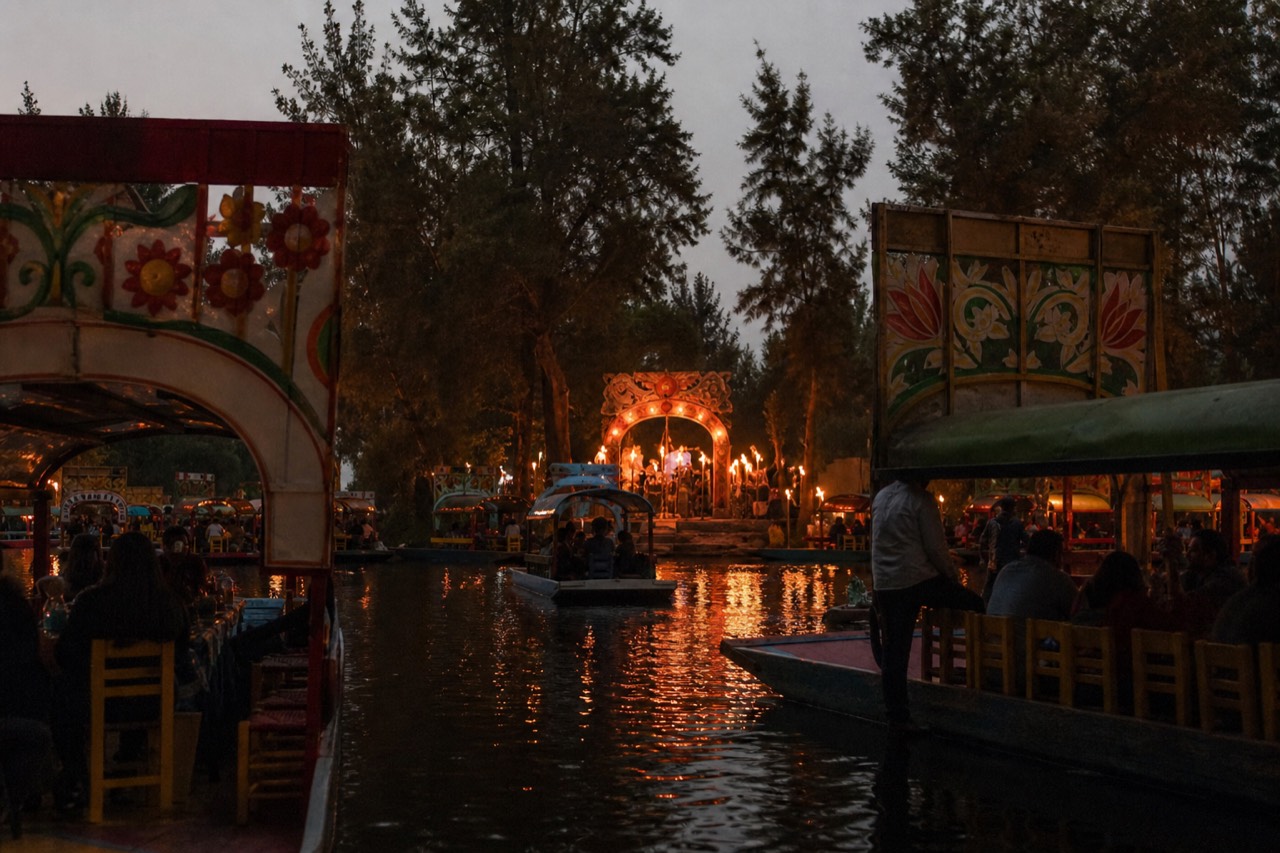
Cold comes off the water at Cuemanco in a way it never does at midday. The boats push out in a loose convoy with no engine noise, only poles knocking against wood, and then the drums start somewhere ahead in the dark. La Llorona at Xochimilco is theatre performed on a floating stage in the middle of a lagoon, watched by an audience sitting in trajineras, and the 2026 season is running right now: weekends through 22 November, tickets at 750 pesos, boarding at Embarcadero Cuemanco.
It is not a haunted-house attraction and it is not a boat party, but a full production with live music, dance and fire that locals treat as a season the way other cities treat a Christmas market.
What is the La Llorona show at Xochimilco?
A large-scale outdoor theatre production staged on the Laguna de Tlilac, in the ecological zone off Embarcadero Cuemanco. Performers work a floating pyramid-shaped stage with live music, dance and fire; the audience watches from trajineras poled into position around it. The production has run for roughly 32 to 33 years.

The staging is the point. Sound carries strangely across open water, the performers appear and disappear behind reeds and smoke, and there is no barrier between the boats and the lagoon. Milenio's complete guide to the 2026 season covers the format and the calendar, and the production runs its own site at lalloronaencuemanco.com.
Cuemanco matters here. It is the quieter ecological embarcadero rather than a busy tourist dock, which is why the lagoon is dark enough for the show to work at all. The rundown of every embarcadero explains how differently the docks behave.
When is the 2026 season and how much are tickets?
The 2026 season was expanded and brought forward, running from late May through 22 November 2026, on weekends, with evening performances typically listed around 18:00 and 21:00. Tickets are 750 MXN, sold through the production's own channels. The 2025 season was shorter and cheaper, at roughly 550 to 616 pesos.
The expansion was deliberate. Mexico City hosted World Cup matches in June and July 2026, and the season was stretched to catch that traffic rather than sitting in its traditional autumn slot around Day of the Dead. Practically, a show that used to be an October ritual is running right now.
| Season | Title and edition | Dates | Ticket | Where |
|---|---|---|---|---|
| 2025 | "El Último Latido del Agua", 32nd edition | 3 October to 16 November, Friday to Sunday | ~550 MXN base, about 616 with service fees | Laguna de Tlilac, boarding at Cuemanco |
| 2026 | Expanded season, weekends | Late May through 22 November | 750 MXN | Laguna de Tlilac, boarding at Cuemanco |
The 2025 figures come from Infobae's guide to that year's dates, times and prices, which is a useful reference point for how much the season shifts year to year. Confirm the current calendar on the production's page before you plan a date around it, because the schedule of single, double and triple performances changes week by week.
How does watching from a trajinera actually work?
You arrive at Cuemanco before the listed showtime, present your ticket, and are seated in a trajinera with other ticket holders. Boatmen pole the convoy out to the lagoon and hold position for the performance. You are outdoors, on water, at night, for the length of the show plus the ride each way.
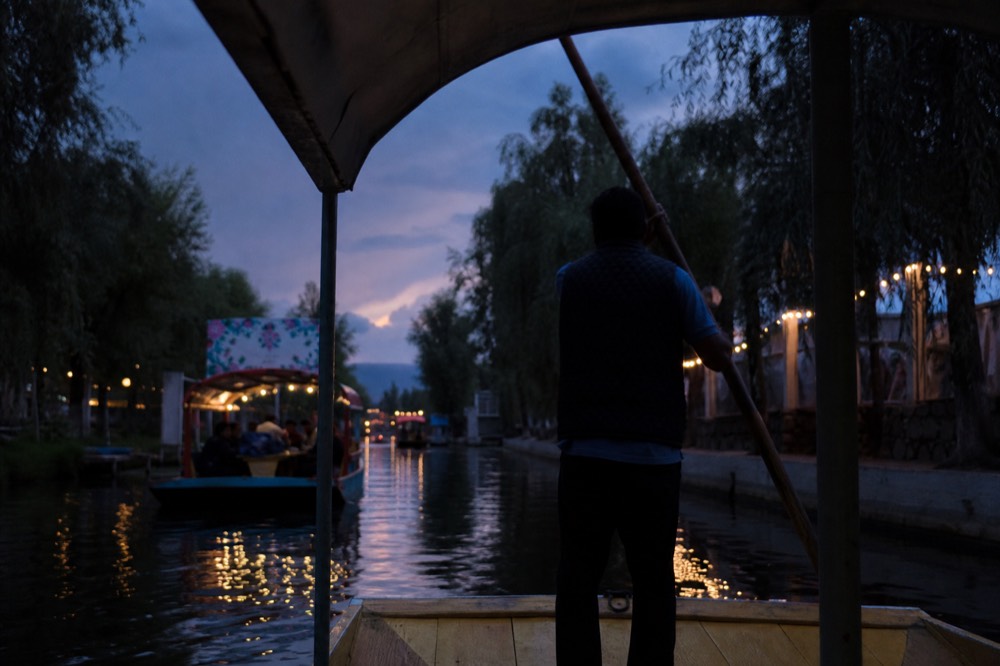
Dress for it seriously. I have been on these canals at night since I was a child on family lunadas, and the temperature drop after sunset catches out every visitor who came dressed for a Mexico City afternoon. Bring a jacket you would use in the mountains, not a cardigan. Wet wood is cold to sit on, and the boats have no sides to speak of.
Getting back is the other thing people underestimate. The light rail from the Xochimilco terminal to Metro Tasqueña runs until around midnight, which covers most evening shows, but the walk and the ride add up. Plan the return before you go rather than after, using the route out to the canals and back.
Seeing the same water in daylight first changes the show, because you recognise the reeds and the turns. The easiest way to do that without your own group is a private trajinera with transport included at four to five hours from $108, or you can check which dates are still open on its listing.
What is the legend the show is built on?
La Llorona is the weeping woman: in the version told across Mexico, a mother who drowned her children in a river and now wanders the water at night crying for them. Every region tells it differently. Staging it on the remains of a lake, in boats, is about as close to the original setting as the story gets.
The version I grew up with in the south of the city ends on the warning rather than the drowning: do not answer if you hear crying on the water. It is what children get told to keep them away from canals after dark, which is practical parenting in a neighbourhood built on them.
What the production does with it varies by year, and that is half the appeal for locals. The 2025 edition ran under the title "El Último Latido del Agua", the last heartbeat of the water, and folded the ecological state of the lake into the ghost story. The canals really are shrinking, the water really is in trouble, and a show about a woman wailing over drowned children lands differently when the lagoon it is staged on is disappearing.
How is this different from a normal night on the canals?
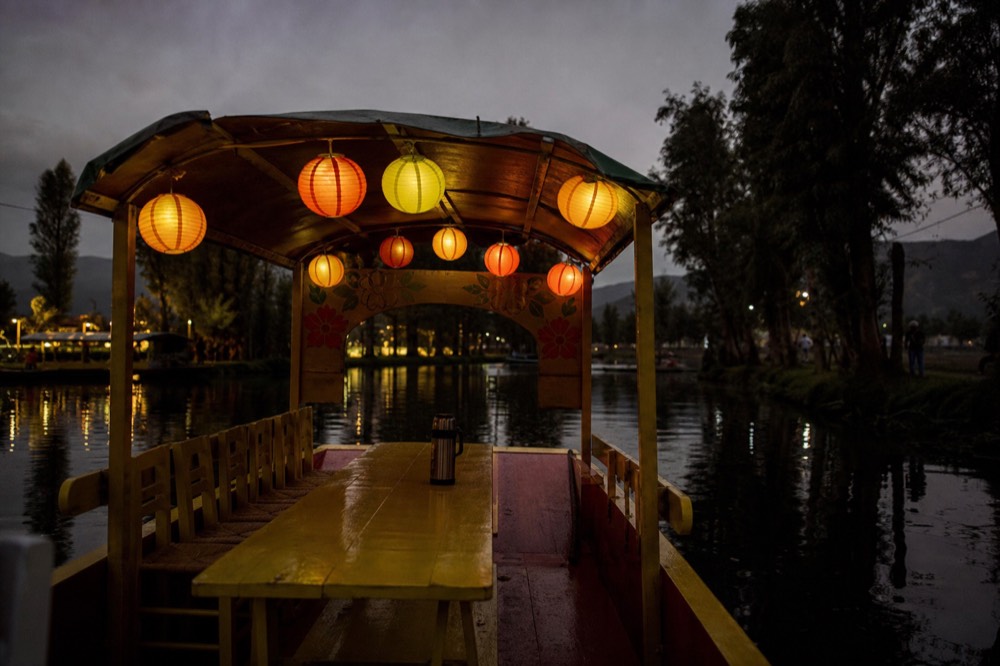
A ticketed show is not the same as a private night ride. Lunadas are rented trajineras after dark, charged at the standard 750 pesos an hour per boat and arranged in advance. Unauthorised night parties with amplified sound, lights and alcohol in the protected area were prohibited in 2026, which is where the confusion usually comes from.
| Night on the water | What it is | Cost | How you get on |
|---|---|---|---|
| La Llorona at Cuemanco | Ticketed theatre on a floating stage | 750 MXN per person, 2026 season | Booked through the production, weekends only |
| A private lunada | Rented trajinera after dark, 3-4 hours, your own food and drink | 750 MXN per hour, per boat | Arranged in advance with an embarcadero |
| INAH contemplative lunada | Guided night ride on history and tradition, no party | 264 MXN per person, run 1 May 2026 | Reservation through INAH, event-specific |
| Unauthorised night party | Amplified sound, neon lights, alcohol in the protected zone | Not available | Blocked by Sedema in 2026 |
The prohibition is real and worth understanding rather than resenting. Sedema barred unauthorised night parties with alcohol and lights on the trajineras, citing damage to a protected natural area and a lack of permits, and separate alcohol restrictions followed the death of a young man. Licensed daytime cruises and ticketed productions are unaffected. What is and is not allowed after dark now goes through it in full.
Can you do the canals by day and the show at night?
Comfortably. Standard embarcadero service runs 8:00 to 18:00, and the booked daytime tours run two to three hours, so a morning or early-afternoon trip finishes well before an evening performance. Most people underestimate the transfer time between docks rather than the tour length.
The pairing I would suggest for a first visit is a dolls-island run in the afternoon and the show after dark, because both trade on the same eerie register and you get the canals in two completely different lights. The tasting trip out to a doll island holds a 5.0 rating across 144 reviews, runs around three hours from $65 and cancels free up to 24 hours ahead; you can see live dates and prices for that afternoon before locking a show ticket to the same day. From-prices move, so the listing is the authority.
Be honest with yourself about stamina, though. That is six or seven hours of boats, most of it outdoors, and the evening half is the cold half. If you would rather split them across two days, the full set of dolls-island trips all run daytime departures. The dolls have a story stranger than the show, told properly in the Julián Santana story, and the comparison of every bookable trip is on the homepage.