How to Get to Xochimilco from Mexico City
Three pesos and forty minutes, or a car and an hour of ring road. Both routes end at the same water, and only one of them needs your patience.
Short answer
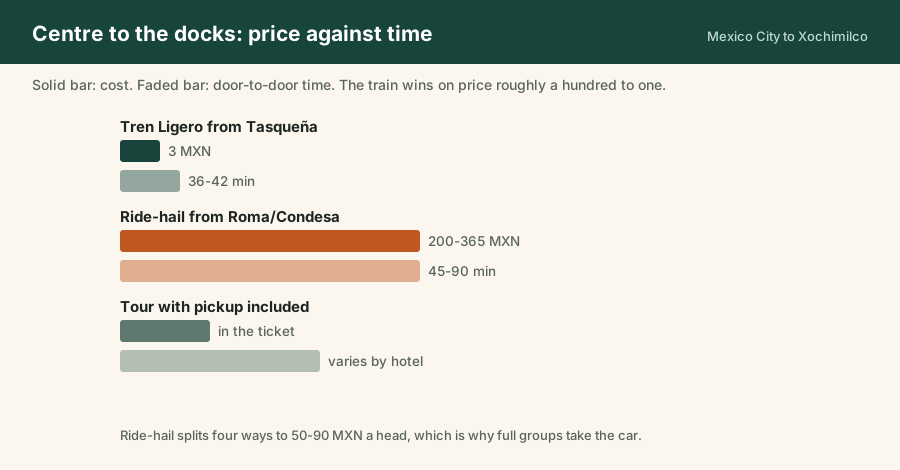
The cheapest route is the Tren Ligero from Metro Tasqueña to the Xochimilco terminal: 3 MXN per trip with an MI card, 36 to 42 minutes, running until midnight every night. A ride-hail from the centro, Roma or Condesa covers the 20 to 25 km in 45 to 90 minutes for roughly 200 to 365 MXN. Two of the private trips include transport.
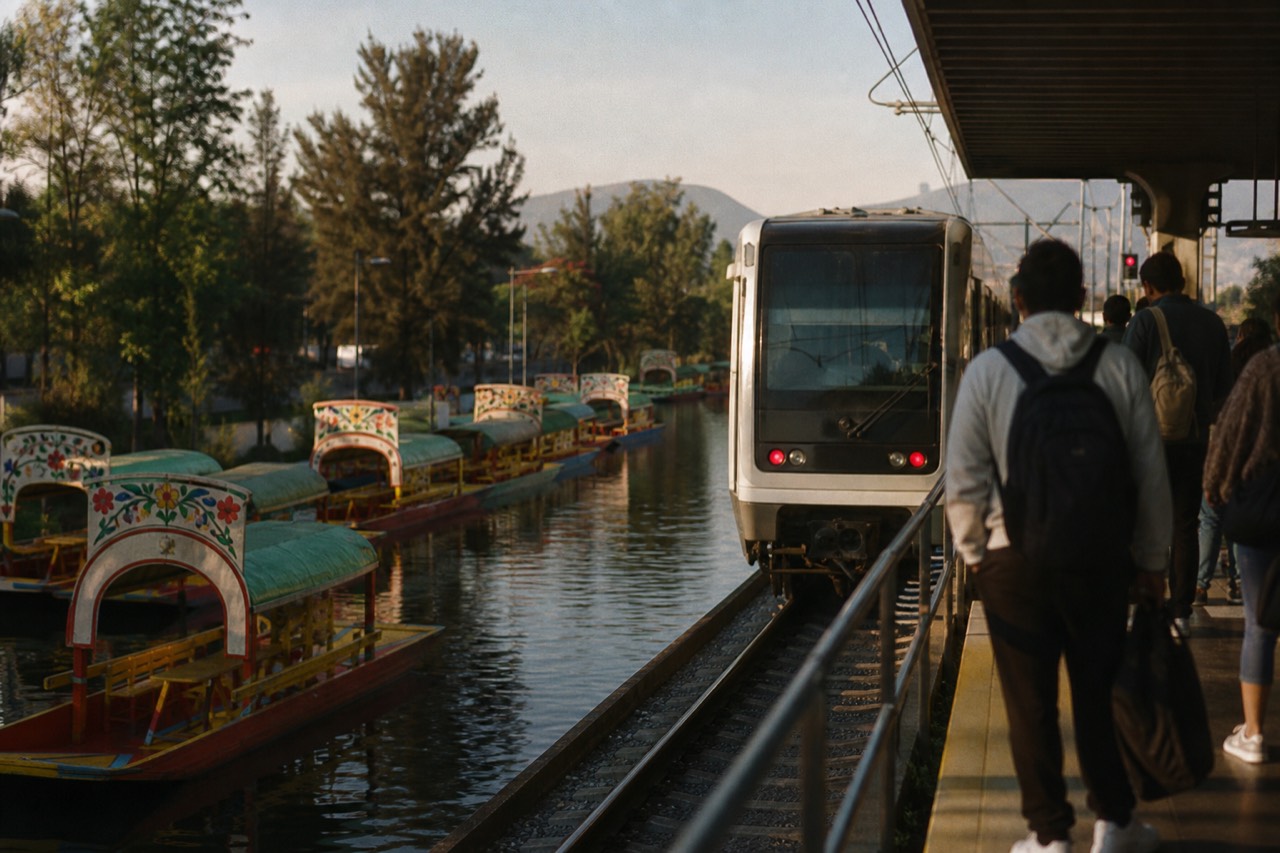
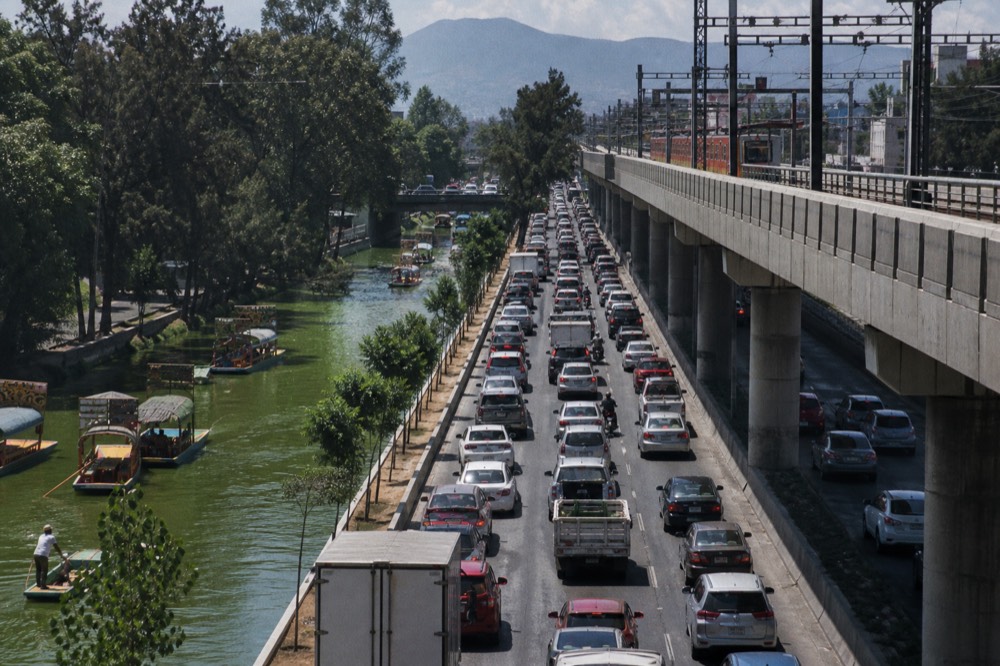
The Tren Ligero at eight on a Tuesday morning is half students and half people carrying flowers wrapped in newspaper. Three pesos. Nobody who grew up in the south of this city thinks twice about it, and yet most of the visitors I meet at the docks arrived by car, having paid something close to a hundred times that for the privilege of sitting on Periférico with a driver who also wishes he were somewhere else. Both choices are defensible. They are simply very different mornings, and the right one for you depends less on money than on what hour you want to be on the water and how many people you are moving.
What's the cheapest way to reach the canals?
The light rail wins on price and nothing else comes close: 3 MXN per trip with an MI card, Metro Tasqueña to the Xochimilco terminal, 36 to 42 minutes on the train. A ride-hail from the centro, Roma or Condesa covers 20 to 25 km in 45 to 90 minutes and runs roughly 200 to 365 MXN one way.
The gap looks absurd written down, and in practice it narrows fast. Four people splitting a 280-peso car ride pay 70 pesos each and lose no time changing lines. One person travelling alone on a weekday morning has no reason at all to pay for a car. That is the whole calculation, and everything below is detail on top of it.
There is a third route people forget: let the tour do it. Two of the trips on this site put transport in the price, which turns the entire transfer question into a pickup time. That costs more than the train and less than your morning, and for a group staying in Polanco or the centro with a fixed departure to make, it is often the honest best answer.
| Route | Cost one way | Realistic door to door | Suits |
|---|---|---|---|
| Tren Ligero (plus your Metro leg) | 3 MXN light rail fare, MI card | 36 to 42 min on the train, more with the Metro leg and the hop to a dock | Solo travellers, weekday mornings, tight budgets |
| Ride-hail or taxi | ~200 to 365+ MXN | 45 to 90+ min for 20 to 25 km | Groups of three or four, late starts, luggage |
| Tour with transport included | Folded into the tour price, from $108 for the private trajinera | Set by the operator, pickup to drop-off | Anyone who does not want to think about it |
| Driving yourself | Fuel plus parking | 45 to 90+ min | Rare. Parking near the docks on a Sunday is a competitive sport |
Whichever line of that table you pick, the money you spend getting there is small next to the boat itself. A trajinera is 750 MXN per hour for the whole boat under the official tariff, and the guided trips on every bookable boat compared start at $40. Transport is the rounding error in a Xochimilco day, which is exactly why so many people overpay for it without noticing.
How do you ride the Tren Ligero, step by step?
Take Metro Line 2 to its southern terminal, Tasqueña. Follow signs to the Tren Ligero platform inside the same complex, load an MI card, tap through for 3 MXN, and stay on until the last stop, Xochimilco. The single line takes 36 to 42 minutes and runs to midnight every night of the week.
The light rail is one line with one useful direction, so there is nothing to get wrong once you are on it. The only friction is the card. The 3-peso fare is paid with the MI card, the same rechargeable card the Metro uses, and you buy or top it up at the machines before the turnstiles. Carry coins or small notes for that machine. It is the one moment of the journey where a 500-peso note is useless to you.
Opening hours matter more than the timetable, because the trains come often enough that nobody in this city checks. Weekdays it starts at 5:00, Saturdays at 6:00, Sundays and holidays at 7:00, and it runs to midnight in every case. That is far later than the boats: embarcadero service is 8:00 to 18:00, so the train is never the thing that ends your day.
| Tren Ligero | Detail |
|---|---|
| Boards at | Metro Tasqueña, southern terminal of Line 2 |
| Ends at | Xochimilco, the far terminal of the single light-rail line |
| Fare | 3 MXN per trip, paid with the MI card |
| Journey time | 36 to 42 minutes |
| Monday to Friday | 5:00 to midnight |
| Saturday | 6:00 to midnight |
| Sunday and holidays | 7:00 to midnight |
The part nobody tells you: the terminal is not a dock. Xochimilco station drops you in the town, and the embarcaderos sit apart from it, so the last stretch is a short taxi, a pedicab or a walk depending on which one you have chosen. Decide that before you arrive rather than on the pavement outside the station with six drivers offering opinions. The dock-by-dock breakdown covers who runs from where.
How much is a taxi or ride-hail, and when is it worth paying?
Expect roughly 200 to 365 MXN one way from the centro, Roma or Condesa, at the top of that band during peak hours, for a drive of 45 to 90 minutes over 20 to 25 km. Split three or four ways it beats the train on comfort and matches it closely enough on cost. Alone, it rarely justifies itself.
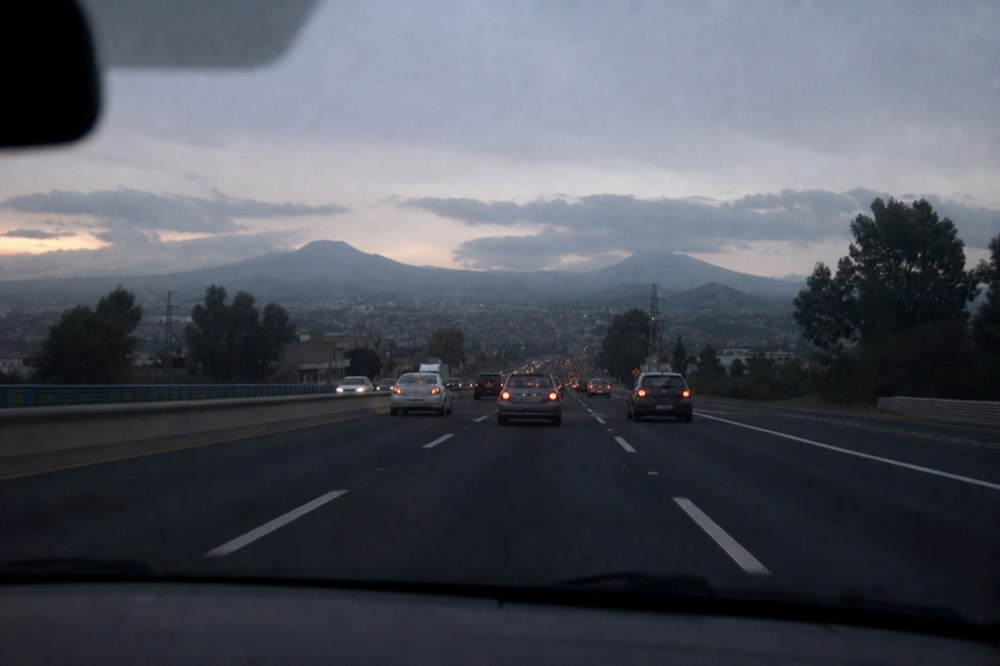
The variable is not distance, it is the hour. Southbound traffic out of the centre in the late morning is slow in a way that no app can price accurately in advance, and the same run at 7:30 on a Sunday can be startlingly quick. If your booked departure has a hard meeting time, build in the pessimistic end of that range and accept that you may end up drinking coffee at the dock. That is a much better problem than the alternative.
| Starting point | Distance | Typical drive | Ride-hail band |
|---|---|---|---|
| Centro Histórico | 20 to 25 km | 45 to 90+ min | ~200 to 365+ MXN |
| Roma Norte or Condesa | 20 to 25 km | 45 to 90+ min | ~200 to 365+ MXN |
| Coyoacán | 11 to 13 km | 15 to 36 min | Well under the centro fare for the shorter run |
| Metro Tasqueña | Light rail only | 36 to 42 min by train | 3 MXN |
Coyoacán is the sleeper entry there. At 11 to 13 km and 15 to 36 minutes by car it is the closest useful base to the canals, which is precisely why the full-day combos chain the two together. If you are choosing a neighbourhood for a Xochimilco-heavy trip, that row is the argument. The logic of that pairing gets a full treatment in the guide to pairing the canals with Coyoacán.
From the airport there is no clever shortcut worth pretending about. It is a long cross-city run on the wrong diagonal, and the sensible version is to drop your bags wherever you are staying first, then treat the canals as a fresh trip. Arriving at a dock with suitcases is a genuinely bad idea for reasons that become obvious the moment you step onto a moving boat.
Which embarcadero should you actually aim for?
Which landing you pick changes your day more than the transport does. Nuevo Nativitas is the biggest and most touristy, with the market attached. Cuemanco is the eco and long-run dock, and the La Llorona venue. Zacapa, Fernando Celada, Caltongo and Las Flores sit between the two in scale and noise.
Tell your driver the dock, not the word "Xochimilco". A car sent to the general area will deposit you somewhere in the town centre, and from there you are walking or paying twice. The docks each have a full name and every driver in the city knows them, so say "Embarcadero Nuevo Nativitas" or "Embarcadero Cuemanco" and the problem disappears.
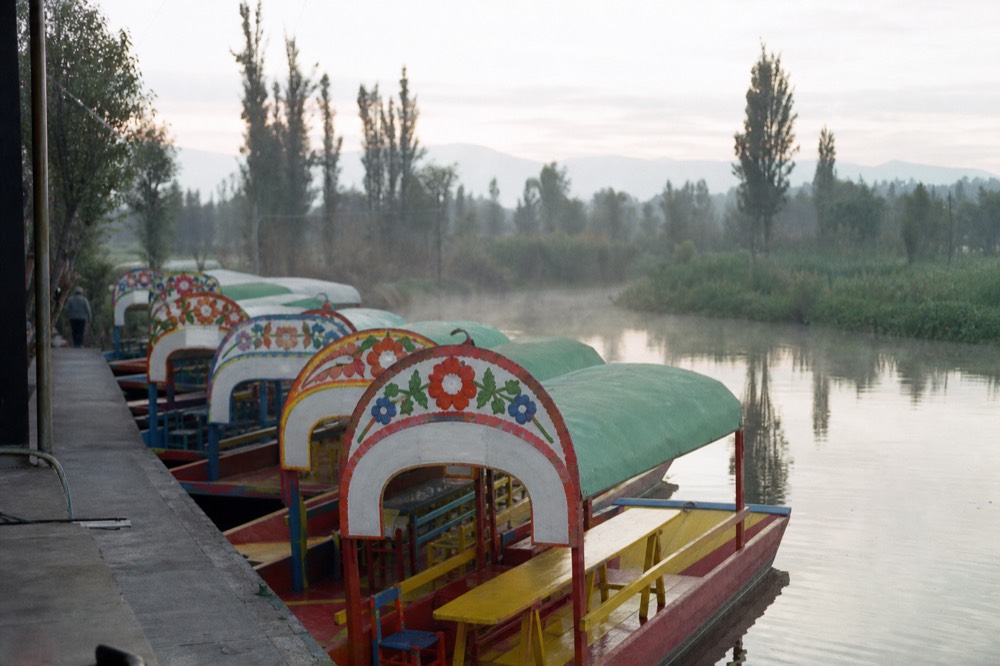
The docks themselves are in better shape than they were a couple of years ago. The alcaldía put 174 million pesos into embarcadero upgrades in the run-up to the 2026 World Cup, and that work is finished, so the piers, lighting and public areas at the main landings look considerably less improvised than the photos you may have seen. El Universal's dock rundown is the standard local reference for what each landing is.
| Embarcadero | Character | Choose it for |
|---|---|---|
| Nuevo Nativitas | Largest, busiest, market and food stalls attached | First visits, the full noisy weekend experience, easy walk-up rentals |
| Cuemanco | Wide water, eco routes, the La Llorona floating stage, also busy with weekend group rentals | Longer runs toward the dolls islands, evening shows, nature-leaning trips |
| Zacapa | Mid-sized, calmer than Nativitas | Groups who want the party without the crush |
| Fernando Celada | Central, close to the town | Short rides, people arriving by light rail |
| Caltongo | Smaller, quieter water | Slower sightseeing, chinampa-facing routes |
| Las Flores | Smaller landing, included in the renovation programme | Avoiding the Sunday scrum |
Booked tours tell you the meeting point on the listing, and it is not always the dock you would have picked yourself. Read that line before you plan your transport, because a 25-minute difference between Nativitas and Cuemanco is the difference between arriving relaxed and arriving at a run.
Do any tours pick you up from your hotel?
Yes, though fewer than you would expect. The private trajinera from $108 and the sunrise trip from $174 both state transport in their listing titles. The rest give you a meeting point at a dock or a central spot, and the full-day Coyoacán combos move you between sites once you have joined them.
Transport-included trips solve a real problem in this city. You are not haggling with an app at 6am, you are not explaining a dock name in Spanish, and you are not standing on Periférico watching your departure time pass. What you pay for that is visible in the price gap: the sunrise trip sits at $174 against $42 for a walk-on traditional boat, and a chunk of that difference is the car.
| Trip | From | Duration | What the listing says about transport |
|---|---|---|---|
| Private Trajinera Through the Canals | $108 | 4 to 5 h | Transport included per the listing; free cancellation up to 24 hours |
| Xochimilco at Sunrise with Breakfast | $174 | 5 h | Transport and breakfast included; rated 5.0 across 123 reviews |
| Pre-Hispanic Chinampa Lunch and Axolotl Sanctuary | $216 | 5 to 6 h | Confirm the meeting point on the listing |
| Xochimilco, Coyoacán and Frida Kahlo Super Saver | $42 | 9 h | Full-day routing between sites; confirm where it starts |
| Premium Frida Kahlo Museum and Xochimilco, max 15 | $40 | 6 to 7 h | Small-group full day; confirm where it starts |
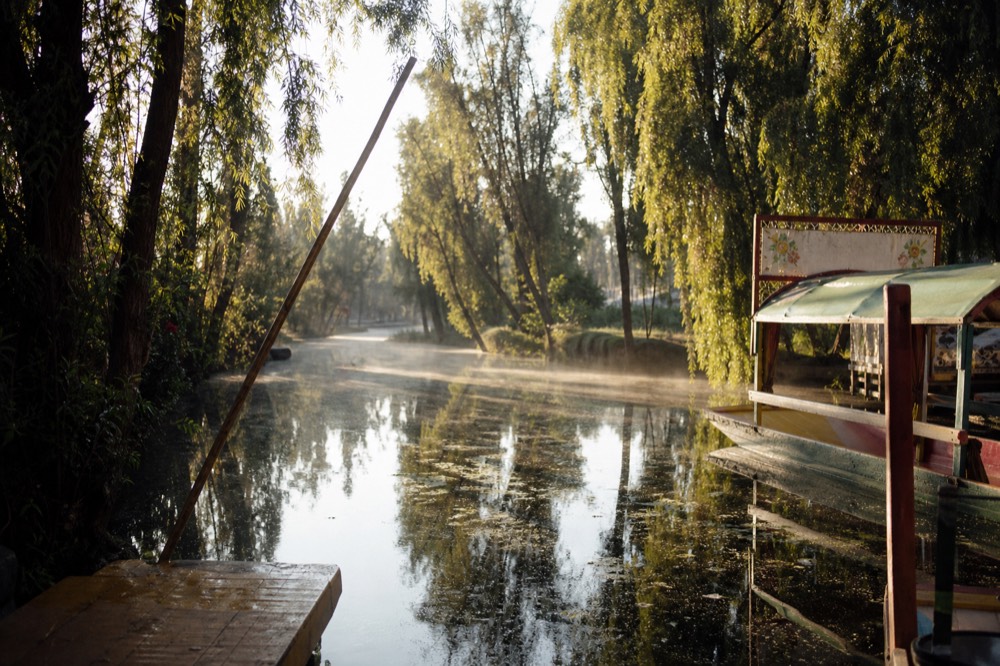
For a sunrise start the maths gets one-sided quickly. The canals at first light are the version of this place I would show anyone, which is the whole argument in morning versus afternoon on the water, and getting yourself there for 7am from the centre means a car in the dark and a driver booked the night before. If that is the day you want, compare the private and eco trips as a set, or see the current departure times on the sunrise listing and work backwards from the pickup.
Where should you stay for an easy Xochimilco day?
Anywhere on the Metro Line 2 or Metrobús spine works, because Tasqueña is the hinge of the whole trip. Roma and Condesa give you the food-and-walking base most visitors want, the centro puts the metro at your door, and a south-side base around Del Valle or Coyoacán cuts the transfer to its shortest.
These five are real, currently bookable properties that make the canal day simple, picked for where they sit rather than for luxury. Rates move with dates, so the button opens the live page.
Mondrian Mexico City Condesa Check rates ›
Condesa proper: leafy streets, the city's best casual eating, and a straight run south by Metrobús or ride-hail in 45 to 75 minutes depending on the hour.
ULIV Pulse Roma - Condesa Check rates ›
An aparthotel on the Roma-Condesa line, handy for groups self-catering before a boat picnic; same southbound transport picture as the Mondrian.
Hotel Catedral Check rates ›
Centro Histórico, two blocks off the Zócalo: Line 2 runs from here to Tasqueña directly, which makes the 3-peso train route genuinely door-to-door.
Novotel Mexico City World Trade Center Check rates ›
Del Valle, the south-side pick: the shortest drive to the docks of anything on this list, and an easy base if Coyoacán and the canals are the heart of your stay.
Hotel Castropol Check rates ›
The budget seat in the centro: plain, well kept, and on the same direct Line 2 run to Tasqueña as the Catedral.
How long does the whole day take, door to door?
Budget half a day for a booked shared cruise, most of a morning for a self-rented boat, and a full day for a Coyoacán combo. The travel is 45 to 90 minutes each way by car or around 40 minutes each way on the train, and the water is 2 to 5 hours depending on what you booked.
People plan the boat and forget the bookends. A 2.5-hour party cruise is a five to six hour commitment once you add both transfers and the standing-around at the dock, and that is the number that decides whether you can also fit the Frida Kahlo Museum in. Being honest with yourself about it at the planning stage is the single biggest favour you can do your itinerary.
| Plan | Out | On the water | Back | Block of your day |
|---|---|---|---|---|
| Light rail plus a self-rented boat | 36 to 42 min train, plus your Metro leg | 2 h at 750 MXN per hour for the boat | Same in reverse | Most of a morning |
| Ride-hail plus a booked shared cruise | 45 to 90 min | 2 to 2.5 h | 45 to 90 min | Half a day |
| Private trajinera with transport | Included | 4 to 5 h | Included | 4 to 5 h, pickup to drop-off |
| Sunrise trip with transport | Included, early | 5 h | Included | Morning gone, afternoon free |
| Coyoacán and Frida Kahlo combo | Included in the routing | 9 h total | Included | The entire day |
The private row is the one that surprises people. Four to five hours sounds long until you realise it absorbs both transfers, which means the boat time is not being eaten by traffic on either end; you can see today's dates for it if that shape suits your group. The 9-hour combo row, meanwhile, is not a warning, it is a feature for anyone with three days in the city and a long list. It buys you the canals and Coyoacán without a single transport decision. What it costs is flexibility, and the full-day combo itineraries make that trade explicit on each listing.
How do you get back to the city afterwards?
The docks stop running at 18:00, so the boat ends your day long before transport does. The light rail runs to midnight every night, and cars are available at every dock, though on a Sunday evening you will be requesting one at the same moment as everyone else who has just come off the water.
The end of a Sunday at Nativitas is genuinely chaotic in a way the start never is. Everyone leaves within the same 45 minutes, the app fares climb, and the street outside the market fills with families and coolers and sleeping children. If you have any flexibility, push off the water by 16:30 and leave before the wave. If you do not, walk a few blocks away from the dock entrance before requesting a car and the pickup gets much simpler.

| Getting home | When it works | Watch for |
|---|---|---|
| Tren Ligero | To midnight daily; boats end at 18:00 so the train is never your limit | The walk or short taxi from the dock back to the station |
| Ride-hail from the dock | Any hour, but surge and queueing on Sunday evenings | Walk clear of the dock entrance before requesting |
| Street taxi | Available, negotiated, cash | Agree the fare before you get in |
| Tour transport | Drop-off is part of the price on the trips that include it | The listing states where it drops you, which may not be your hotel |
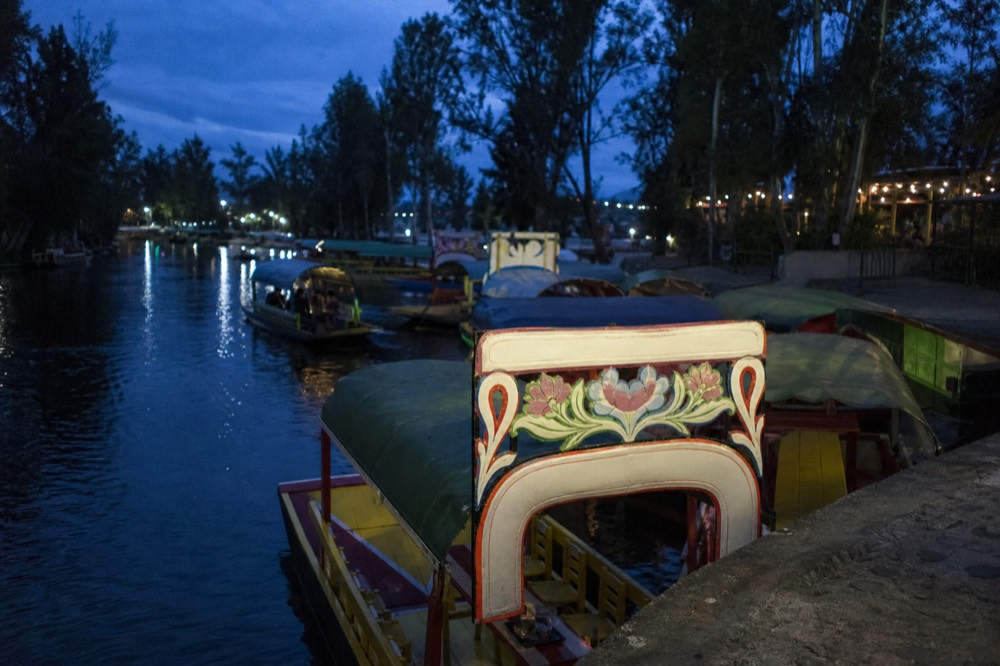
| La Llorona night at Cuemanco | Weekend shows at 18:00 and 21:00 through 22 November | Book the ride home before the show, not after |
One practical note that catches people out: the docks and the market around them run on cash, and so does a street taxi. Booked tours are paid online in advance, which is a different world. The split between the two is covered in the post on how much cash to carry, and it is worth reading before you leave a hotel with nothing but a card.
Is the trip out there safe on your own?
Mexico City carries a Level 2 "exercise increased caution" advisory, and recent reporting flags no incident pattern specific to Xochimilco. The canals in daylight, on a booked or properly rented boat, are a low-risk outing. The friction that does exist is commercial: pier-side pressure, quoted prices that ignore the official tariff, and hustling before you board.
That last part is the honest warning. The official rate is 750 pesos per hour per boat, set by the alcaldía, and it is the whole boat, not a per-head charge. Infobae's write-up of the official tariff is the clearest public statement of it. Anyone quoting you per person at the gate is off-tariff, and knowing the number is the entire defence.
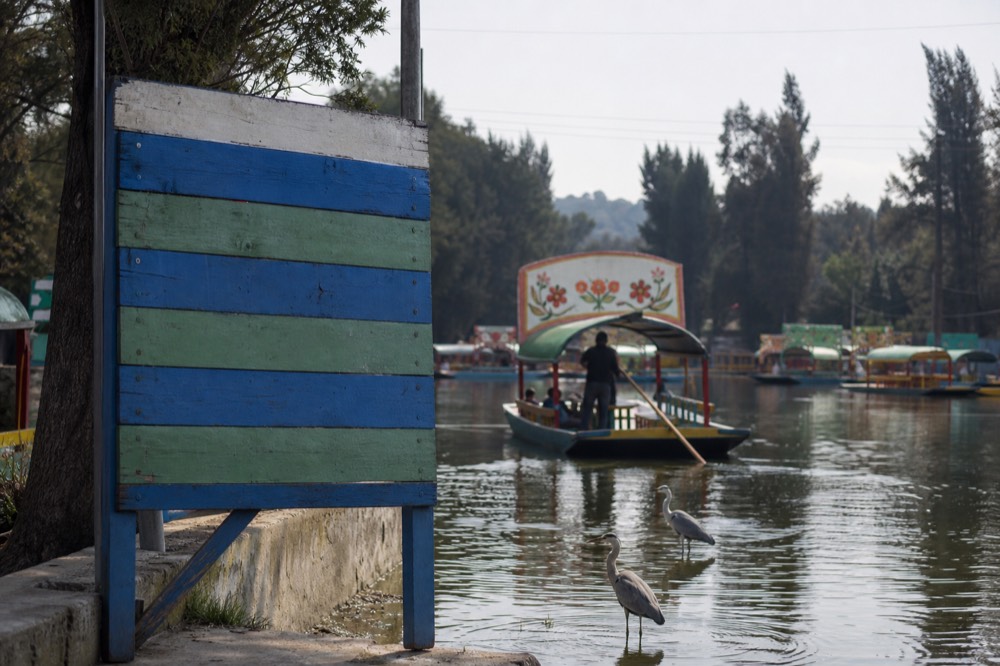
Travelling out by light rail is ordinary public transport used by ordinary people all day. Keep your phone in a pocket rather than a hand, do the standard city things, and it is unremarkable. The genuine reason to prefer a car is not danger, it is timing and the number of transfers, especially if you are moving a group with small children or planning to end the day after dark at Cuemanco. The longer version lives in the post on safety on the canals, and the practical dock etiquette is in renting a trajinera on your own.
Anyone weighing the DIY route against a booked seat purely on money will find the arithmetic in what a boat actually costs, which El Gráfico's visitor guide backs up from the local side. Once transport is settled, the two decisions left are which day to come and what to carry, and both live in picking the right day and hour.
Questions people ask before they set off
How far is Xochimilco from Mexico City centre?
Roughly 20 to 25 km from the Centro Histórico, Roma or Condesa to the embarcaderos, which is 45 to 90 minutes by car once traffic is involved. Xochimilco is part of Mexico City, not a separate town, so you are travelling across the city rather than out of it. By light rail the Tasqueña to Xochimilco leg alone is 36 to 42 minutes.
Can you get to Xochimilco by Metro?
Not directly. The Metro takes you as far as Tasqueña, the southern terminal of Line 2, and the Tren Ligero light rail covers the rest for 3 MXN with an MI card. It is one line with one destination, so there is nothing to change once you are aboard. From the Xochimilco terminal you still need a short hop to whichever dock you have chosen.
Which dock should I tell my driver?
Name the embarcadero, not the neighbourhood. Nuevo Nativitas is the biggest and easiest for walk-up rentals, Cuemanco is the dock for eco routes, the longer runs toward the dolls islands and the La Llorona show. If you have booked a tour, the listing names the meeting point, and it will not always match the dock you would have picked yourself.
Do Xochimilco tours include hotel pickup?
Some do. The private trajinera from $108 and the sunrise trip from $174 both state transport in the listing title, and the full-day Coyoacán combos handle the movement between sites. The shared cruises from $42 to $65 generally start at a dock and expect you to arrive under your own steam. Check the transport line on the listing before booking a car.
What time should I leave the city to be on the water by 10am?
Leaving by 8:30 covers the pessimistic end of a 45 to 90 minute drive with room for dock time. By light rail, allow closer to two hours door to door once you count the Metro leg and the transfer at the far end. Weekday mornings run faster than weekend ones, and the docks are quieter then too.
Is the last light rail late enough to get home?
Comfortably. The Tren Ligero runs to midnight every night, while embarcadero service ends at 18:00, so the boats close hours before the trains do. The only late scenario worth planning for is a La Llorona show at Cuemanco, where the 21:00 performance ends well after dark and a pre-arranged ride home is the easier option.