What Food Is Xochimilco Known For?
Elotes and esquites off a paddled canoe, quesadillas cooked on the water, micheladas and a chinampa lunch grown metres away: what Xochimilco actually feeds you.
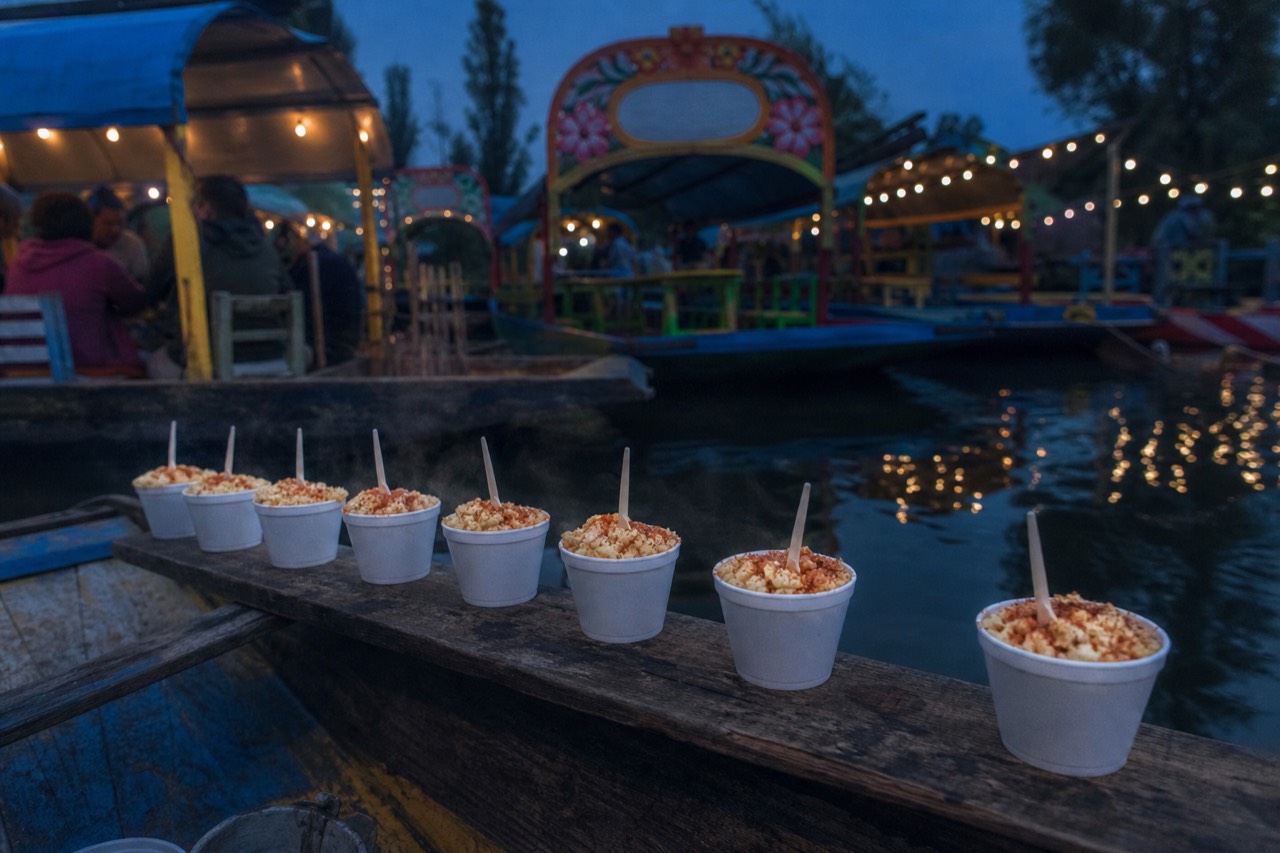
The smell reaches your boat before the canoe does: charred corn, lime, chilli powder in a shaker. A woman kneeling in a canoe the width of a bathtub balances a steaming pot between her knees, hooks a hand onto your trajinera's rail, and asks how many. That is the food of Xochimilco in one sentence. Corn in every form the Valley of Mexico has ever put it in, cooked on the water, handed over the side, eaten with your hands while the canal slides past.
Beyond the canoes there is a second food story, older and quieter: chinampas still growing vegetables and herbs in the beds the Mexica cut into the lake.
What do the vendor canoes actually sell?
Corn first: elotes on the cob and esquites in a cup, both loaded with mayonnaise, dry cheese, chilli and lime. Then quesadillas cooked to order on a comal in the canoe, micheladas built in front of you, beer at roughly 40 to 50 pesos, plus sweets, chicharrones and whatever the vendor's family cooked that morning.
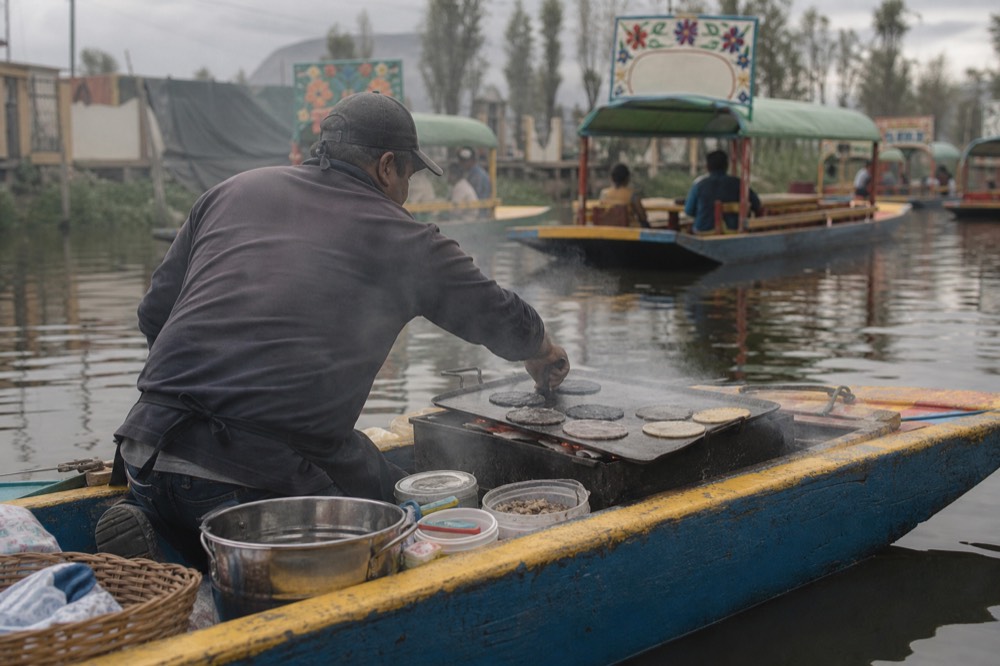
The canoes do not queue politely. They read your boat, decide whether you look hungry, and come in. Beer prices around 40 to 50 pesos line up with El Gráfico's guide to prices and recommendations for a Xochimilco visit; food is sold at market rates that move with the vendor and the day, so nobody publishes a menu. Bring small notes. Cash reality on the canals is its own subject, and the canoes are the sharpest edge of it.
| From the canoe | What it is | How it reaches you |
|---|---|---|
| Elotes | Boiled corn on the cob, mayonnaise, crumbly cheese, chilli, lime | Handed across on a stick, eaten standing at the rail |
| Esquites | The same corn cut into a cup with broth and epazote, spoon included | Cup passed over, exact change expected |
| Quesadillas | Blue-corn masa folded over cheese, squash blossom, huitlacoche or mushrooms | Cooked on a comal in the canoe while the boats are tied together |
| Micheladas and beer | Beer with lime, salt and chilli sauce, or straight from the ice chest | Mixed in the canoe, around 40 to 50 pesos for the beer |
| Chicharrones and botanas | Pork crackling, chips, sauces, pickled things | Passed over in a bag, best shared |
| Dulces | Tamarind, chamoy, cocadas, paletas | The last canoe of the afternoon, usually the children's favourite |
Music arrives the same way and works on the same principle. A mariachi boat charges by the song rather than the hour, which is why the full price arithmetic for a day out here is worth reading before you start waving at boats.
Is the food in Xochimilco authentic Mexican?
Yes, in the most literal sense. This is street food cooked by families from Xochimilco and the neighbouring pueblos, sold from their own canoes, in the recipes they eat at home. It is not restaurant Mexican and it is not tourist Mexican. It is the food of a Sunday outing in the south of Mexico City.
The question usually comes from visitors who have been warned about tourist traps, and the fear is misplaced. Nobody is producing canal food for foreign palates. The chilli levels are not adjusted, the huitlacoche is genuinely corn fungus, and the esquites come with epazote whether you know the herb or not. Half the boats on the water on a Sunday are chilangos celebrating a birthday, and they are eating the same cups.
What you should adjust for is hygiene tolerance rather than authenticity. Food is cooked over coals in an open boat with river water a hand's width away. I grew up eating it and still do. Visitors with delicate stomachs tend to be fine with anything cooked hot in front of them, and less fine with the raw salsas and the ice.
Which boat tours include food, and what do you get?
Included food ranges from guacamole made on board to a full lunch cooked on a working chinampa. Party boats lean on tacos and open bar, small-group cruises on snacks with a guide explaining them, and the eco trips build the whole day around a real meal. Prices below are from-prices.
| Boat | What lands on the table | From | Duration | Rating |
|---|---|---|---|---|
| Party cruise with guacamole and unlimited drinks | Guacamole made on board, drinks without a cap | $64 | 2.5h | 4.9 (1,219) |
| Boat with guacamole and premium drinks | Guacamole plus premium spirits | $65 | 2.5h | 4.9 (59) |
| Boat tour with live guide, food and drinks | Snacks and drinks, group capped at 16 | $54 | 2.5h | 4.9 (184) |
| 18+ party boat with open bar and tacos | Tacos and open bar | $49 | 2h | 4.9 (1,932) |
| Sunrise trip with breakfast | Breakfast on the water, transport included | $174 | 5h | 5.0 (123) |
| Pre-Hispanic chinampa lunch and axolotl sanctuary | Lunch cooked on a working farm island | $216 | 5-6h | 5.0 (46) |
Those are starting prices and the live listing is the authority on what you actually pay on a given date. If the food is the point of the day rather than a bonus, the small-group option reads best on paper: 2.5 hours, sixteen people maximum, food and drinks included, free cancellation up to 24 hours out. You can see current dates and prices on that boat's listing, or compare it against the rest of the shared cruises with drinks and snacks included.
What is a chinampa lunch and why is it different?
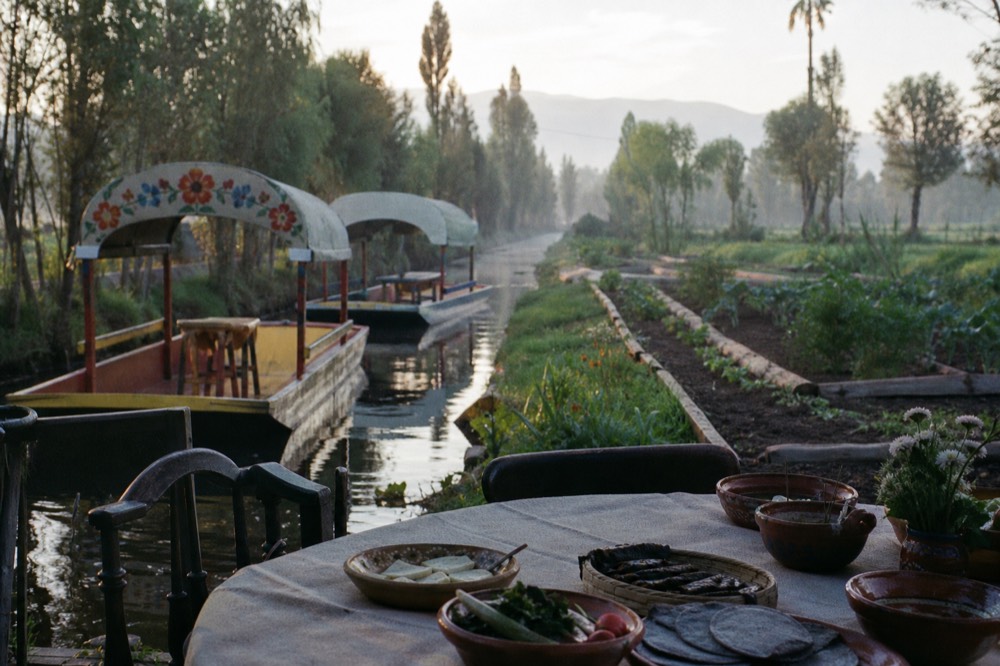
A chinampa is a raised farming bed built out into the lake, a pre-Hispanic system still worked today. A chinampa lunch is eaten on one of those islands, from produce grown in the same beds, usually as part of a longer trip that also visits an axolotl sanctuary. It is the slowest and best eating in Xochimilco.
This is the food story that has nothing to do with the party. The canals exist because the beds exist; the whole landscape was engineered to grow food, which is part of why the area sits on the UNESCO World Heritage list alongside the historic centre of Mexico City. The floating gardens and how they are built is the longer version of that story.
On the ground it means a table under a tarp, a cook working from a comal, herbs cut fifteen metres away, and a pace that assumes you have five or six hours. The pre-Hispanic chinampa trip runs from $216 with a 5.0 rating across 46 reviews and includes transport, and you can check the current availability calendar if a specific date matters.
What should you eat before or after the boat?
The market beside Nativitas is where locals eat on either side of a rental: tlacoyos off a comal, barbacoa on Sundays, quesadillas with fillings the canoes do not carry, plus aguas frescas by the litre. It is cheaper than anything on the water and it is walking distance from the docks.
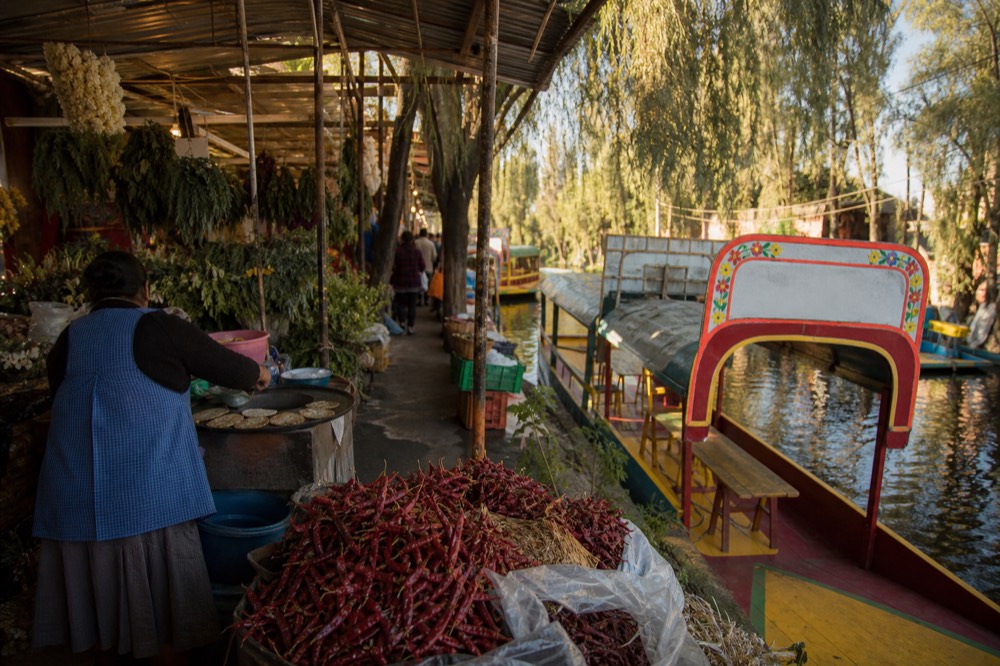
My family's habit has always been the same: eat properly before boarding, then treat the canoes as dessert and drinks rather than lunch. It also keeps the cash requirement down. And if the eating turns out to be your favourite part of the day, the city side has dedicated tasting walks through the historic centre, booked separately from any boat; check the food-walk dates here.
Which dock you use changes the eating around it: the big touristy embarcaderos carry full markets, the quieter ecological ones almost nothing. The dock-by-dock rundown covers which is which.
Can you bring your own food and drink instead?
On a self-rented trajinera, yes. Coolers, tortas, cake, a birthday piñata: bringing your own is normal and carries no extra fee. Alcohol is allowed within posted limits and those limits tightened after a fatal incident, so the sensible move is to bring less than you think and drink slower.
This is how most Mexican families do it, and it is why the boats you pass are stacked with plastic containers. Rentals sit at the official 750 pesos an hour per boat, food included at no charge, which makes a group picnic on the water absurdly good value. Recent reporting on night rentals from Milenio's rundown of trajinera night tours and costs describes the same setup after dark.
The honest caveat: alcohol here is more regulated than it was. Limits per boat and per person are enforced, visible drunkenness can end a ride early, and unauthorised night parties with amplified sound in the protected area were blocked outright in 2026. Booked daytime cruises operate inside those rules. How the drinking rules work now has the detail, and if you would rather someone else handled the catering, the full lineup of bookable boats is on the homepage.