Is Xochimilco Cash Only?
Cash runs the docks and the vendor canoes in Xochimilco: the 750 MXN per hour boat tariff, mariachi songs and beer all want pesos. Here is what to carry.
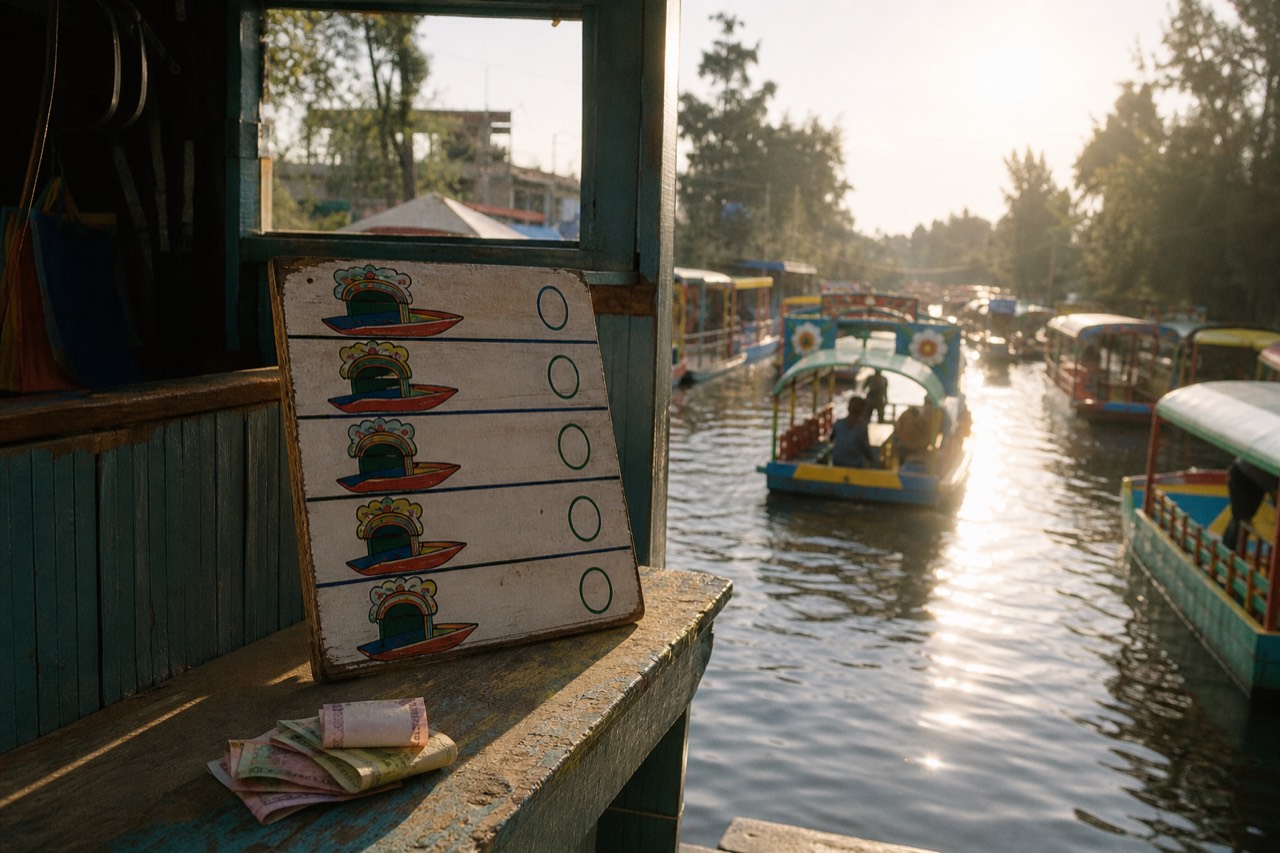
The rate board at Nativitas is painted rather than printed, and the figure on it has held steady: 750 pesos an hour, per boat. Below it sits a man with a clipboard and a roll of bills. In more than twenty years of Saturday afternoons on these canals I have never once seen a card reader at a boat window. So the short answer is yes, the dock side of Xochimilco runs on cash, and the vendor canoes run on it absolutely.
What surprises visitors is how much of the day does not have to be cash at all. If the boat itself is booked and paid online before you land in Mexico City, the largest single line of the day is already gone, and the pesos in your pocket are just for corn, beer and a song.
What at Xochimilco actually has to be paid in cash?
Everything on the water is cash: the trajinera rental itself, the mariachi or marimba boat, beer and antojitos from the vendor canoes, tips to the remero, and parking at the embarcadero. None of those are card businesses. They are boat owners, family food operations and musicians settling up between one canal and the next.
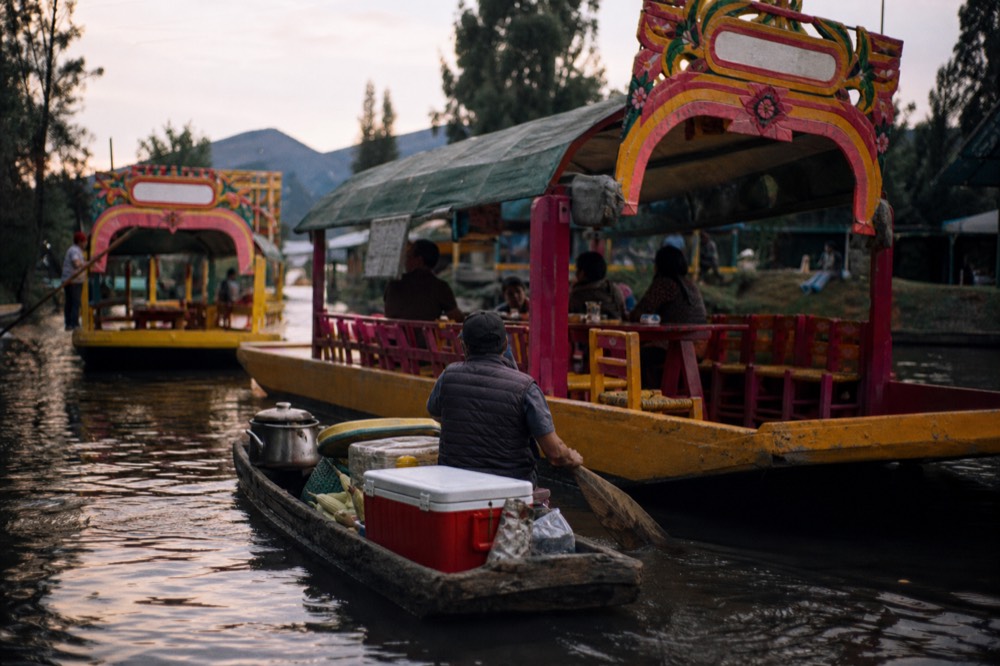
The trajinera is the big one. The official tariff set by the Alcaldía is 750 MXN per hour and it is charged per boat, not per person, a point Infobae confirmed in its rundown of the official rate. Split across a group of ten or twelve, the arithmetic gets friendly fast, and there is more on how the 750 tariff adds up in the prices guide. Posted passenger limits run 18 to 20 depending on which embarcadero you use.
Then come the canoes. They tie onto the side of your boat while it is still moving, and the transaction takes about eleven seconds. Beer has been reported at roughly 40 to 50 pesos in El Gráfico's guide to official prices and recommendations, and the food canoes work at market rates that shift with the vendor. Nobody is making change for a 500.
Is there anywhere in Xochimilco you can pay by card?
The reliably cashless part of the day is whatever you paid for before you arrived. Booked cruises are charged online, so the boat, guide, drinks and any hotel pickup are settled. Off the water, restaurants and shops around the town centre vary. On the water, assume nothing takes plastic.
I would not plan a day here around finding a terminal. The market stalls beside Nativitas, the woman selling tlacoyos on the walk down from the light rail, the man renting you an hour on the canal: all of them are cash, and the one time you decide to test it will be the time it goes badly. Withdraw in the city before you get on the Tren Ligero. That is the whole trick.
The transport itself is the odd exception in the other direction. The light rail from Metro Tasqueña costs 3 MXN and is paid with the rechargeable MI card, which you top up at the station rather than handing coins to a driver. The step-by-step route out to the canals covers that in more detail.
How much cash should you bring for a day on the canals?
For a self-rented boat, budget the hourly tariff times your hours, plus 500 to 800 pesos per boat for food, drinks and a couple of songs. On a booked tour, 300 to 500 pesos per person covers vendor snacks and tips comfortably. Bring it in 20s, 50s and 100s.
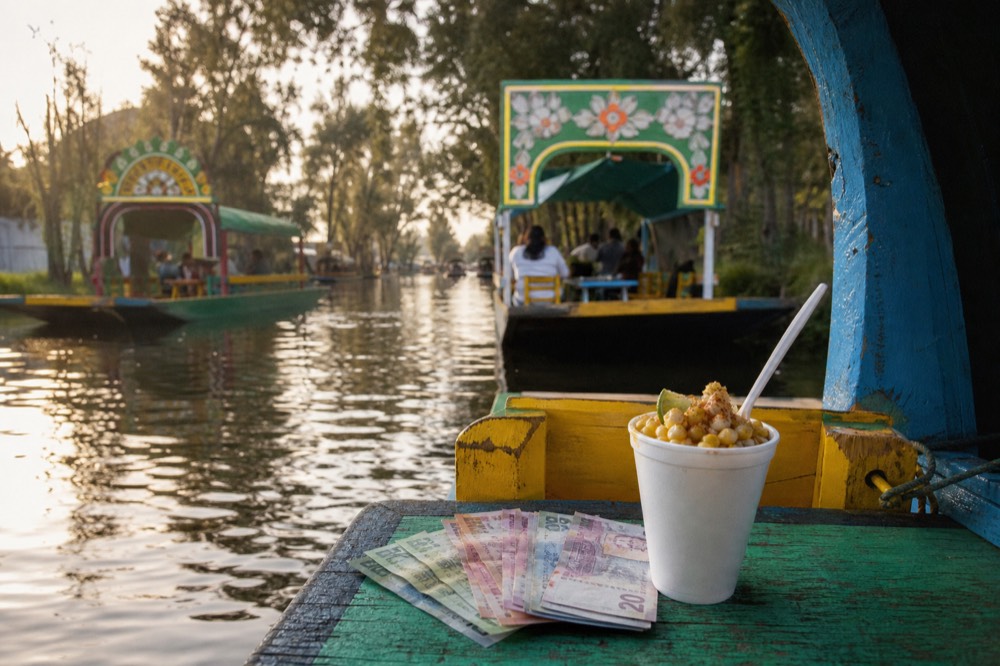
Here is the ladder of what actually gets paid on a normal Saturday, using the figures reported for 2025 and 2026:
| What you pay for | Typical price | How it is paid |
|---|---|---|
| Trajinera rental, official tariff | 750 MXN per hour, per boat | Cash at the dock |
| Mariachi, per song | 300 MXN | Cash to the band's boat |
| Norteño group, per song | 230 MXN | Cash, negotiated first |
| Marimba or trío, per song | 170 MXN | Cash |
| Beer from a vendor canoe | 40 to 50 MXN | Cash, small notes |
| Tren Ligero, Tasqueña to Xochimilco | 3 MXN | MI card, topped up at the station |
| La Llorona ticket, 2026 season | 750 MXN | Prepaid online or at the box office |
Two hours on the boat, one mariachi song and a round of beers for a group of eight comes to about 2,100 pesos total, which is why the canals stay a local weekend habit rather than a splurge.
Does booking a tour online change the cash question?
Substantially. A booked cruise moves the boat, the guide, the drinks and often the transport onto your card weeks earlier, and most of them cancel free up to 24 hours out. You still want pocket money for the canoes, but the day stops depending on how many pesos you managed to withdraw.
That is the practical reason a lot of first-time visitors book. It is not that the dock is difficult, it is that the dock is a negotiation in Spanish with a stranger about how many hours you want, while your group stands around holding cash. Compare the shared cruises with drinks included if you would rather skip that, or check live availability on the guacamole and premium drinks boat, which runs 2.5 hours from $65 and holds a 4.9 rating. From-prices move, and the live page is the authority on what you actually pay.
One honest caveat: not every listing cancels free. The big unlimited-drinks party boat at $64 is non-refundable once booked, which matters more than the price difference if your plans are loose.
What bills should you carry, and how do you avoid overpaying?
Carry 20s, 50s and 100s. Agree the boat price out loud before you step on, in hours, and confirm it is per boat. The posted tariff is 750 MXN per hour for the whole trajinera. Anyone quoting per person, or quoting a "special" higher rate, is outside the official price.
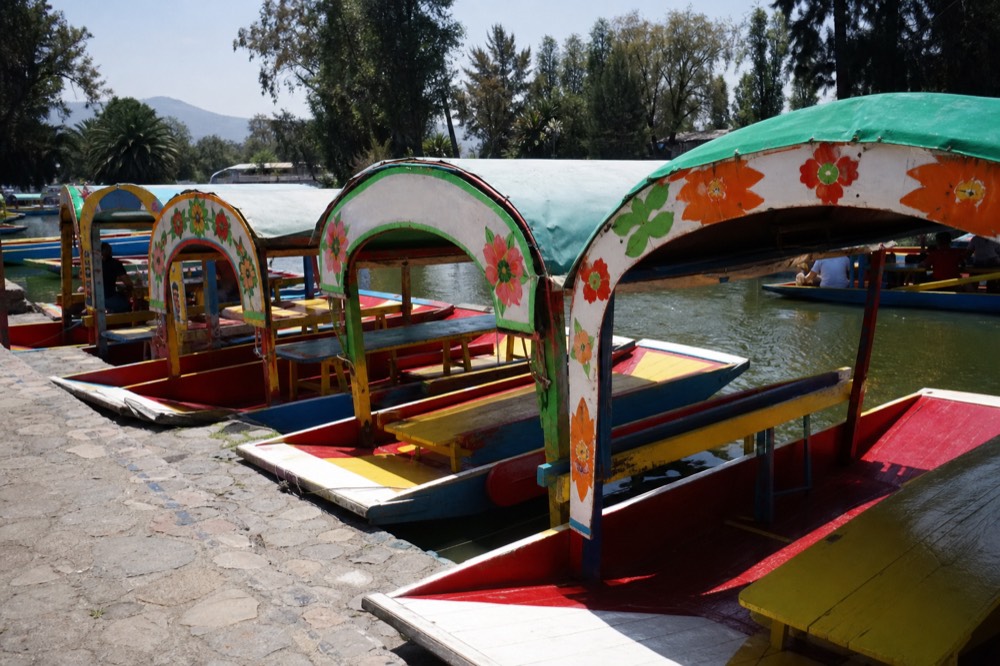
The overcharge, when it happens, is almost never dramatic. It is a quote of 1,000 an hour instead of 750, or an hour that quietly becomes ninety minutes. Say the number back to the boatman, note the time you push off, and it goes away. Different docks have different levels of hustle too, and the dock-by-dock breakdown is worth two minutes before you choose one.
Big notes are the other quiet problem. A vendor selling 45-peso beers cannot break a 500, so you either overpay or you go without. Break your money at a shop before you reach the water.
What happens if you run out of cash on the water?
Not much, and none of it is good. The canoes stop pulling alongside, the music passes you by, and you sit out the last hour watching other boats eat. There is no cash machine in the middle of a canal, and a boat cannot be recalled to the dock on your schedule without cutting the rental short.
This is the single most common complaint I hear from friends who came out unprepared, and it is entirely avoidable. Bring more small money than you think the day needs. Anything left over buys pan dulce on the walk back to the train.
If you would rather remove the variable altogether, book a cruise with the food and drinks already inside the price: the traditional sightseeing boat runs about two hours from $42 with free cancellation, and you can see what it costs on your date. If you would rather run the day yourself, read through renting a boat on your own so the cash you carry matches the plan. Either way it helps to know what the vendor canoes sell before a canoe is bumping against your boat asking what you want, and every bookable boat compared is laid out on the homepage if you are still choosing.