Floating Gardens of Xochimilco: How the Chinampas Actually Work
Nine hundred years of farming built these islands out of lake mud and willow roots, and people are still working them. You can stand on one, and almost nobody does.
Short answer
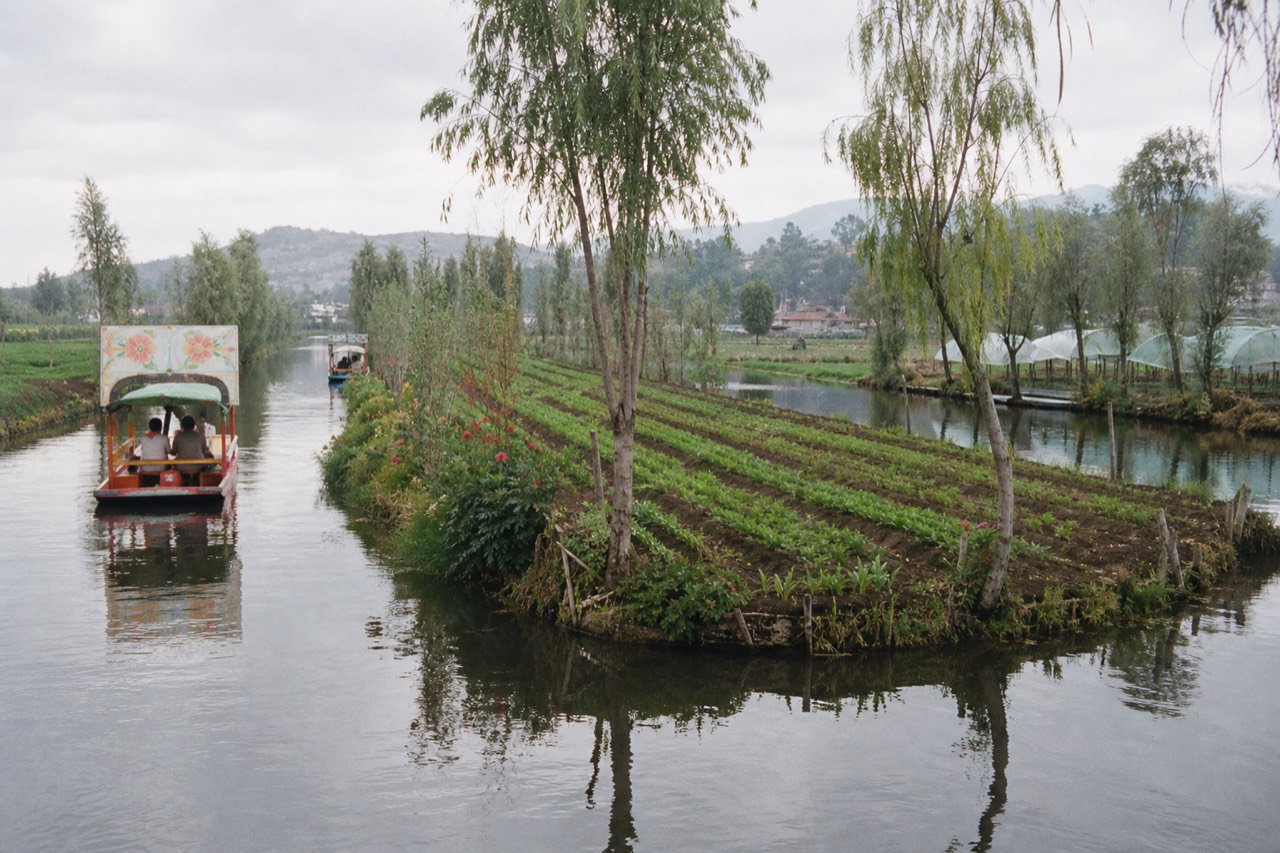
Chinampas are artificial farm islands built up from lake bed mud and vegetation, staked and anchored by willow roots. Archaeologists date the technique to around 1100 CE, with the earliest firm examples between 1150 and 1350. They do not float. Several hundred are still farmed inside the protected zone, and longer canal trips land on working ones.
Step off a boat onto a chinampa and the first surprise is that it is solid. Not spongy, not floating, not rocking under you: black soil, firm as a garden bed, cool a few centimetres down even in May. The second surprise is the smell of it, wet earth and cut herbs, with the canal right there at ankle height on both sides. I have been landing on these plots since I was small and it still catches me, that the ground I am standing on was scooped out of a lake by hand a very long time ago and has been producing food ever since.
What are the floating gardens of Xochimilco, and do they float?
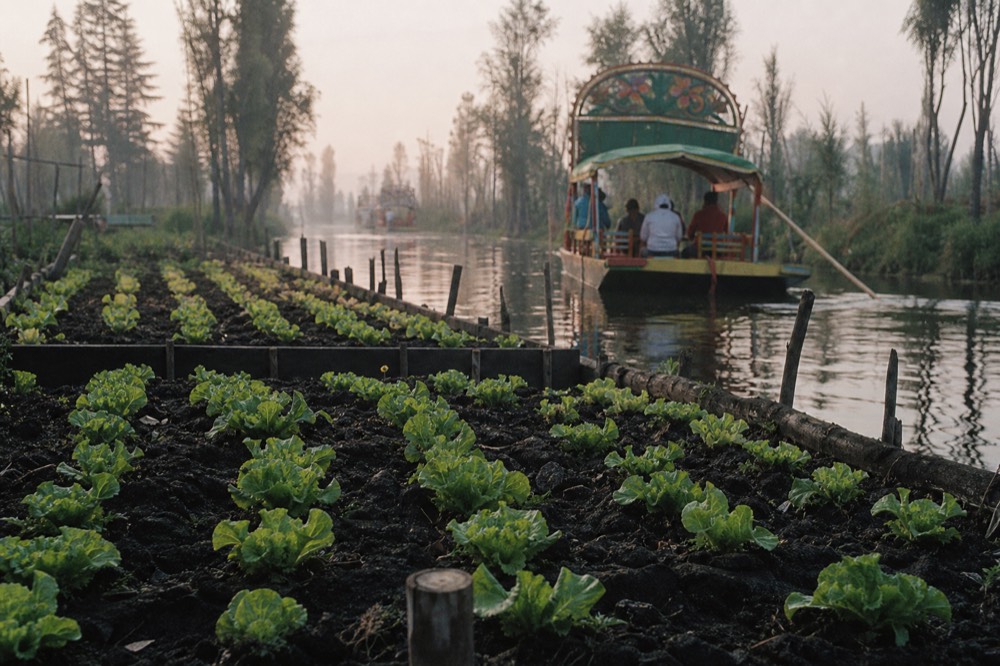
They are chinampas: artificial islands of lake bed mud, vegetation and sediment, built up inside shallow water and pinned in place by willows planted along their edges. They rest on the lake floor and do not float. The English name comes from early European descriptions of what the system looked like, not from how it works.
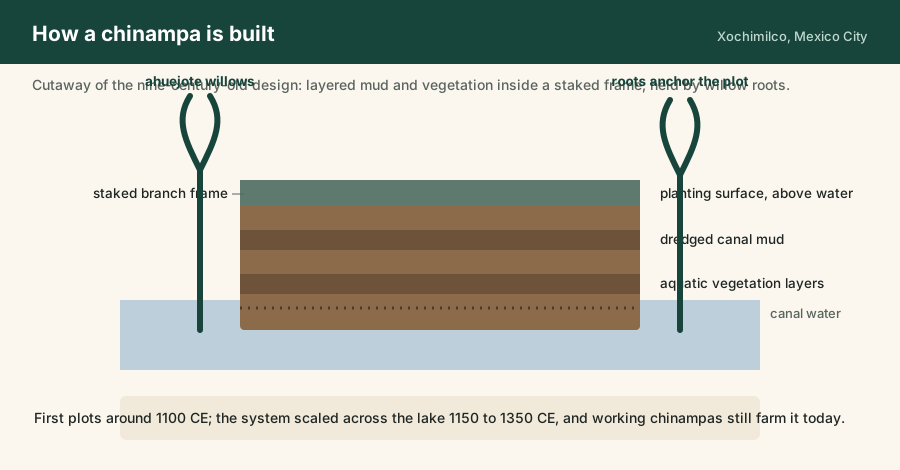
The construction logic is simple and very good. Stake out a rectangle in shallow water. Weave a frame of branches and reeds. Fill it with mud dredged from the canal floor, layered with aquatic vegetation, until the surface sits above the waterline. Plant willows at the corners and along the sides, and let their roots grow down and knit the whole thing to the lake bed. What you end up with is a raised bed that irrigates itself by capillary action from the canal on either side, fed constantly by nutrient-rich muck you scoop up from the water beside you.
That last part is why the system produced so much for so long. A chinampa farmer does not have to import fertility. It arrives in the canal, gets dredged onto the beds, and goes back into the water as runoff. The canal is not next to the farm, it is part of the farm.
The rectangles are long and narrow for a reason too. Every part of a plot needs to be reachable from the water, so the shape is dictated by the length of a farmer's arm and the reach of a pole. Look at the canal grid from above and you see the same proportions repeated across hundreds of hectares, which is what makes what is left of the old lake read as designed rather than natural.
How were the chinampas built, layer by layer?
Frame first, then fill, then anchor. A staked rectangle of woven branches was packed with alternating layers of canal mud and water plants until it rose above the surface, then held together by willows planted along the edges whose roots bound the soil to the lake floor. Maintenance is the same work, repeated forever.
| Stage | What went into it | Why |
|---|---|---|
| Staking out | Posts driven into the shallow lake bed | Fixes the plot's footprint and holds the frame |
| Weaving the frame | Branches, reeds and cane lashed between the posts | Contains the fill before the roots take over |
| Filling | Alternating layers of dredged canal mud and aquatic vegetation | Builds height and creates fertile, water-retaining soil |
| Raising above water | Repeated dredging until the surface clears the waterline | Lets crops grow without drowning |
| Anchoring | Willows (ahuejotes) planted along the edges | Roots bind the plot to the lake bed and stop the banks collapsing |
| Ongoing upkeep | Annual re-dredging, bank repair, willow pruning | Without it the plot slumps and the canal silts up |
The willows deserve their own sentence. The ahuejote is a narrow, upright willow that tolerates being permanently wet, and the rows of them you see along the canals are structural, not decorative. Pull them out and the bank goes. When you pass an abandoned plot in the farm canals, the first thing you notice is that the willow line has gaps in it, and the second is that the edges have started to slide into the water.
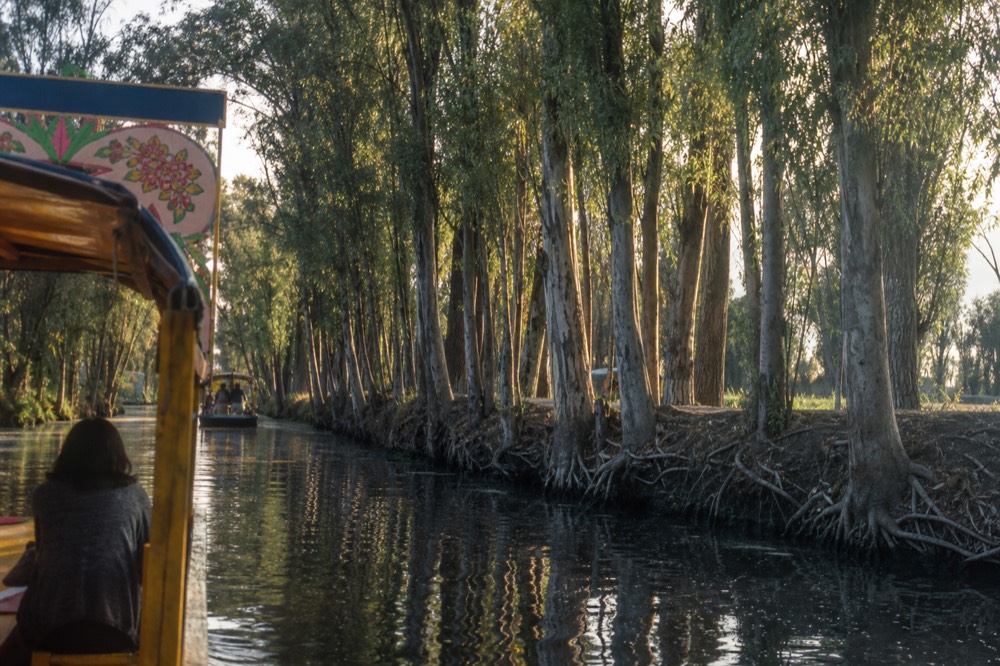
Maintenance is the part that decides whether the landscape survives. A chinampa is not a monument, it is a machine that needs a farmer. Every year the beds want new mud, the banks want repair, the willows want cutting back. Stop for a few seasons and the plot goes back to lake. That is the real threat to this place, more than any single pollution event: not destruction, just people leaving.
How old are the chinampas, and who built them?
Archaeologists date chinampa agriculture to around 1100 CE, with the earliest securely dated examples in the Middle Postclassic period, roughly 1150 to 1350. They were developed by Nahua communities farming the shallow southern lakes of the Valley of Mexico, and the system was expanded on an enormous scale under the Aztecs to feed Tenochtitlan.
| Period | What happened |
|---|---|
| Around 1100 CE | Chinampa technique appears in the shallow lakes of the southern basin |
| Roughly 1150 to 1350 CE | Earliest firmly dated chinampas in the Xochimilco and Chalco lake system |
| Aztec era | Massive expansion; the chinampa belt becomes a food supply for Tenochtitlan |
| Colonial period onward | Basin drainage begins; the lake shrinks around the surviving plots |
| 1987 | UNESCO inscription recognises the landscape as World Heritage |
| 2025 to 2026 | Organic chinampa revival documented, with some operations moving around 2.5 tonnes of produce a month |
Nine centuries is the headline, and it is worth sitting with. This is not a reconstructed heritage technique that somebody revived for tourists. The plots being farmed today are, in many cases, the same plots, maintained continuously, using a method that predates the Aztec empire and outlasted it. The UNESCO listing covers the zone under criteria that explicitly recognise a living cultural tradition and a vulnerable traditional land use, which is a polite way of saying: this still works, and it could stop.
The Aztec connection is the one guides lean on hardest, and it is genuinely accurate, though the technique was not an Aztec invention. Xochimilco's farmers were doing this before Tenochtitlan needed feeding. What changed under the empire was scale, organisation and the volume of tribute moving north through the canals.
Are the chinampas still farmed today?
Yes, actively. Chinamperos still grow flowers, vegetables and herbs on plots inside the protected zone, increasingly under organic methods, with some operations reporting around 2.5 tonnes a month. Nobody publishes a reliable count of how many farmers are still working, which is itself part of the problem.
I want to flag that gap honestly, because most articles about Xochimilco will give you a confident number of active chinamperos and the current sources do not support one. What the reporting does establish is direction: through 2025 and into 2026, coverage from development and conservation organisations has tracked a revival of organic chinampa production, with restaurant demand in the city pulling produce off the canals at prices that make the work viable again.
| What the chinampas produce | Where it goes | Notes |
|---|---|---|
| Cut and potted flowers | City markets and the nursery trade | The oldest commercial staple; Xochimilco means "flower field" in Nahuatl |
| Leafy vegetables | Markets, and increasingly city restaurants direct | The core of the organic revival; short canal-to-kitchen chains |
| Culinary herbs | Markets and restaurant supply | High value per square metre, suits small plots |
| Nursery and ornamental stock | Garden centres across the south of the city | Greenhouses on chinampas are common and visible from the boat |
The chinampa method has agronomic advantages that are not nostalgia. Compare it against a conventional field and the differences are real.
| Chinampa | Conventional mainland field | |
|---|---|---|
| Water | Self-irrigating from the canal on both sides | Pumped or rain-fed, needs infrastructure |
| Fertility | Replenished by dredged canal mud and vegetation | Bought in as fertiliser |
| Growing season | Effectively continuous, several harvests a year | Limited by rainfall and irrigation cost |
| Access | By boat, on foot along narrow beds | By road and machine |
| Scale | Small plots, hand-worked | Large, mechanised |
| Upkeep | Constant dredging and bank repair | Ploughing and standard field maintenance |
Read that table and the trade-off is obvious. Chinampas are extraordinarily productive per square metre and extraordinarily labour-intensive per peso. That is the entire economic story of the last century here in one line, and it explains why the plots nearest the tourist docks have often been converted to party landings, football pitches or nurseries while the ones deep in the zone are still growing food.
Why do the chinampas matter for the water and the axolotl?
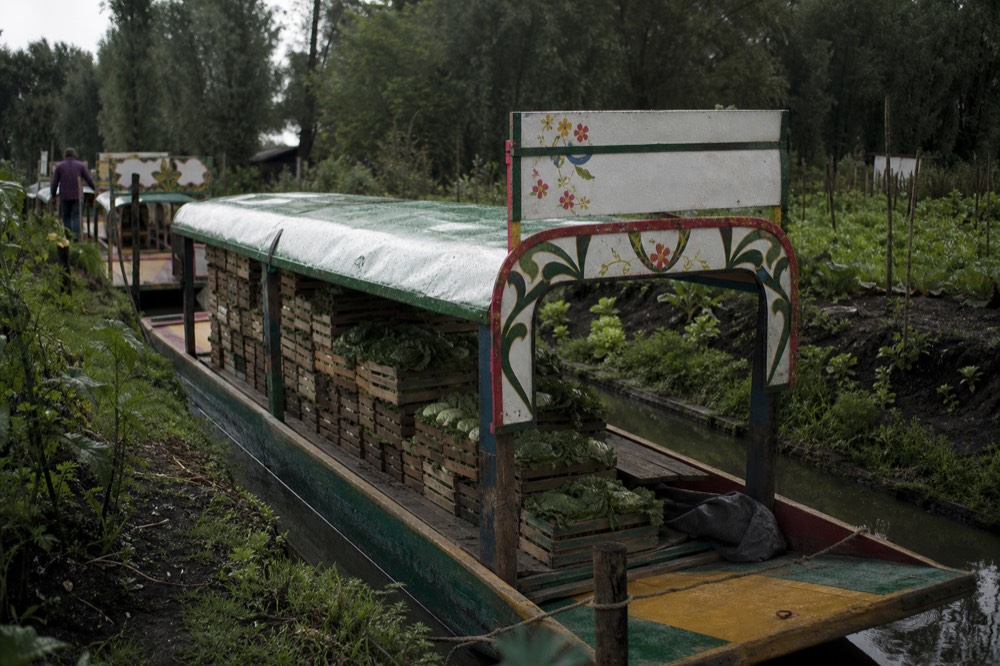
Because the farms and the canals are one system. Maintained plots keep banks intact and canals open; abandoned ones silt up and collapse. The most promising habitat work now runs through farming: refuge chinampas where the surrounding canal is separated with biofilters, cleaned, and kept free of introduced tilapia and carp.
This is the part that surprises people who assume conservation means keeping humans out. Here the opposite applies. A canal beside a worked chinampa gets dredged, gets its banks held by willow roots, and gets water moving through it. A canal beside an abandoned plot fills with sediment and rubbish and stops flowing.
The refuge idea takes that logic and pushes it further. Ring a single plot's canal with filters, clean the water inside, remove the introduced fish, and you have created a pocket of habitat good enough for native species while the farmer keeps growing on the island in the middle. It is small-scale by design, which is both its weakness and the reason it actually gets built. The axolotl side of this is covered properly in where the axolotls actually are, including why you will not see one from a boat rail.
The uncomfortable corollary: the canals do not get saved by tourism in the party stretch, and they do not get saved by anyone feeling guilty about it either. They get saved by chinampa produce being worth enough that someone under forty decides to keep farming.
How do you actually visit a working chinampa?
Three routes: book a trip that includes a farm landing, arrange one directly with a chinampa cooperative, or hire a boat at the official 750 MXN per hour per boat and ask a boatman to take you into the farm canals, where you will see plots from the water without landing on one.
| Option | What you get | Time needed | How it works |
|---|---|---|---|
| Booked chinampa trip | A landing on a working farm, usually a meal, guide, often transport | 5 to 6 hours | Reserved online, terms on the listing |
| Sunrise eco trip | The farm canals at first light, breakfast, transport | About 5 hours | Reserved online, early start |
| Private trajinera | The route you ask for, at your pace, with your own group | 4 to 5 hours | Reserved online, transport included |
| Self-hired boat | The farm canals from the water; landings are not yours to make | However many hours you pay for | Cash at the dock, 750 MXN per hour per boat |
| Direct with a cooperative | A working visit, sometimes volunteering or a produce pickup | Variable | Arranged ahead in Spanish, not a walk-up |
The distinction between seeing and landing is the one to hold on to. Chinampas are private property with people working on them. A boatman can take you along the farm canals all day, and you will get an excellent view of greenhouses, beds, cargo boats and willow lines, but he cannot put you ashore on somebody's plot. Landing happens because a relationship exists, which is what the organised trips are actually selling.
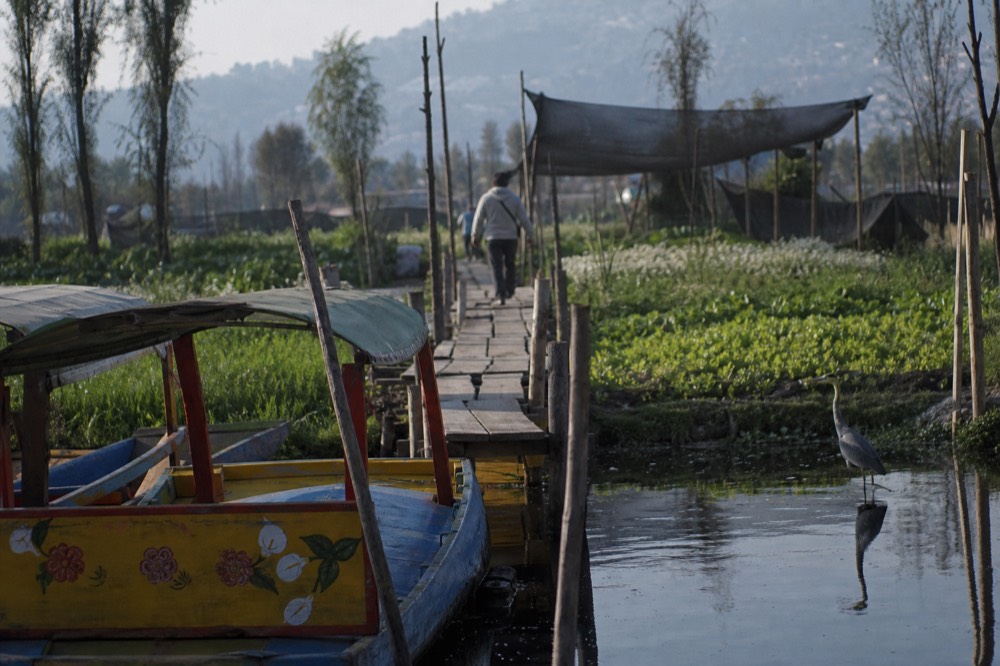
Doing it independently is entirely legitimate and much cheaper. The tariff is 750 pesos an hour for the boat, not per person, as the published borough rate confirms, posted capacity limits run 18 to 20 people depending on the dock, and service runs 8:00 to 18:00. Four hours of boat into the farm zone and back is 3,000 pesos split across your group, and if there are ten of you that is very good value for a morning. Which dock you choose changes the route badly or well, and the dock-by-dock rundown explains why Cuemanco beats Nativitas for this particular mission. The full arithmetic, including what the vendor boats charge, sits in how the canal prices add up.
Which trips land on a working farm, and what do they include?
The pre-Hispanic chinampa trip is the one built around it: 5 to 6 hours, a chinampa lunch and an axolotl sanctuary stop, rated 5.0 from 46 reviews, from $216. The sunrise trip runs 5 hours with breakfast and transport at 5.0 from 123 reviews, from $174. A private trajinera at 4.9 from 25 reviews, from $108, gets you the route without the farm relationship.
| Trip | Duration | Rating | Reviews | Free cancellation | From |
|---|---|---|---|---|---|
| Pre-Hispanic Xochimilco: Chinampa Lunch and Axolotl Sanctuary | 5 to 6 hours | 5.0 | 46 | Yes, 24 hours | $216 |
| Xochimilco at Sunrise with Breakfast and Transport | 5 hours | 5.0 | 123 | Yes, 24 hours | $174 |
| Private Trajinera Through the Canals, Transport Included | 4 to 5 hours | 4.9 | 25 | Yes, 24 hours | $108 |
| Boat Tour with Live Guide, Food and Drinks | 2.5 hours | 4.9 | 184 | Yes, 24 hours | $54 |
Those are from-prices, and the live listing is the authority on any given date. The top line is not cheap, and I would rather say why than dress it up: five to six hours, hotel transport, a guide, a cooked meal on a farm and a sanctuary stop is a different product from a two-hour circuit with drinks. If you compare it against the party boats on price alone it looks absurd. Compare it against a day trip out of the city and it stops looking absurd very quickly.
The shorter guided option at the bottom of that table is included because it is honest about what it is: a 2.5 hour circuit with a live guide who will explain the chinampas as you pass them, capped at sixteen people. You see the landscape and you learn what you are looking at. You do not land on a farm. For a lot of visitors, especially anyone fitting the canals around Coyoacán in the same day, that is the right trade, and you can see the times it runs before deciding. Read the inclusions across the private and small-group trips, or check which dates still have space on the chinampa lunch trip, which runs small and fills early.
What is a chinampa day actually like?
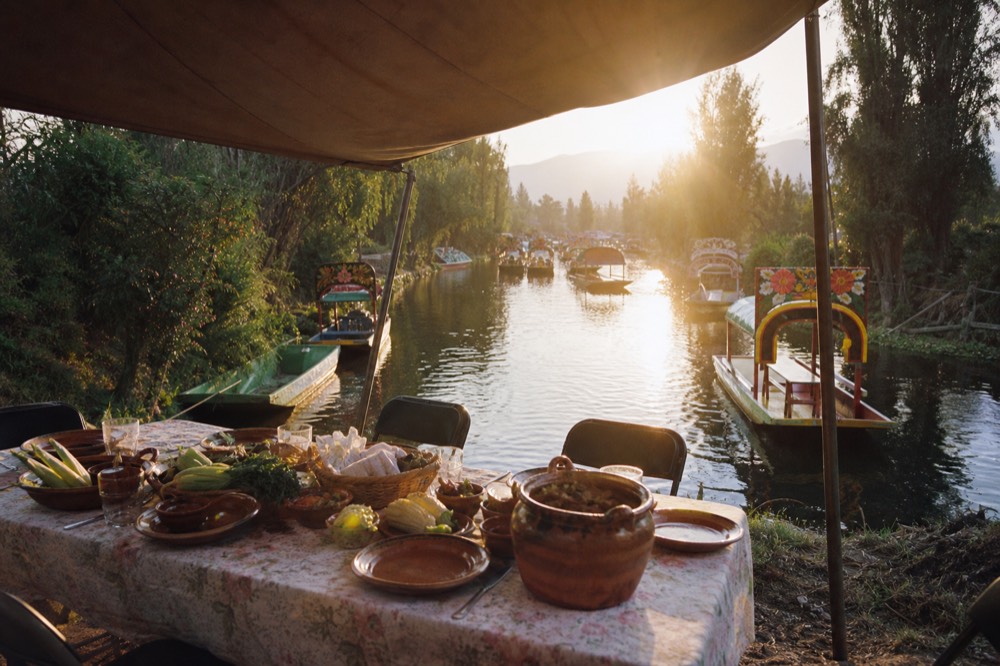
Long and unhurried. Pickup or dock meeting early, an hour or more of canal to get past the tourist stretch, a landing on the farm, a walk through the beds, a meal cooked from what grows there, usually a sanctuary or greenhouse stop, then the ride back. Reckon on five to six hours door to door.
| Roughly when | What is happening |
|---|---|
| Early morning | Hotel pickup or dock meeting; the canals are quiet and cool |
| First hour on the water | Out through the tourist canals and into the farm zone; birds, cargo boats, greenhouses |
| Mid-morning | Landing on the chinampa; a walk through the beds with whoever farms them |
| Late morning | Sanctuary or ajolotario stop on trips that include one |
| Midday | Lunch on the farm, cooked from the plot |
| Early afternoon | Return leg; the tourist canals are loud by now, which makes the contrast obvious |
Two practical notes from years of doing this. First, the sun on the water is much stronger than it feels, because the canal reflects and the boat shade is partial. Hat, long sleeves, real sunscreen. Second, toilets are a genuine constraint: there is one at the dock, maybe one on the farm, and nothing in between, which is a five-hour consideration rather than a two-hour one.
Food is the other thing people ask about, and chinampa cooking is not restaurant food. It is what grows fifty metres away, cooked simply, usually more vegetables than a visitor expects from Mexico. If canal eating in general interests you, what the vendor boats and farms actually serve covers both ends of it.
What should you know before you go?
Cash, sun cover, closed shoes and low expectations about toilets. Book the farm trips ahead because they run small. Weekday mornings are the good version of Xochimilco; Saturday afternoon in the tourist canals is a party, and a party is not what a chinampa visit is for.
| Bring or know | Why |
|---|---|
| Cash in small notes | Docks, vendor canoes and musicians are cash; card readers are rare on the water |
| Sun protection | Reflected glare off the canal, partial shade under the boat canopy |
| A layer for the shade | Under the willows and on early starts it is genuinely cool |
| Closed shoes | Chinampa beds are wet soil; a landing plank is not a jetty |
| Weekday or early morning | Quiet water, working farms, no music boats |
| The 8:00 to 18:00 dock window | Nothing leaves late; night rides are by prior arrangement only |
| Book longer trips ahead | Small groups, early departures, limited dates |
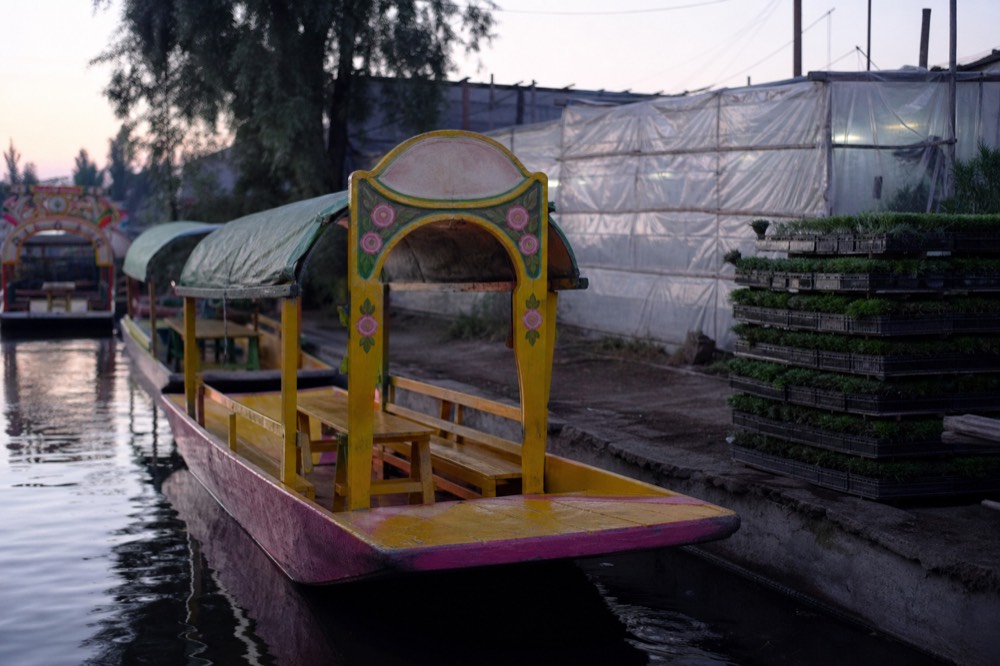
One last thing about etiquette, because chinampas are workplaces. Ask before photographing anyone working, do not walk on the beds themselves, and if somebody offers you something out of the ground, take it and eat it. That is the whole point of being there. For choosing which day of the week and which season suits you, what to pack and which day to pick is the detail version, and if you want the full spread of formats side by side, the whole canal tour lineup sets them out. The far end of these same canals is where the original doll island sits, which tells you something about how big the network really is.
Do the floating gardens of Xochimilco actually float?
No. Chinampas are built up from the lake bed with layers of dredged mud and aquatic vegetation inside a staked frame, then anchored by willow roots that grow down into the lake floor. They are firmly grounded. The name comes from early European descriptions of how the plots looked sitting in shallow water.
How much does it cost to visit the floating gardens?
Hiring a boat yourself costs 750 MXN per hour for the whole boat under the official borough tariff, so a four-hour run into the farm canals is around 3,000 MXN split across your group. Booked trips that land on a working chinampa start higher because they add a guide, transport and a meal. The full breakdown is in the canal price guide.
Can you walk on a chinampa?
Only where you are invited. Chinampas are private, working farms and most have no public access. Trips that include a farm landing have an arrangement with the family or cooperative that works the plot. A self-hired boat can take you along the farm canals to see them from the water, but not put you ashore.
What is grown on the chinampas today?
Flowers, leafy vegetables, culinary herbs and nursery stock, increasingly under organic methods. Recent reporting describes a revival driven by city restaurants buying direct, with some operations moving around 2.5 tonnes a month. Flowers are the oldest commercial crop here, which is where the name Xochimilco, "flower field", comes from.
How old are the chinampas of Xochimilco?
The technique dates to around 1100 CE, with the earliest securely dated plots in the Middle Postclassic period, roughly 1150 to 1350. Nahua communities in the shallow southern lakes developed it, and the Aztecs expanded the system enormously to supply Tenochtitlan. Many plots have been farmed continuously ever since.
Are the chinampas worth seeing if I only have a couple of hours?
You will see them from any canal trip, because the tourist canals run between chinampas the whole way. What a short circuit will not give you is a landing on a working farm or a meal grown on one, which takes five hours or more. A guided 2.5 hour boat with someone explaining what you are passing is a reasonable middle ground.