Planning a Xochimilco Visit in 2026: Best Day, Best Hour, What to Bring
Tuesday and Sunday are two different places with the same name. Choose the wrong one for what you came for and the day still works, just not the way you pictured it.
Short answer
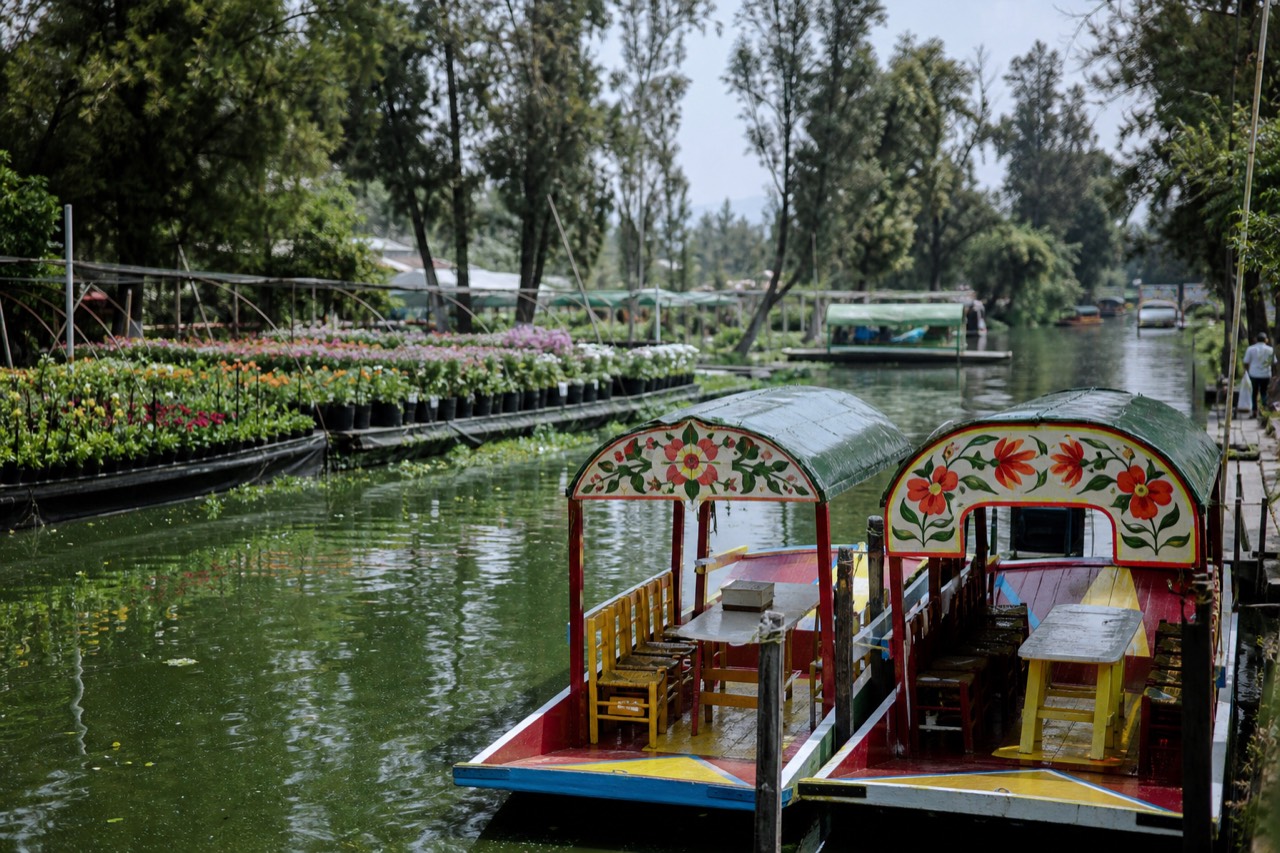
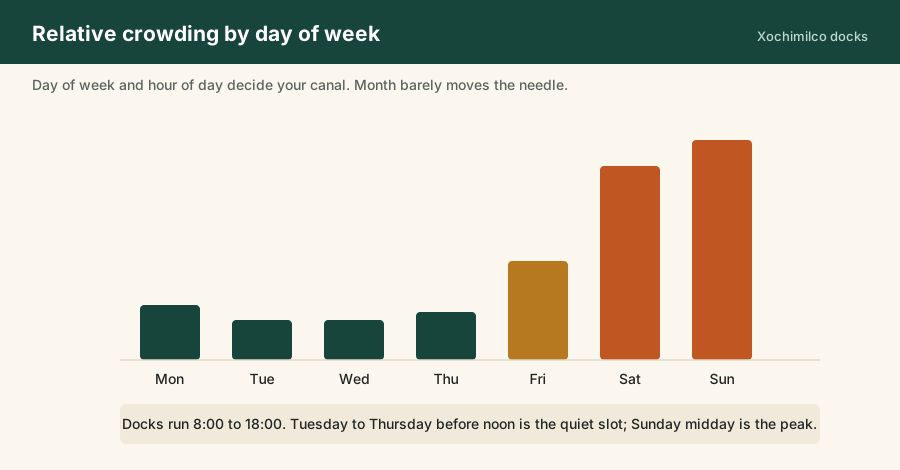
Sunday is the biggest party and the worst crowds. Tuesday to Thursday mornings are the quietest, with easy rentals and open water. Dock service runs 8:00 to 18:00. Budget two to three hours on the water for a standard trip, four to five for a private one, and dress for hard sun and a cold breeze in the same afternoon.
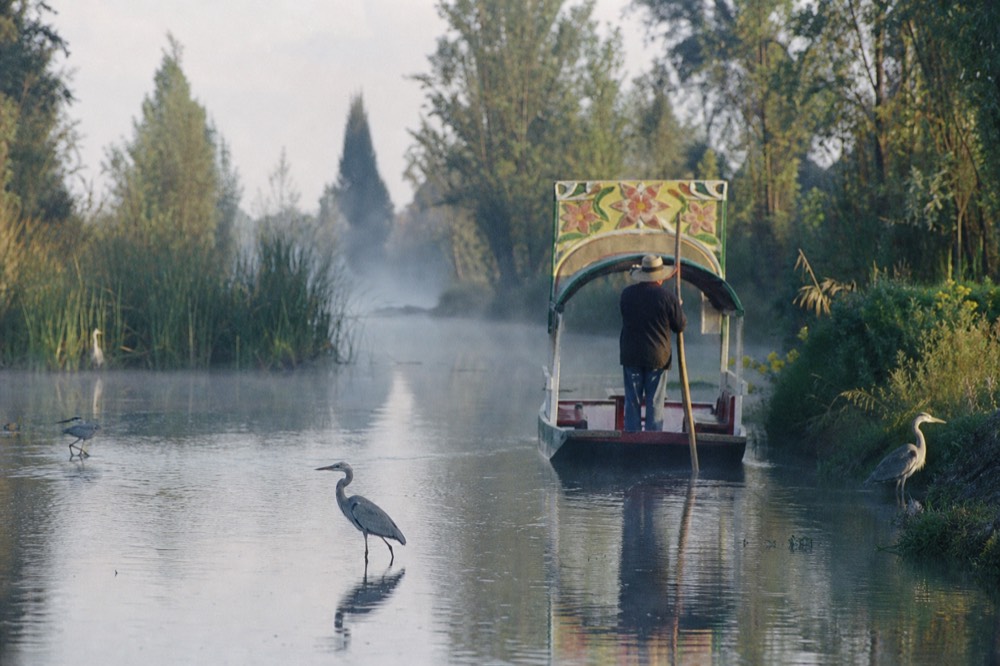
The first thing I tell anyone visiting is that they have to choose which Xochimilco they want, because there are two and they do not overlap much. There is the Sunday one, where a hundred boats knot together and a trumpet plays four metres from your ear and somebody's aunt is dancing on the table. And there is the Wednesday one, where a farmer poles past with a load of lettuces, a heron stands in the reeds, and the loudest sound for ten minutes is your own boat. Same canals. Same price. Entirely different day out.
What day is best to visit Xochimilco?
Tuesday to Thursday for calm water, easy rentals and photographs. Saturday and Sunday for the full festival, with Sunday the loudest and most crowded of the week. Weekends fill the docks noticeably, while midweek mornings are close to empty, which is why every local recommendation splits along exactly this line.
Neither answer is wrong, and that is what makes the question hard. People arrive expecting the postcard version and the party version at once, and the canals do not supply both on the same afternoon. Decide what you actually came for before you pick a date, because the date is the decision.
| Day | Crowd | Getting a boat | Best for |
|---|---|---|---|
| Monday | Very quiet | Immediate | Peace, though a Frida Kahlo pairing is out since the museum closes Mondays |
| Tuesday to Thursday | Quietest of the week, especially mornings | No wait | Photography, birds, chinampa farming, families with small children |
| Friday | Building through the afternoon | Easy in the morning | A compromise day, quiet early and lively later |
| Saturday | Busy and festive | Some waiting at peak | Groups who want atmosphere without Sunday's crush |
| Sunday | Heaviest of the week | Queues at the popular landings | The full carnival: mariachi, families, food, noise |
| Public holidays | Sunday, amplified | Expect to wait | Only if the crowd is the point |
If you are travelling with a group and the party is the plan, lean into the weekend and book ahead rather than turning up. If you are here for the wetland, the farming and the birds, midweek is not a small improvement, it is a different experience. The contrast is drawn out further in the party side of the canals.
What time should you get on the water?
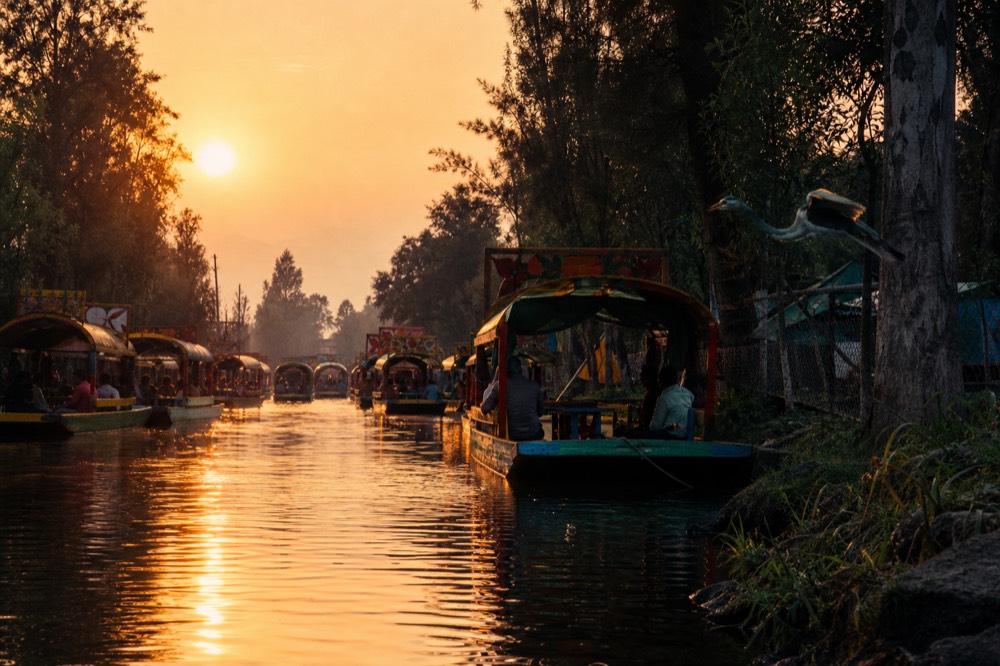
Docks open at 8:00 and close at 18:00. The quiet window is before roughly 9:00 to 11:00, when the water is still and the vendors have not come out. From late morning it fills, peaking through the middle of a weekend afternoon, then thins again around 16:00 with the best light of the day.
Early is the recommendation you will hear from every local and ignore anyway, because holidays and 7am alarms are natural enemies. I will make the case once: at 8:30 the canals are glassy, the boatmen are unhurried, and you can hear birds. By 13:00 on a Saturday you are in a traffic jam that happens to float.
| Hour | What the canals are like |
|---|---|
| 08:00 | Service opens. Cold, still, almost nobody out. Few vendor canoes yet |
| 09:00 to 11:00 | The quiet window. Water calm, boats plentiful, birds visible |
| 11:00 to 13:00 | Filling. Vendors appear, music starts, groups arrive |
| 13:00 to 16:00 | Peak on weekends. Boats bunched, mariachi moving deck to deck, full noise |
| 16:00 to 17:00 | Thinning out, and the best light of the day for photographs |
| 18:00 | Service ends. Night rides only by prior arrangement |
The hard stop at 18:00 is the number that ruins itineraries. People plan an afternoon of something else and treat the canals as an evening activity, which does not exist as a walk-up option. Evening on the water means an arranged lunada or a ticketed show, not a spontaneous boat. If you are weighing the two ends of the day against each other, morning against afternoon breaks it down hour by hour.
How long should I spend in Xochimilco?
Two hours on the water is the sensible minimum and covers most shared cruises. Three hours suits a group that brought food. Four to five hours is the private and eco territory, and the full-day Coyoacán combos run six to nine. Add one to three hours of travel on top, depending on how you get there.
The most common planning error is treating the boat time as the whole commitment. A 2.5-hour cruise from the centro is realistically a six-hour block of your day once you count both transfers and the standing about at the dock. That is fine, as long as you knew it before you booked something else for lunch.
| Trip type | On the water | Realistic block of your day |
|---|---|---|
| Self-rented trajinera, two hours | 2 h at 750 MXN per hour for the boat | Most of a morning |
| Traditional boat, culture and fun, from $42 | ~2 h | Half a day with transfers |
| Party cruise, from $49 to $65 | 2 to 2.5 h | Half a day |
| Small-group boat with live guide, from $54 | 2.5 h, capped at 16 | Half a day |
| Island of the dolls trips, from $65 to $113 | 2 to 3 h | Half a day, longer from Cuemanco |
| Private trajinera with transport, from $108 | 4 to 5 h | Pickup to drop-off, most of a day-part |
| Sunrise with breakfast and transport, from $174 | 5 h | The whole morning, afternoon free |
| Chinampa lunch and axolotl sanctuary, from $216 | 5 to 6 h | A full outing |
| Coyoacán and Frida Kahlo combos, from $42 to $52 | 6 to 9 h | The entire day |
Two hours is genuinely enough to understand the place if you are on a guided boat that explains what you are looking at. It is not enough if you want to reach anything distant, which is the honest constraint behind the dolls-island trips and the reason the longer runs cost more. If you are budgeting whole days rather than hours, the classic pairing is the canals one day and the Teotihuacan pyramids the next, on opposite sides of the city; the most-reviewed pyramid day trip runs mornings and afternoons, and you can check its dates here. It is a separate booking from everything on this page. For a look at every duration side by side, the shared cruises compared lays them out, and you can check live availability on the traditional boat if two hours is your shape of afternoon.
What should I wear to Xochimilco?
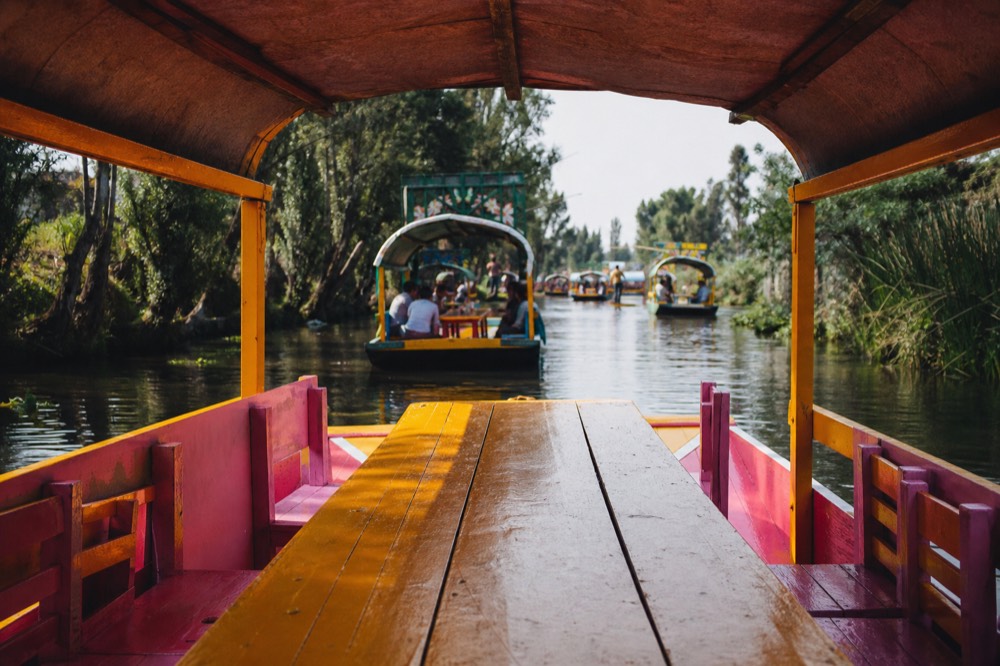
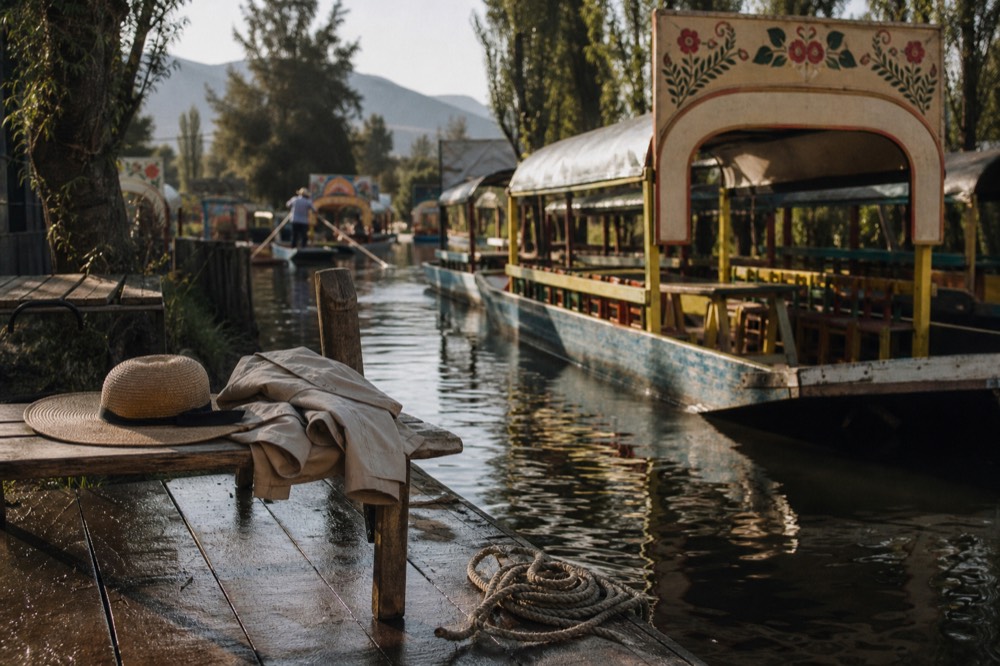
Sun protection first: a hat, sunglasses and sunscreen, because the sun at this altitude is fierce and many boats have no shade over the table at midday. Then a layer, since the breeze off the water is cold and late afternoons turn quickly. Closed, comfortable shoes for wet dock boards.
The mistake I see most is dressing for a boat and forgetting you are also spending an hour on a busy dock, stepping between moving vessels, and walking through a market. Flip-flops on wet planks are a bad idea and heels are worse. Whatever you wear should tolerate a splash, a spilled drink and somebody's guacamole.
| Wear | Why |
|---|---|
| Hat and sunglasses | Open water, high sun, and many boats have no cover over the seating at midday |
| Sunscreen, applied before you board | Reapplying on a moving boat with a drink in hand rarely happens |
| A light jacket or layer | The breeze off the canal is cold, and late afternoon shifts fast |
| Closed, comfortable shoes | Wet dock boards, uneven planks, stepping between boats |
| Clothes you do not mind splashing | Water, drinks, food shared down a long communal table |
| A packable rain layer, in the wet months | Afternoon storms are normal from roughly May through October |
| Not: heels, long trailing hems, anything precious | The dock and the boat are both unforgiving of them |
Modesty and dress codes are not a factor here, so wear what you like. The only genuine constraints are sun, wind and wet wood. Get those three right and you will be comfortable for six hours, which is the point.
What should you bring on the boat?
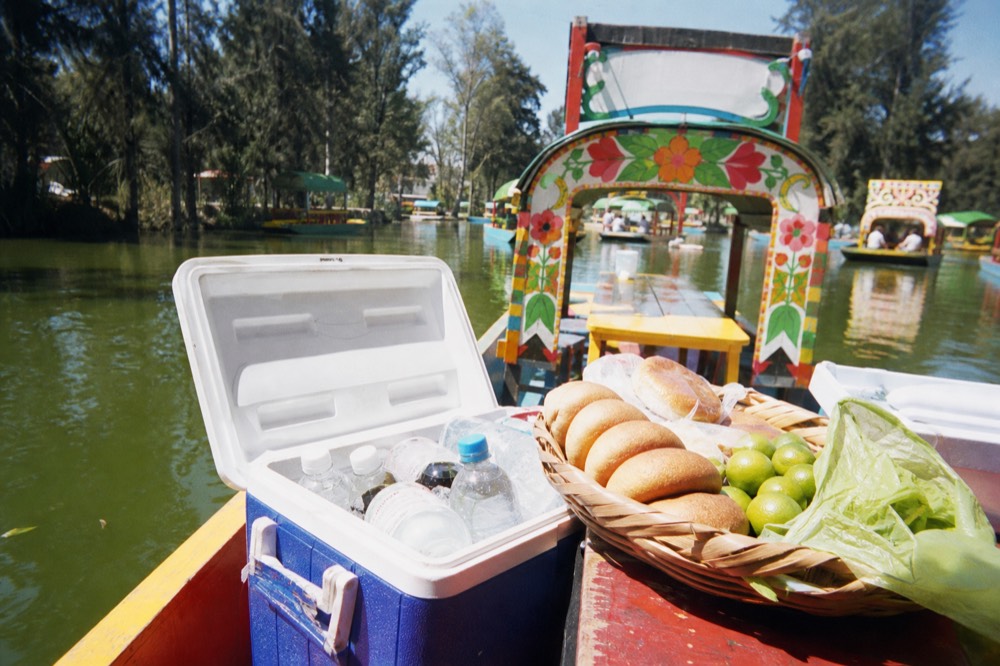
Cash in small notes, water, sun protection, and food if you are renting rather than booking. Bringing your own food and drink is allowed on standard daytime rentals at no extra charge. There are no bathrooms on a trajinera, so use the facilities at the dock before you push off.
The bring-your-own tradition is real and it is one of the best things about the place. Families here arrive with coolers, cake, foil trays and a speaker, and the boatman helps carry it aboard. Just know the posted limits: one bottle of liquor per boat or three beers per adult, with 2026 updates pushing toward roughly two drinks per person at some landings.
| Bring | Why it matters |
|---|---|
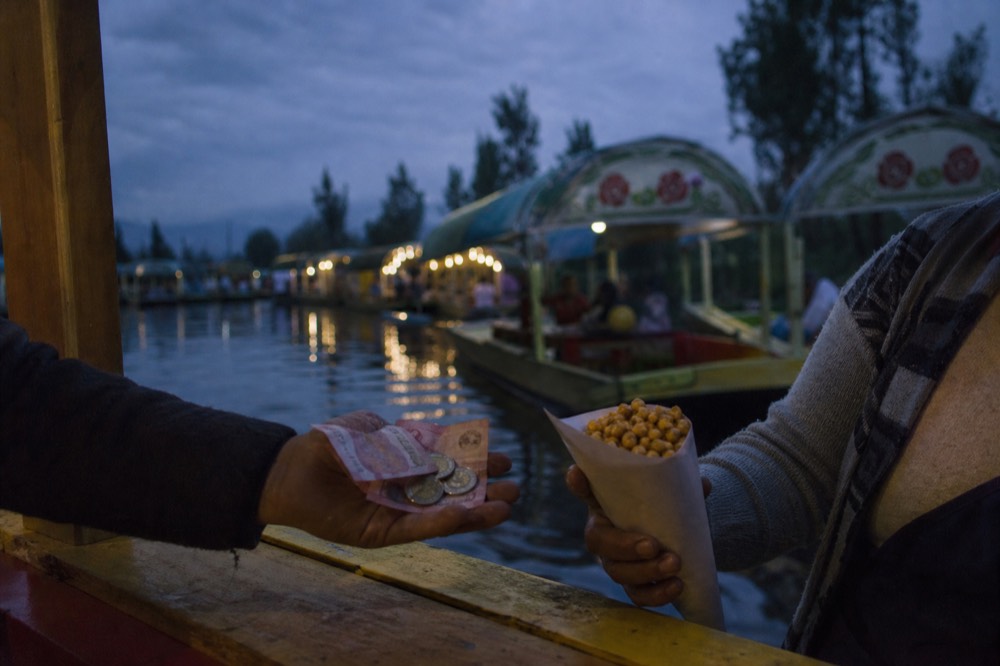
| Cash in small notes | Vendor canoes, the boatman, mariachi and tips all run on cash, and nobody has change for a 500 |
| Water, more than you think | Sun, altitude and a long time in the open |
| Your own food and drink, if self-renting | Permitted at no extra fee on daytime rentals, within the posted alcohol limits |
| A bag for your rubbish | This is a protected wetland; take it out with you |
| Power bank | Four hours of photographs will finish a phone |
| Bathroom stop before boarding | Trajineras have no facilities; the docks do |
| Modest sound, if any | High-volume external speakers are restricted, and operator-provided sound is the permitted version |
Booked cruises change this list entirely. If your boat includes an open bar and tacos, you carry nothing but cash for tips and sunscreen. That difference is one of the quieter arguments for booking rather than renting when your group is small, alongside the arithmetic in the price breakdown.
What is the best month or season to go?
Any month works, because the canals do not close and the boats run year round. The real variable is rain: from roughly May through October the storms arrive in the afternoon, which makes mornings the safer booking. The La Llorona season at Cuemanco is on now and runs to 22 November.
Mexico City's weather is not a reason to move a trip, but it is a reason to move an hour. In the wet months the sky is usually clear until early afternoon and then it is not, and a boat with no side walls is an honest place to be caught by that. Everyone who lives here plans around it without thinking about it.
| Period | What is on | Crowds | Planning note |
|---|---|---|---|
| Now through 22 November | La Llorona season at Cuemanco, weekend evenings, 750 MXN tickets | Weekend evenings busy at that dock | Book the show and the ride home together |
| Roughly May to October | The wet months | Unchanged by rain, but afternoons empty out when it breaks | Take a morning slot and carry a rain layer |
| Roughly November to April | The dry stretch | Weekends still peak | Cool mornings, bring the extra layer |
| Any weekend, year round | The full festival version | Heaviest of any period | Book party boats ahead |
| Public holidays | Family outings at scale | Peak plus | Only if the crowd is what you want |
The 2026 season stretch is worth knowing about even if you are not going to the show. La Llorona used to be a narrow autumn window and now runs across most of the year, which changes the rhythm at Cuemanco specifically. Nativitas is unaffected. The full picture of the production is in the night show on the canals, and Milenio's season guide tracks the current dates.
What should you budget for the day?
A self-rented two-hour boat is 1,500 MXN for the vessel under the official 750-per-hour tariff, split across your group. Add 40 to 50 MXN a beer from the canoes, mariachi charged per song, and transport of either 3 MXN by light rail or 200 to 365 MXN by car each way. Booked cruises start at $42 with food and drink already inside.
The tariff is the anchor for everything else. It is 750 pesos per hour, for the whole boat, set by the alcaldía, and never per person. Infobae's explanation of the official rate is the reference to have open when someone at the gate quotes you per head, which happens often enough that you should expect it.
| Line item | Doing it yourself | On a booked cruise |
|---|---|---|
| Boat | 750 MXN per hour for the whole vessel | Included, from $42 per person |
| Two hours on the water | 1,500 MXN split across your group | Included |
| Getting there by light rail | 3 MXN each way with an MI card | Same, unless transport is included |
| Getting there by car | ~200 to 365 MXN each way from the centro, Roma or Condesa | Included on the transport-inclusive trips |
| Beer from a vendor canoe | ~40 to 50 MXN each | Open bar or unlimited drinks on the party boats |
| Food | Bring it, or buy from the canoes | Tacos or guacamole included depending on the boat |
| Music | Mariachi charged per song | Operator sound system |
| Museum, if you are combining | 320 MXN for foreign visitors at Casa Azul | Included or optional depending on the combo |
Every peso of that is cash except the tour itself. The docks, the canoes, the musicians and the street taxis all want notes, and there is no card machine floating past with the beer. Turning up with only a card is the single most avoidable mistake here, and why the docks run on cash covers where to get it before you go.
What do first-timers usually get wrong?
Four things, in order of frequency: arriving in the afternoon on a Sunday, bringing no cash, expecting to see a wild axolotl from the boat, and assuming the short tours reach the original Island of the Dolls. All four are fixable at the planning stage and none of them at the dock.
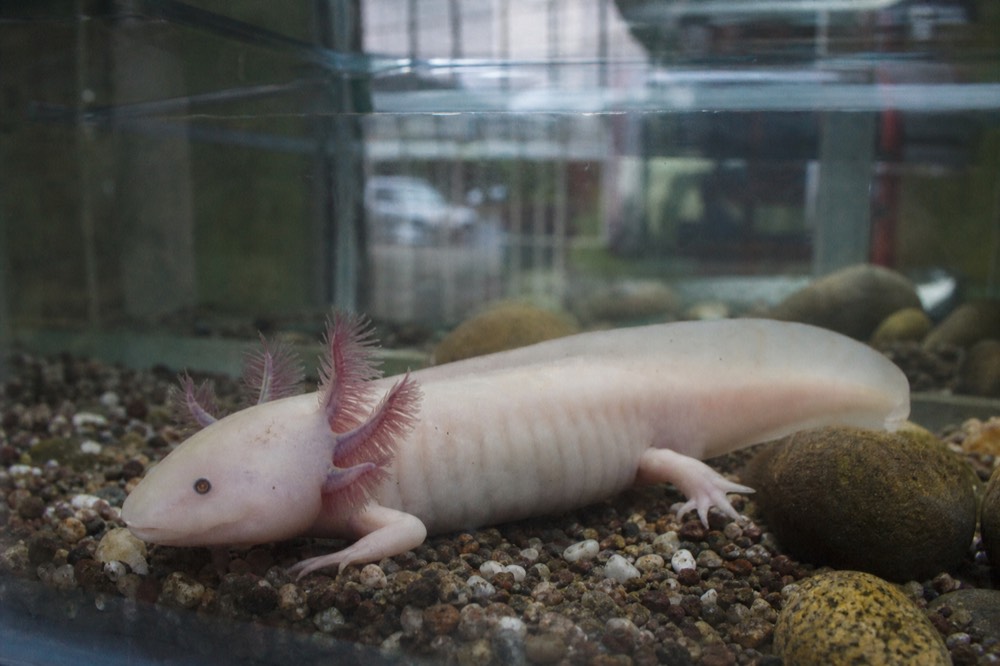
The axolotl one deserves particular care because the disappointment is real. Wild density in these canals fell from around 6,000 per square kilometre in 1998 to 36 by 2014, the most recent published survey, and you will not spot one over the rail of a moving boat. Sanctuary and ajolotario stops are how tours show them, honestly and in a tank. The full story sits in where the axolotls actually are.
The dolls point is the same kind of honesty problem. Julián Santana's original island, where he hung dolls until his death in 2001, sits hours deep in the canal network, and reaching it means a charter of roughly 3,000 pesos for the boat plus an entry fee, with a long ride each way. The two to three hour trips leaving from Cuemanco visit a nearer doll island in the same tradition, which is a good visit and not the same place. Anyone selling you the original in ninety minutes is selling you something else.
The other two fix themselves once you have read this far. Come midweek or come early, carry cash in small notes, and the day gets much easier. If you would rather have someone else handle all of it, the private and eco trips remove most of the decisions, and the small-group boat with a live guide at $54 for 2.5 hours is the middle path: you can see the current dates for it and compare against the rest.
Weekend party boats are the one category that genuinely sells out, which is the whole argument in booking ahead versus walking up, and how you travel decides your start time, covered in getting out to the docks. The reason all these rules exist at all, incidentally, is that the canals and the historic centre were inscribed together by UNESCO in 1987, which is why a wetland in a city of this size still has farmers working it. Everything currently bookable sits together on all fourteen bookable trips.
Questions people ask while planning
What day is best to visit Xochimilco?
Tuesday to Thursday if you want calm water, immediate rentals and photographs, since weekdays are noticeably quieter at the docks. Saturday or Sunday if you want the full party, with Sunday the busiest of the week. Monday is quiet but rules out a Frida Kahlo pairing, because Casa Azul closes on Mondays.
How long should I spend in Xochimilco?
Two hours on the water is the working minimum and matches most shared cruises. Three suits a group with food. Private and eco trips run four to five hours, the chinampa and axolotl trip five to six, and the Coyoacán combos six to nine. Add one to three hours of travel each way depending on how you get there.
What should I wear to Xochimilco?
A hat, sunglasses and sunscreen for the open sun, a light layer for the cold breeze off the water, and closed comfortable shoes for wet dock boards. Skip heels and long hems. In the wet months, roughly May through October, carry a packable rain layer, since storms usually arrive in the afternoon.
What time do the Xochimilco boats stop running?
Embarcadero service runs 8:00 to 18:00. There is no walk-up evening boat. Night rides, known as lunadas, are arranged in advance at the same 750 MXN hourly rate, and the ticketed La Llorona show at Cuemanco is the other legitimate way to be on the water after dark, running weekend evenings through 22 November.
How much cash should I bring to Xochimilco?
Enough for the boat if you are renting, at 750 MXN per hour for the whole vessel, plus food and drinks from the vendor canoes at around 40 to 50 MXN a beer, plus mariachi if you want it, charged per song. Bring small notes. The docks, the canoes and the musicians are all cash, and change for large notes is scarce.
Can you visit Xochimilco in the rain?
Yes, and the boats run, but a trajinera has a roof and open sides, so a heavy afternoon storm in the wet months is a damp experience. Booking a morning slot from roughly May through October is the standard local workaround, since the sky usually holds until early afternoon. Carry a light rain layer either way.