Axolotls in Xochimilco: Where You Can See One, and Where You Won't
Every boatman gets asked. The honest answer is that the animal on the postcards has almost vanished from the water outside, and the place to meet one is a tank, not a canal.
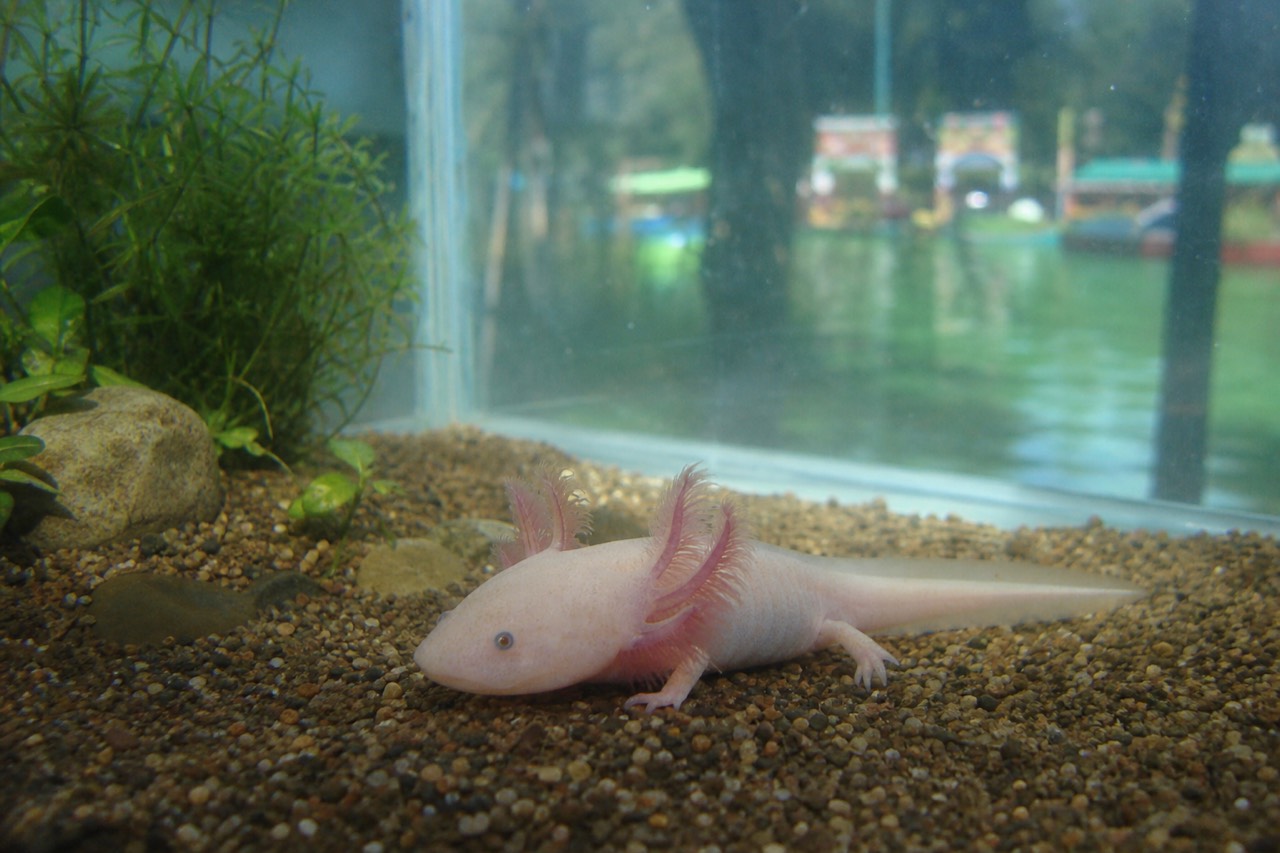
Short answer
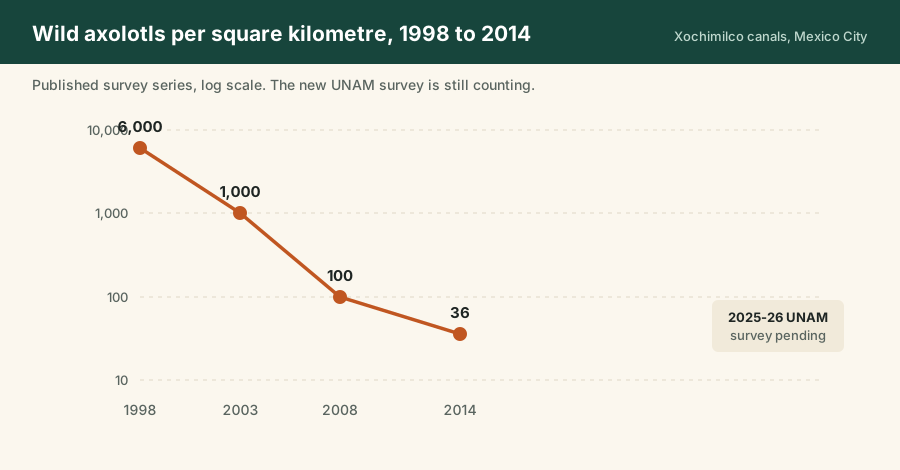
Not from the boat. Wild axolotl density in the Xochimilco canals fell from 6,000 per square kilometre in 1998 to 36 in the 2014 survey, the most recent published count. Sightings from a trajinera are effectively zero. Sanctuary and ajolotario stops, where captive-bred animals are kept for research and education, are how tours show them.
Ask a boatman about ajolotes and watch his face. Some of them shrug, some laugh, and the older ones tell you they used to catch them as kids, hands in the mud at the canal edge, and that they have not seen one in the water in twenty years. That is not a tourism-industry line. It matches the surveys exactly, and it is the single most important thing to understand before you go looking: the axolotl is Xochimilco's emblem, it is on the murals and the souvenir stalls and the fifty-peso note, and it has nearly disappeared from the canals it is named after.
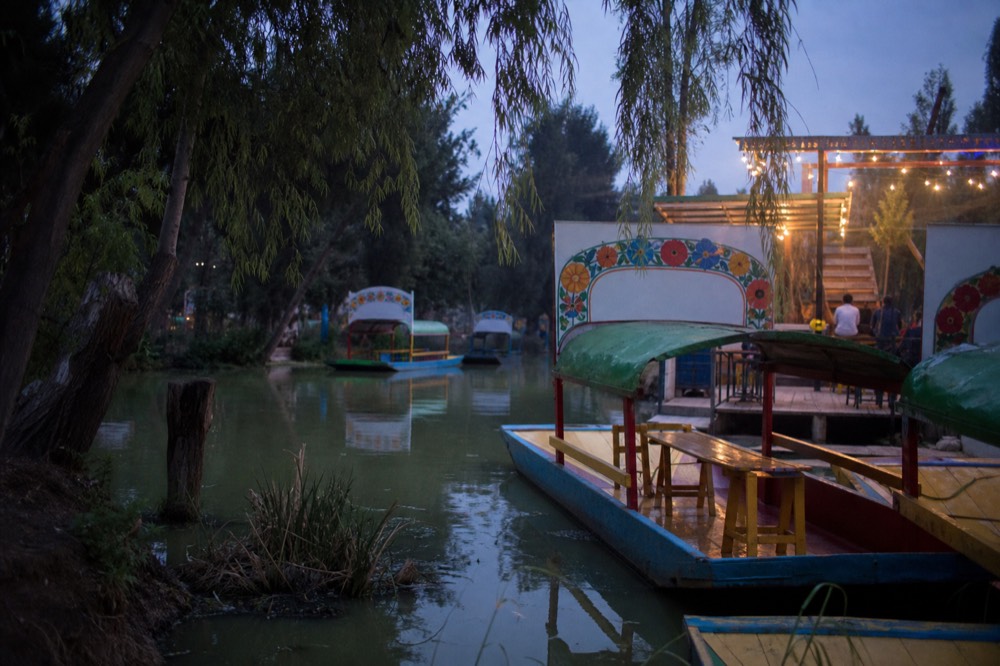
Can you see axolotls in Xochimilco?
Not in the wild, realistically. The last published survey, in 2014, found 36 individuals per square kilometre across the canal system, down from 6,000 in 1998. They are bottom-dwelling, nocturnal by habit and living in opaque water. Sanctuary and ajolotario stops, with captive-bred animals in tanks, are the only reliable way to see one.
I know that is a deflating opening. It is better than the alternative, which is booking a boat because a listing photo implied you would spot one drifting past the hull. Even at healthy population levels you would have struggled: axolotls sit on the bottom, they are camouflaged against mud, and the water in most of the network has visibility measured in centimetres. Now add a density of 36 per square kilometre and the arithmetic is finished.
What you can do, and what a lot of visitors find more affecting than they expected, is see them properly. In a tank, at eye level, with somebody explaining what happened. They are strange animals up close: external gills like feathered antlers, a permanent accidental smile, limbs that regrow if they lose them. Children lose their minds over them.
So the question is not really whether you can see an axolotl in Xochimilco. It is which trips actually stop somewhere that has them, and which just say the word in the listing text. That difference is what the rest of this page is about.
How many axolotls are left in the wild?
The published series is stark: 6,000 per square kilometre in 1998, around 1,000 by 2003 to 2004, 100 by 2008, and 36 in the 2014 census, which remains the most recent full published figure. A UNAM-led survey launched around 2025 and its results were still pending as of this summer.
| Survey year | Wild density, individuals per km² | Change since previous |
|---|---|---|
| 1998 | 6,000 | Baseline |
| 2003 to 2004 | About 1,000 | Down roughly 83% |
| 2008 | 100 | Down roughly 90% |
| 2014 | 36 | Down roughly 64% |
| 2025 to 2026 | Survey under way, results pending | Not yet published |
Sixteen years, from six thousand to thirty-six. That is not a decline, it is a collapse, and the shape of it matters: the steepest drop came early, between the late 1990s and the mid 2000s, which lines up with the period when introduced fish established themselves across the network.
The pending survey is genuinely interesting and I would not pre-judge it. Restoration work has been going for over a decade now, refuge canals exist that did not exist in 2014, and researchers have been putting captive-bred animals back into protected pockets. Whether that shows up as a system-wide number is a different question from whether it works in a given canal.
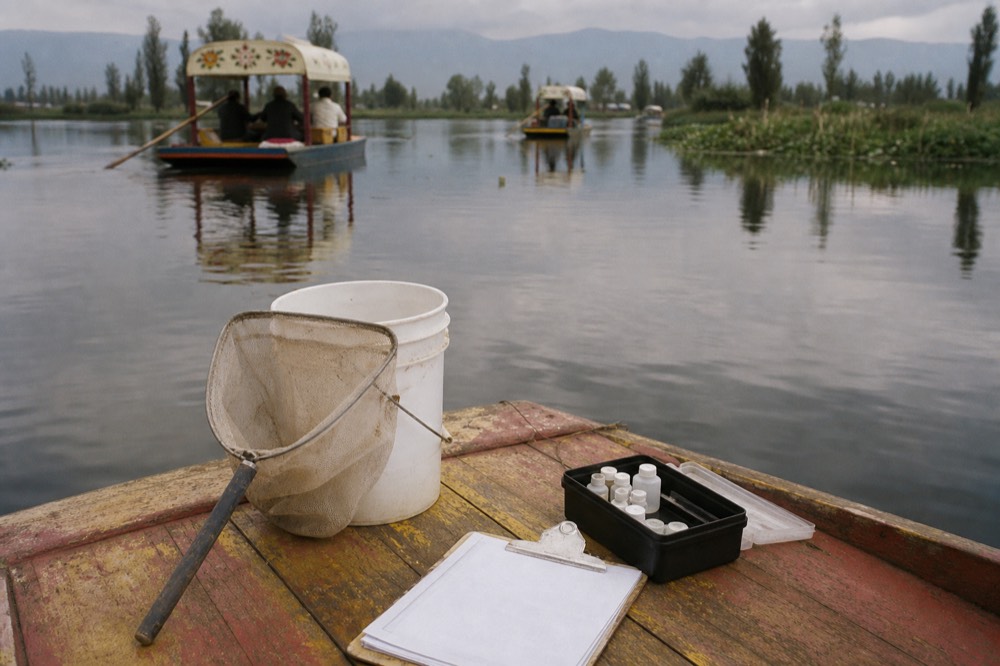
One more piece of context, because it confuses people constantly. Axolotls are not rare as animals. There are tens of thousands in laboratories and aquariums worldwide, bred for research because of their regenerative abilities, plus a large pet trade. The species is not short of individuals. It is short of habitat. Every axolotl on earth traces back to this one lake system, and this one lake system is about 170 kilometres of canals with serious water problems, a landscape inscribed by UNESCO in 1987 precisely because it is a living tradition at risk.
Why did the axolotl population collapse?
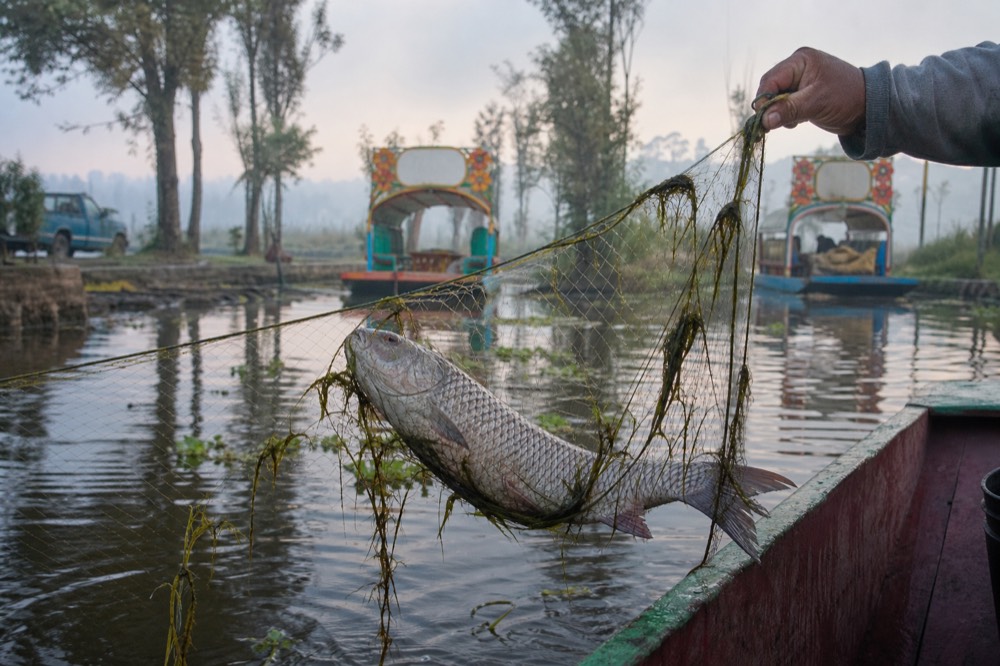
Four pressures acting together: introduced tilapia and carp eating eggs and larvae, poor water quality from treated and untreated wastewater, urban pressure at the edges of the protected zone, and the loss of the spring-fed inflow that once kept the canals fresh. No single one of them explains the curve; together they do.
| Pressure | What it does |
|---|---|
| Introduced tilapia and carp | Eat axolotl eggs and larvae, and compete for the same food; the biggest single driver |
| Poor water quality | Nutrient loading and low oxygen from treated and partly treated wastewater |
| Loss of spring inflow | Springs tapped for city supply; the system now depends on treated water |
| Urban pressure | Encroachment, waste and altered drainage at the zone boundary |
| Abandoned chinampas | Banks slump, canals silt up, flow stops, habitat structure is lost |
| Collecting and trade | Historic pressure from harvesting; minor now compared with habitat loss |
The fish story is the one to remember, because it is the most fixable. Tilapia and carp were introduced into the system as a food source, which was not an unreasonable idea at the time and turned out to be a catastrophe for a slow-moving amphibian that lays eggs on submerged vegetation. Conservation coverage is direct about this, and the conservation reporting on the species sets out why removing introduced fish from an entire 170 kilometre network is not a realistic project, while removing them from one separated canal is.
There is also a slower structural problem underneath all of it. When farmers leave the chinampas, the canals beside them stop being maintained, and habitat degrades whether or not anybody pollutes it. The health of the amphibian and the health of the farm plots that hold the canals together are the same subject.
Where can you actually see an axolotl in Xochimilco?
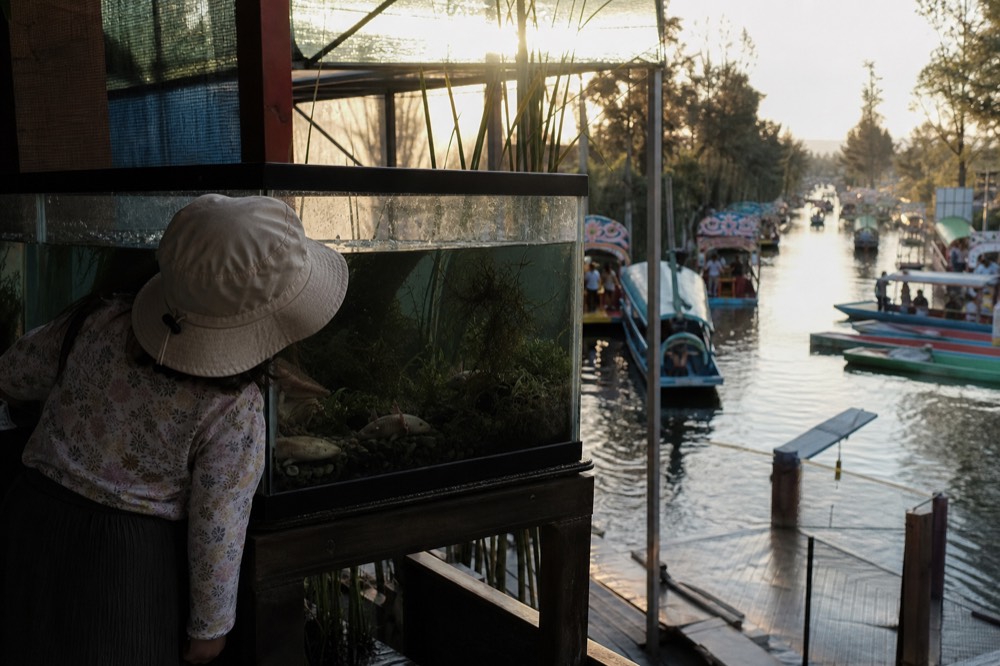
At an ajolotario, which is what a sanctuary or breeding facility is called here. These keep captive-bred animals in tanks for research, breeding and education, usually attached to a research centre or a chinampa farm. The best known is CIBAC, the biological research centre at Cuemanco. Access is generally through an organised visit rather than a walk-up.
| Venue type | What it is | How you reach it |
|---|---|---|
| Research-centre ajolotario | Breeding and research tanks attached to an institution, with an education function | Organised visits and trips that include the stop |
| Chinampa farm ajolotario | Tanks or protected ponds on a working farm, often alongside the refuge canal project | Included on longer chinampa trips |
| Refuge chinampa canal | A plot whose surrounding canal is biofilter-separated and cleared of introduced fish | Seen from the water on eco trips; the animals are not on display |
| City aquariums and museums | Public displays outside Xochimilco entirely | Independent visits elsewhere in Mexico City |
CIBAC, the Centro de Investigaciones Biológicas y Acuícolas de Cuemanco, is the anchor institution on the canal side, and it works alongside the UNAM programmes that run the population surveys and the refuge projects. These are working scientific facilities first and visitor attractions second, which is why access is structured rather than open.
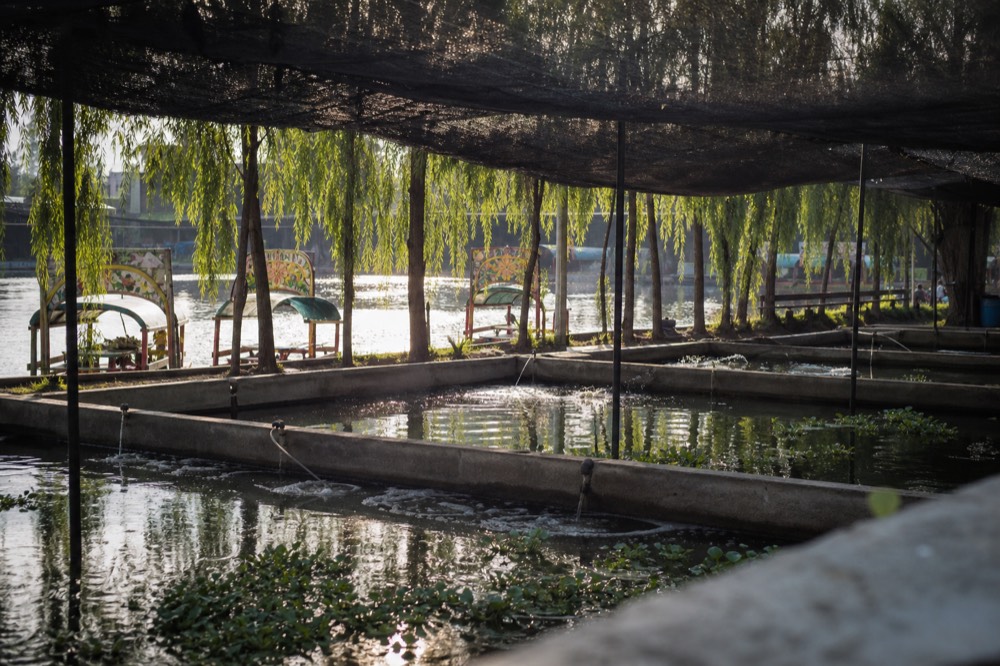
The refuge canals deserve a mention even though you cannot see anything living in them from a boat. A refuge chinampa has its surrounding water separated with biofilters, cleaned, and kept free of tilapia and carp so that native species stand a chance. From the water it looks like a slightly tidier canal with some filtration structure at the ends. What it represents is the most credible version of recovery anybody has: not a restored lake, but a growing number of clean pockets inside a dirty system.
Which tours include an axolotl stop?
One trip in the lineup names it in its own itinerary: the pre-Hispanic chinampa trip, 5 to 6 hours, with a chinampa lunch and an axolotl sanctuary stop, rated 5.0 from 46 reviews, from $216. The others do not advertise a sanctuary, and I am not going to imply that they do.
There is also one dedicated sanctuary experience on the booking platforms, a boat ride paired with an ajolotario visit run from the Cuemanco side. It is a separate booking from anything else on this site, shorter and cheaper than the chinampa day; check its dates and current price here if the axolotl is the whole reason you are coming.
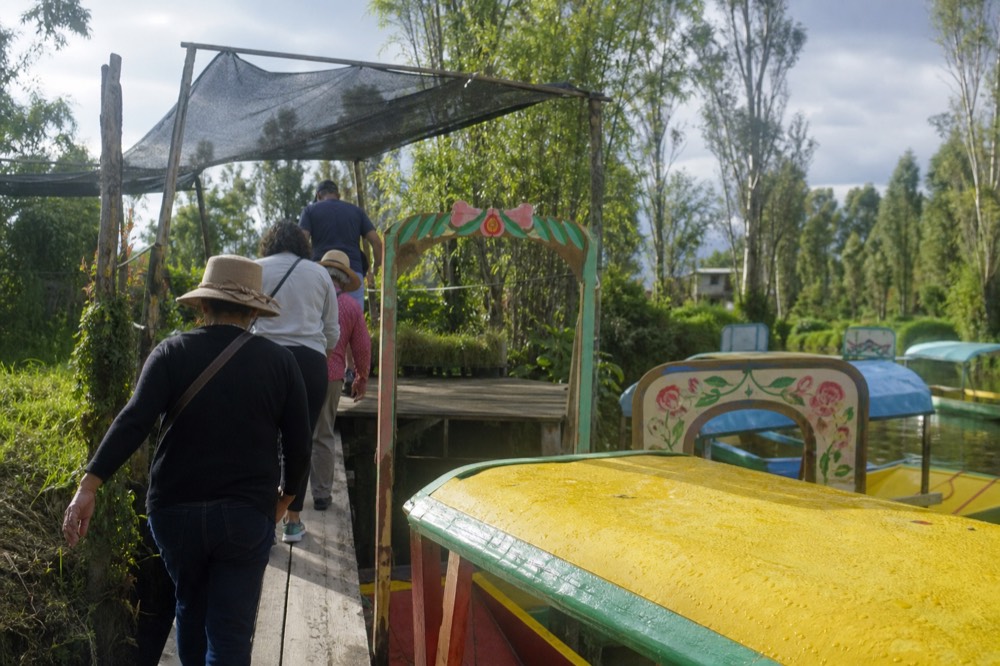
| Trip | Does the listing name an axolotl stop? | Duration | Rating and reviews | From |
|---|---|---|---|---|
| Pre-Hispanic Xochimilco: Chinampa Lunch and Axolotl Sanctuary | Yes, in the itinerary and the title | 5 to 6 hours | 5.0 from 46 | $216 |
| Xochimilco at Sunrise with Breakfast and Transport | No; sunrise canals, breakfast, transport | 5 hours | 5.0 from 123 | $174 |
| Private Trajinera Through the Canals, Transport Included | No; a private canal route | 4 to 5 hours | 4.9 from 25 | $108 |
| Boat Tour with Live Guide, Food and Drinks | No; a guided 2.5 hour circuit, maximum 16 | 2.5 hours | 4.9 from 184 | $54 |
That is the whole honest answer, and it makes booking simple. If seeing an axolotl is the reason you are going to Xochimilco, book the trip that says so on its own page. If it is a nice-to-have, any of the longer eco trips will put you in the landscape the animal belongs to, and a good guide will explain the story properly as you pass the refuge canals. All four sit alongside the rest of the private and small-group trips, and you can see which dates are open on the sanctuary trip, which runs small and books out early in the week.
Prices above are from-prices and the live listing is the authority on any date. Free cancellation up to 24 hours applies to all four, which matters more than usual here: these are early-start, weather-exposed, five-hour days.
What is being done to save them?
Captive breeding, habitat refuges and invasive-fish removal, run mainly through UNAM and the CIBAC centre at Cuemanco, with public fundraising through an adoption campaign. The strategy has shifted from breeding numbers to building water they can survive in, one canal at a time.
| Programme | What it does | Can a visitor see it |
|---|---|---|
| UNAM research and surveys | Population counts, habitat science, the rewilding programme | Indirectly, through outreach and partner sites |
| CIBAC, Cuemanco | Breeding and biological research on the canal system | On organised visits and trips including the stop |
| Refuge chinampas | Biofilter-separated canals around single plots, cleaned and kept fish-free | From the water on eco and chinampa trips |
| Adopt an Axolotl | Fundraising and education campaign run through the university foundation | Online, supporting tank and refuge work |
| Invasive species control | Netting and removal of tilapia and carp in target canals | Occasionally visible from the water |
| Chinampa recovery | Bringing abandoned plots back into cultivation so canals stay maintained | Yes, on any trip that reaches the farm zone |
The important shift in thinking, and the reason the refuge model matters, is that breeding axolotls is easy and releasing them is not. Laboratories have been producing them for a century. Put them into a canal full of carp and dirty water and you have fed the carp. Put them into a separated pocket beside a working farm and there is something to measure.
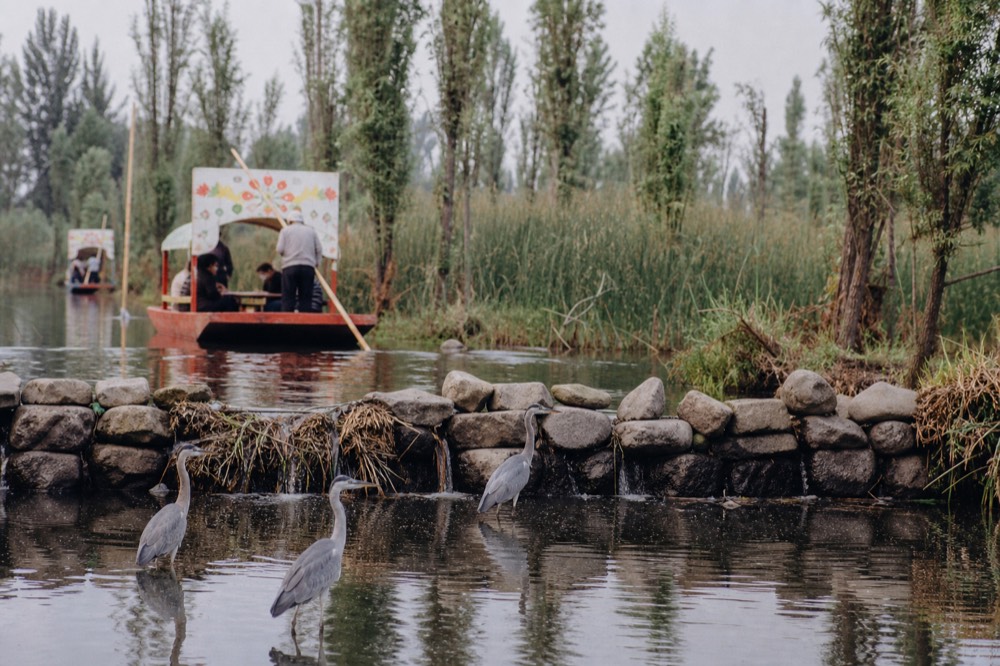
The visitor's role in this is real but modest, and I would rather be accurate than flattering about it. Money that reaches chinampa farmers and cooperatives keeps plots in production, and plots in production keep canals alive. Money spent on a party boat in the tourist canals is a legitimate day out and does approximately nothing for the amphibian. Both can be true at once, and nobody needs to feel guilty about a trajinera afternoon.
Why no tour should promise you a wild sighting
Because the numbers make it a false promise. At 36 individuals per square kilometre, in opaque water, over a mud bottom, a two-hour boat ride has effectively no chance. Any listing or guide implying otherwise is selling an experience that cannot be delivered, and the honest operators say so upfront.
Here is the myth column against the record, since a lot of what circulates about this animal is wrong in ways that affect what people book.
| The claim | What the record supports |
|---|---|
| You can spot axolotls from the trajinera | No. Density is 36 per km², the water is opaque and the animal sits on the bottom. |
| Axolotls are extinct | No. Tens of thousands exist in labs, aquariums and the pet trade. The wild habitat is what is nearly gone. |
| Axolotls are fish | No. They are salamanders that stay in their larval form for life, breathing through external gills. |
| They live all over Mexico | No. The wild range is this lake system and its historic neighbours, nowhere else on earth. |
| Pollution alone killed them | Pollution is a major factor, but introduced tilapia and carp eating eggs and larvae did the heaviest damage. |
| Buying one helps conservation | The pet trade is separate from wild recovery. Habitat work is what moves the wild number. |
The last row is the one worth carrying home. It is a lovely animal to keep and it does nothing for the canals. What moves the needle here is water and farmland, which is why the conservation programmes and the chinampa revival keep turning out to be the same project.
How to visit responsibly
Book a trip that names its sanctuary stop, keep your hands out of the tanks, do not buy live animals anywhere, and do not put anything into the canals. Sunscreen, insect repellent and anything else on your skin ends up in the water. It is a five-hour day, so plan for sun and thin toilet coverage.
| Do | Don't |
|---|---|
| Book the trip that names the sanctuary if that is your reason for going | Assume any canal boat will show you one |
| Ask the guide about the refuge canals as you pass them | Tap the tank glass or put hands in the water |
| Buy food and produce from chinampa farms and cooperatives | Buy live axolotls, here or anywhere |
| Apply sunscreen before you board, not over the water | Release anything, or throw anything, into the canals |
| Bring cash for the dock, vendors and any farm purchase | Expect card readers on the water |
Practicalities are the same as for any long canal day. Docks run 8:00 to 18:00, the early trips start well before the vendor boats launch, and hiring a boat yourself costs 750 pesos an hour for the whole boat under the official tariff, though a self-hired boat cannot get you into a sanctuary. If a first-light run through the same farm canals appeals more than the full farm day, you can see the current departure times for the sunrise trip. Getting to the canals is easy and cheap on the light rail, covered in the light rail route from Tasqueña, and what to pack and which day to pick covers season and weekday choices.
Two more pages that connect to this one. The reason you should not put any part of yourself in the water is set out in why swimming is off the table, and if you want to see the full spread of formats before choosing, the whole canal tour lineup sets out all fourteen bookable boats side by side, from two-hour circuits to five-hour farm days. The same canal network also runs out to the original doll island, which is a very different kind of day.
Can you see axolotls in the Xochimilco canals?
Not realistically in the wild. The last published survey, in 2014, recorded 36 individuals per square kilometre, down from 6,000 in 1998, and the animals sit on the bottom of opaque water. Seeing one means a sanctuary or ajolotario stop with captive-bred animals in tanks, which is included on some longer canal trips.
How many axolotls are left in the wild?
Density measurements are the usual figure rather than a total count: 6,000 per square kilometre in 1998, about 1,000 by 2003 to 2004, 100 by 2008 and 36 in the 2014 census. That census remains the most recent published number. A UNAM-led survey started around 2025 and its results were still pending as of this summer.
Which Xochimilco tour includes an axolotl sanctuary?
The pre-Hispanic chinampa trip names an axolotl sanctuary in its own itinerary, alongside a chinampa lunch, running 5 to 6 hours with free cancellation up to 24 hours and a 5.0 rating from 46 reviews. Other canal trips in the lineup do not advertise a sanctuary stop, so book by what the listing actually states.
Are axolotls extinct?
No. Tens of thousands live in laboratories, aquariums and the pet trade worldwide, all descended from this lake system. What has nearly disappeared is the wild population in its only natural habitat, which conservation groups now describe as being on the brink. Breeding them is straightforward; giving them water they can live in is the hard part.
Why are axolotls disappearing from Xochimilco?
Introduced tilapia and carp eat the eggs and larvae, which researchers identify as the leading cause. On top of that sit poor water quality from treated wastewater, the loss of the spring inflow that once fed the canals, urban pressure at the boundary, and abandoned chinampas whose canals silt up and stop flowing.
Can I hold or touch an axolotl?
No, and you should not want to. They breathe through permeable skin and delicate external gills, and handling stresses and damages them. At a sanctuary you view them through glass or from above a tank. Anything on your hands, including sunscreen and repellent, is a hazard to an amphibian.