Island of the Dolls, Xochimilco: Which Island You Actually Visit
There is one island in the southern canals that people cross the world to see, and at least two more that look almost exactly like it. Almost nobody is told which one they visited.
Short answer
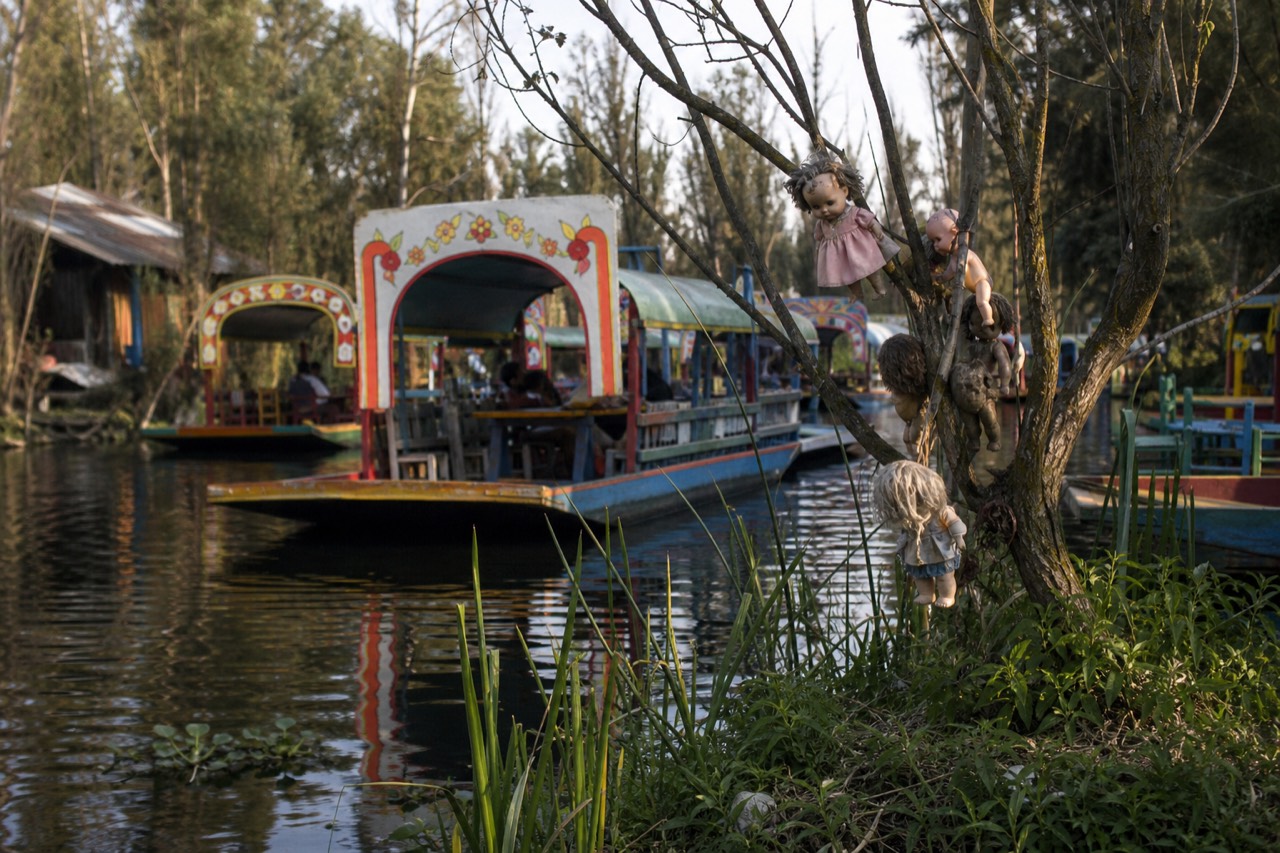
Julián Santana's original Isla de las Muñecas sits in Laguna del Teshuilo, roughly 1.5 to 2 hours by trajinera each way, so a genuine round trip runs about four hours and costs near 3,000 MXN per boat plus a landing fee of 100 MXN for Mexicans and 150 MXN for foreigners. The 2 to 3 hour tours from Cuemanco visit a nearer doll island in the same tradition.
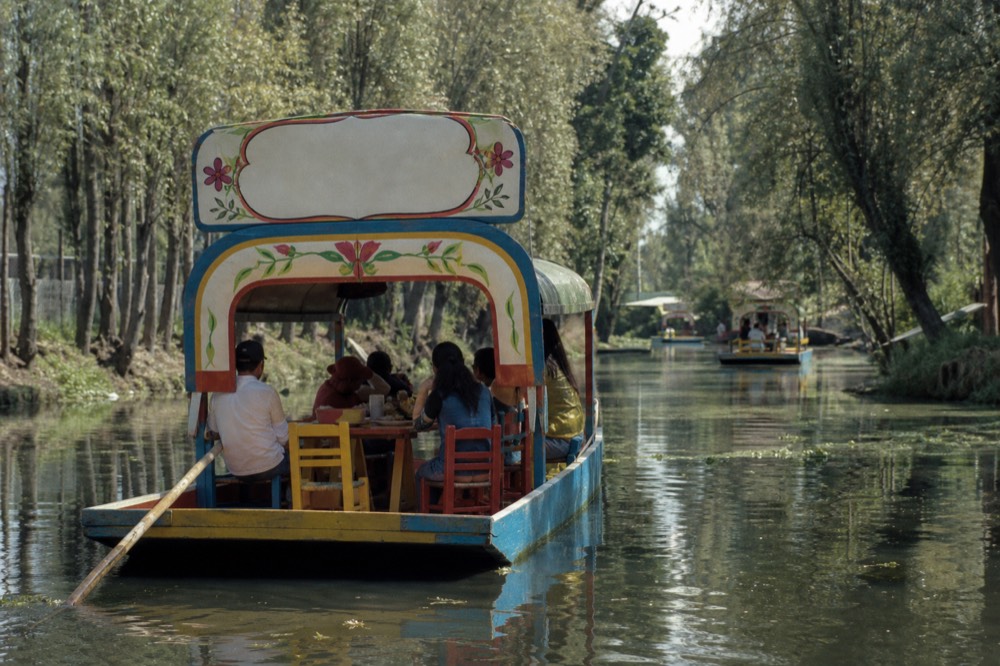
The first time my cousins took me out toward the doll island I was about nine, and what stayed with me was not the dolls. It was the sound. A trajinera makes almost none: the pole knocks the gunwale, water slides along the hull, and after twenty minutes past the last beer boat the canal narrows and the willows close overhead and the whole city stops existing. Then the guide points, and there they are in the branches, dozens of small bleached faces, most of them missing an eye or an arm. Nobody in the boat says anything for a while. That silence is real, and you get it on any of the doll islands. What you do not get, unless somebody tells you plainly, is a clear answer about which island you are looking at.
What is the Island of the Dolls in Xochimilco?
It is a chinampa in the southern canals where hundreds of weathered dolls hang from trees, fences and posts, hung there over roughly five decades by one caretaker, Julián Santana Barrera, who died in 2001. The site is now the single most famous stop in the canal network, and the version most visitors see is not the plot he lived on.
The word chinampa matters here, because it explains the geography. These are not natural islands. They are narrow rectangles of lake bed built up by hand centuries ago, held together by willow roots, separated by water lanes wide enough for a boat and not much more. Santana lived alone on one of them, growing vegetables the way the chinampa farms behind the dolls still do today, and over the years he filled his trees with dolls pulled out of the canals and the rubbish.
Two things happened after his death. The first was that horror television found the place, and by the 2010s the island was appearing on lists of the world's most frightening destinations. The second was more practical: the original island is genuinely far away, deep inside the protected zone, and the demand for a two-hour version of the experience was enormous. Doll islands appeared closer to the tourist docks. Some are run by relatives of the story, some by boat cooperatives, all of them hung with the same kind of dolls in the same tradition.
I am not sneering at the near islands. They are eerie, they are photogenic, and for most visitors, especially anyone doing Xochimilco in a single afternoon, they are the sensible choice. But a lot of people fly to Mexico City believing they are booking Julián Santana's island, and they are not. Knowing the difference before you pay is the whole point of this page.
Who was Julián Santana, and why did he hang dolls in the trees?
Santana was born on 26 October 1914 and moved onto the chinampa around the middle of the twentieth century after leaving his family. He said a girl had drowned in the canal beside his plot, and that he hung dolls to keep her spirit calm. He kept it up for roughly fifty years until his death in 2001.
The story as it is usually told goes like this. Santana found a girl's body in the water, or was told of one, and shortly afterwards found a doll floating nearby. He hung it in a tree as an offering. Then he hung another, and another, trading his vegetables for discarded dolls, fishing them out of the canals, taking them from tips. Neighbours thought he had lost his mind. Visitors began arriving anyway.
His death in 2001 has its own layer of legend. The account repeated everywhere is that he drowned in the same stretch of canal where the girl was supposed to have died. Sources genuinely differ on this, and some report a heart attack. Both versions circulate in the Spanish and English records, and anyone who tells you one of them with total certainty is filling in a gap. The uncertainty has not slowed the legend down at all. If you want the folklore side told properly, with the versions laid out against each other, that belongs on the full story of the dolls rather than here, because this page is about the trip.
| Date | What happened |
|---|---|
| 26 Oct 1914 | Julián Santana Barrera born |
| Mid-1900s (commonly given as the 1950s) | Moves alone onto the chinampa in the southern canals |
| 1950s to 2001 | Collects and hangs dolls, trading vegetables for them and pulling them from the water |
| 2001 | Santana dies; accounts split between drowning in the canal and a heart attack |
| 2000s to 2010s | Horror TV and travel media turn the island into an international destination |
| 2022 | Guinness World Records recognises the collection as the world's largest of its kind |
| Jan 2025 | Travel documentation notes that access to the original island has become unreliable and that many trips go to imitations |
| Sept 2025 | Lady Gaga's "The Dead Dance", directed by Tim Burton, is released, shot on the real island |
| Feb 2026 | Mexican press reports on the replica islands and on the family's claim to the name |
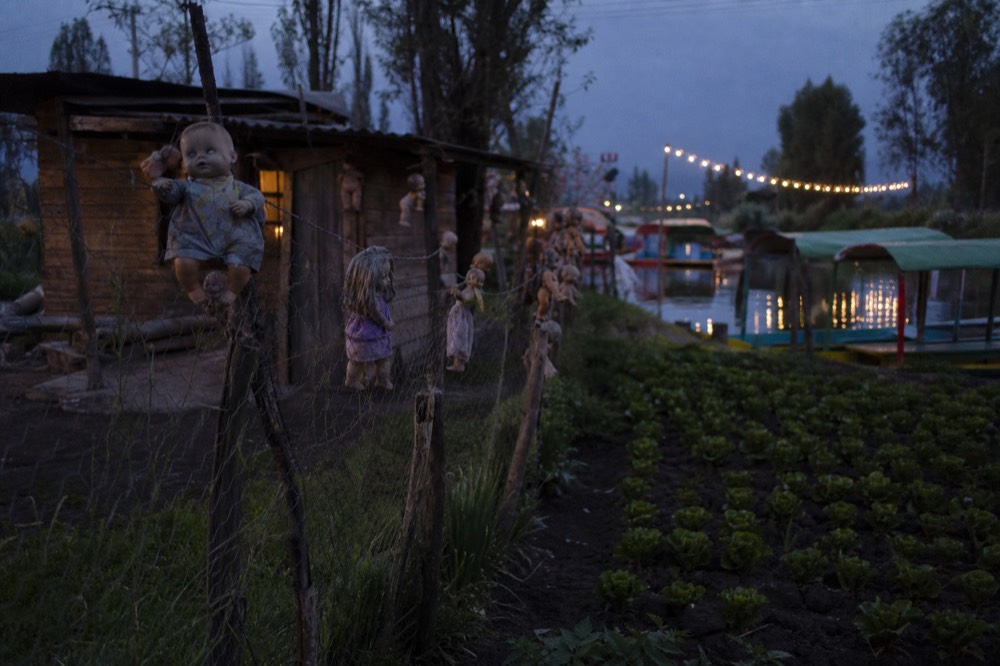
There is one detail worth holding on to, because it changes how the place reads. Santana was not building an attraction. He was a farmer who believed he was doing something protective, on a plot where he lived without electricity, hours from the nearest road. The dolls were not props. Everything since, including this website, is the world arriving afterwards.
Where is the real Isla de las Muñecas, and how far away is it?
The original island sits in Laguna del Teshuilo, inside the protected canal zone, roughly 1.5 to 2 hours by trajinera each way from the main docks. A real visit takes about four hours on the water. At least two replica islands exist closer to the tourist embarcaderos, one in the Apampilco canal and one near Cuemanco inside the ecological park.
This is the section people actually need. Below is the honest map, as clearly as I can put it.
| Island | Where it sits | Boat time from the docks | What is there | Who lands here |
|---|---|---|---|---|
| The original (Isla de las Muñecas) | Laguna del Teshuilo, deep inside the protected zone | About 1.5 to 2 hours each way | Santana's plot, his shack, decades of accumulated dolls | Private charters willing to spend a half day on the water |
| Apampilco canal replica | Off the Apampilco canal, mid-network | Under an hour from most docks | A doll-hung chinampa in the same tradition | Longer half-day trajinera rentals |
| Cuemanco ecological park replica | Near Cuemanco, at the edge of the tourist route | Roughly 20 to 30 minutes | Dolls, boardwalk, a short guided stop | Nearly all 2 to 3 hour booked tours |
Two hours each way is not a figure any operator enjoys printing. It is why the maths of the short tours works: a trip advertised at two or three hours in total cannot physically reach Teshuilo and come back, no matter what the listing photo shows. If a two-hour product claims the original island, the claim is the problem, not the boat.
I would also flag something Atlas Obscura noted in an update in January 2025: access to the original island has become unreliable, and many trips advertised for it go to imitations instead. That is documented on the Atlas Obscura entry for the island, and it matches what boatmen at Cuemanco will tell you if you ask directly. In February 2026 the Mexican press went further and reported both on the replicas and on the Santana family's claim to the name itself, which is the sort of dispute that only happens when something has become genuinely valuable.
Which doll-island tours go where, and what do they include?
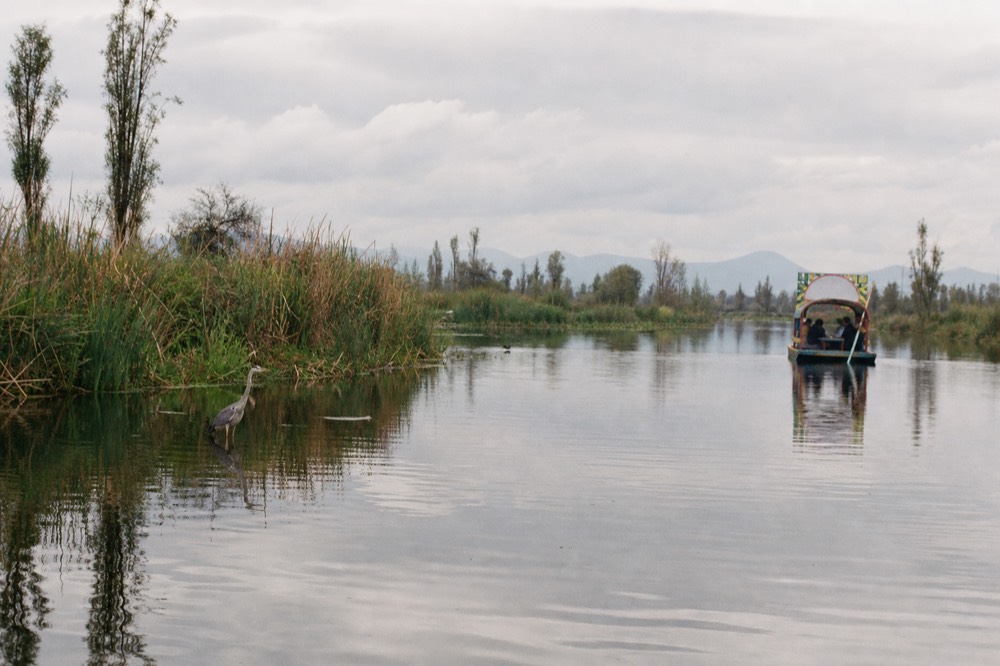
Three doll-island trips are bookable online, all rated 5.0. They run 2 to 3 hours and depart from the tourist docks, which means all three visit a nearer doll island rather than Teshuilo. What separates them is group size, what is poured on board, and how much of the ride is guided.
Here is what the live listings state, side by side.
| Trip | Duration | Group | Included on board | Free cancellation | From |
|---|---|---|---|---|---|
| Island of the Dolls with Tequila and Mezcal Tasting | About 3 hours | Shared | Tequila and mezcal tasting, guide | Yes, 24 hours | $65 |
| Island of the Dolls Tour with Games and Drinks | About 2 hours | Shared | Drinks and on-board games, guide | Yes, 24 hours | $74 |
| Island of the Dolls Small-Group Tour with Drinks | 3 hours | Maximum 14 | Drinks, guide, smaller boat | Yes, 24 hours | $113 |
Ratings and volumes across the three: 5.0 from 144 reviews, 5.0 from 52, and 5.0 from 24 respectively. Those are small review counts by canal standards, which is normal for a niche route, and the perfect scores are consistent rather than suspicious given how few people book them compared with the party boats.
Choosing between them is not complicated. The tasting trip is the longest and the cheapest of the three, so it is the default for most people. The games boat is the shortest, which suits anyone squeezing the canals into a half day. The capped small-group trip costs the most per head and buys you a boat that is not full, which matters more than it sounds when the point of the destination is quiet. All three are laid out with the rest of the lineup on the doll-island trips page, and if you want to read the terms yourself, check the current dates and departure times on the tasting trip's own page before you commit to a morning.
One practical note that has nothing to do with which island you visit: the canals do not run late. Embarcadero service is 8:00 to 18:00, and night rides happen only by prior arrangement. A doll trip is a daylight activity, and the dolls are considerably creepier in flat afternoon light than they would be in the dark anyway.
What does it cost to charter a boat to the original island?
Reckon on about 3,000 MXN for the boat, round trip, based on the official tariff of 750 MXN per hour per boat across roughly four hours. Landing on the island costs extra per person, reported at 100 MXN for Mexicans and 150 MXN for foreigners. Food, drink and any music you want are on top, and the boat price is for the whole boat, not per head.
The tariff is the anchor for all of this. Xochimilco's official rate is 750 pesos an hour for the boat itself, set by the borough, and the published tariff has been reported repeatedly in the Mexican press. Anyone quoting you a per-person rate at the dock is not following it. Posted capacity limits run 18 to 20 people depending on the embarcadero, so the cost per head collapses fast once you fill the boat.
| Line item | Typical amount | Notes |
|---|---|---|
| Trajinera, official tariff | 750 MXN per hour, per boat | Set by the borough; per boat, never per person |
| Round trip to Teshuilo, about 4 hours | Around 3,000 MXN | The commonly quoted charter figure for the dolls run |
| Island landing fee | 100 MXN Mexican, 150 MXN foreign, per person | Charged on the island, separate from the boat |
| Food and drink | Whatever you carry | Bringing your own is normal on a daytime rental |
| Mariachi or marimba | Per song, negotiated | Vendor boats come to you; agree the price before they play |
| Practical total, group of eight | Roughly 3,000 MXN boat plus landing fees | Works out low per person once the boat is full, high if you are two |
That last row is the honest headline. A charter to the real island is cheap for a group of ten and painful for a couple. Two people paying 3,000 pesos for a boat plus 300 in landing fees are spending far more than the price of a booked tour for a considerably longer day, and they are doing the negotiating themselves in Spanish. A group of twelve friends splitting the same boat pays a few hundred pesos each for something no packaged product offers. The full arithmetic of docks, hours and vendor prices sits in how the 750-peso tariff adds up.
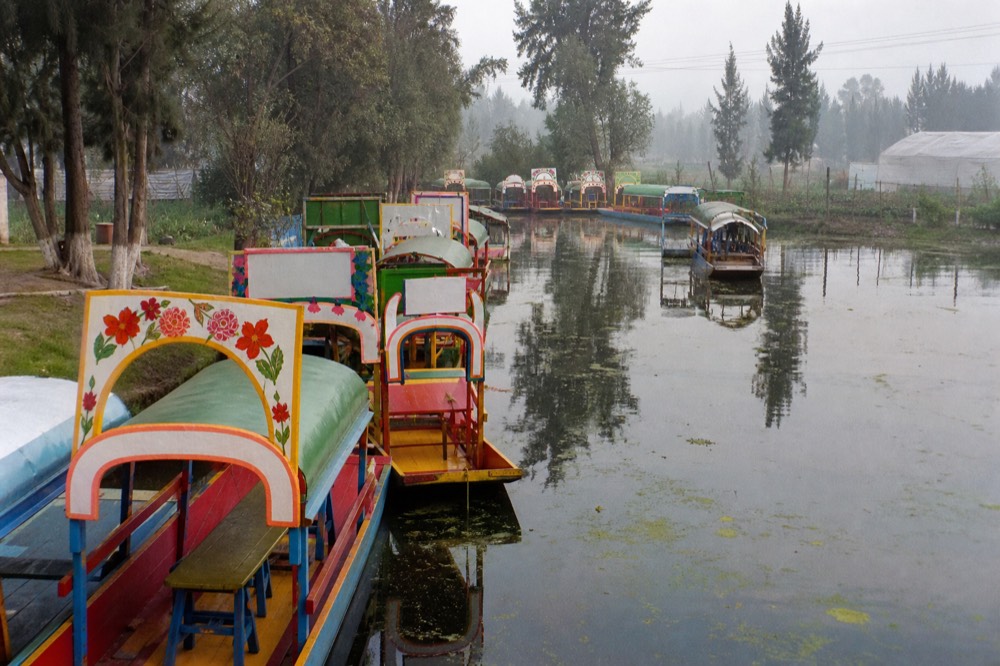
You also need a boatman willing to do it. Four hours out of a Saturday, on a route away from the vendor traffic where he earns nothing extra, is not the shift most of them want. Ask at Cuemanco rather than Nativitas, ask early in the day, and be ready for a no. Which dock you start from changes the answer, and the dock-by-dock breakdown covers who runs what.
How many dolls are actually on the island?
Nobody has published a proper count. English-language references say hundreds, Spanish-language ones say more than a thousand, and Guinness World Records recognised the collection in 2022 as the world's largest of its kind. The number keeps moving because visitors still bring dolls and hang them, and because the canal weather destroys them.
| Source | Figure given | When |
|---|---|---|
| English-language reference records | "Hundreds of dolls" | Current |
| Spanish-language reference records | "Más de mil muñecas", over a thousand | Current |
| Guinness World Records | Largest collection of its kind in the world, no count published | 2022 |
The discrepancy is not sloppiness, it is the nature of the place. Dolls rot. Humidity, sun and canal damp take the plastic apart within a few seasons, which is exactly why the ones you photograph look the way they do: sun-bleached, hollow-eyed, half-swallowed by bark where a branch has grown through a doll's chest. Meanwhile people keep adding. Every visitor who brings one and ties it up moves the count.
Note also that the replicas have their own populations, and no one is counting those either. If you read a number anywhere, it is almost certainly describing the original, and it is almost certainly an estimate. The English-language record of the island is upfront about this vagueness, which I respect more than a confident invented figure.
Did Lady Gaga really film on the Island of the Dolls?
Yes, and on the original, not a replica. "The Dead Dance", directed by Tim Burton, was shot on the real Isla de las Muñecas and released in September 2025. A wave of "curse" memes followed after she handled the dolls and later cancelled a show, which was medically explained and had nothing to do with Xochimilco.
This mattered more to the canals than any tourism campaign of the last decade. A production of that scale reaching Teshuilo is itself evidence of how far out the island sits: it is not a place a crew drives to. The shoot was covered internationally, and the effect on the docks was immediate. Boatmen who had been running the same routes for years suddenly had people asking for the dolls by name.
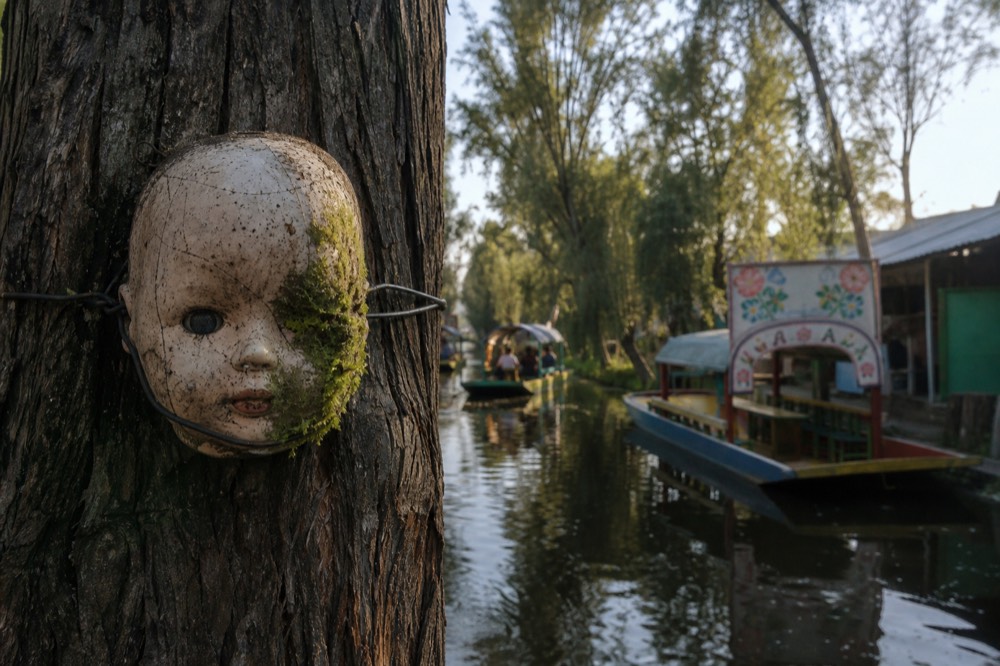
The curse story deserves a calm sentence. She touched the dolls, a Miami date was later cancelled, the internet did what the internet does, and the cancellation had a stated medical cause. Nothing about the island has ever been shown to harm anyone. The boatmen mostly find the whole thing funny, though a couple of the older ones will still tell you not to take a doll home, and honestly, do not take a doll home. It is somebody's offering. The video, the shoot and what it changed are covered in the Lady Gaga shoot in detail.
There was also talk in 2026 of a horror-film promotional campout at the site, announced rather than confirmed as a public event. Treat that as the sort of thing that may or may not happen, and do not build a trip around it.
Is the Island of the Dolls actually frightening?
Less frightening than the photographs suggest and stranger than you expect. In daylight, with a guide talking and a boat of ten people, it reads as melancholy rather than scary. The unsettling part is not the dolls themselves, it is how many decades of one man's private ritual you are standing inside.
Almost everything sold as horror about this place is embroidery on top of a sad story. Here is the myth column against what the record actually supports.
| The claim | What the record supports |
|---|---|
| The dolls move their heads and open their eyes at night | Folklore, repeated by guides and TV. No documentation of any kind. |
| Santana drowned in the exact spot where the girl died | Widely repeated, and possible, but sources also report a heart attack. Genuinely unsettled. |
| A short tour takes you to the island Santana built | Not physically possible. Teshuilo is 1.5 to 2 hours each way. |
| The dolls are antique collectables | Mostly cheap plastic dolls pulled from canals and rubbish over fifty years, plus decades of visitor donations. |
| The island is a cemetery or burial ground | It is a chinampa, a farm plot. Santana grew vegetables on it and lived there. |
What does land, standing on it, is scale. Fifty years is a long time to keep doing something nobody asked you to do. That is the feeling people carry back to the boat, and it is present on the replicas too, because the replicas are maintained by people who took the practice seriously enough to continue it.
If you are travelling with children, the near islands are fine for most ages in daylight. The boat ride is calm, there are no drops, and the dolls are up in the branches. The bigger risk on any canal trip is the sun and the four hours without a proper toilet, not the atmosphere.
When should you go, and which dock should you leave from?
Go on a weekday morning if you want the quiet version, and start from Cuemanco rather than Nativitas. Booked doll trips run inside the 8:00 to 18:00 dock window, and the canals fill with music boats from about midday Saturday and Sunday. Bring cash, sun cover and a jacket for the shade.
The decision most people are actually making is short booked trip versus long self-organised charter, so here it is head to head.
| Booked 2 to 3 hour trip | Self-organised charter to Teshuilo | |
|---|---|---|
| Which island | A nearer doll island in the same tradition | Julián Santana's original |
| Time on the water | 2 to 3 hours | About 4 hours, plus getting to the dock |
| What you pay | From $42 to $113 per person depending on the trip | Around 3,000 MXN for the boat, plus 100 to 150 MXN per person to land |
| Best value for | Couples, solo travellers, anyone on one day in the city | Groups of eight or more with a free half day |
| Guide | Included, usually bilingual | Whatever the boatman offers, generally Spanish |
| Cancellation | Free up to 24 hours on all three doll trips | Cash at the dock, no terms |
| Risk | Low, terms are on the listing | The boatman may refuse the route, or divert to a replica |
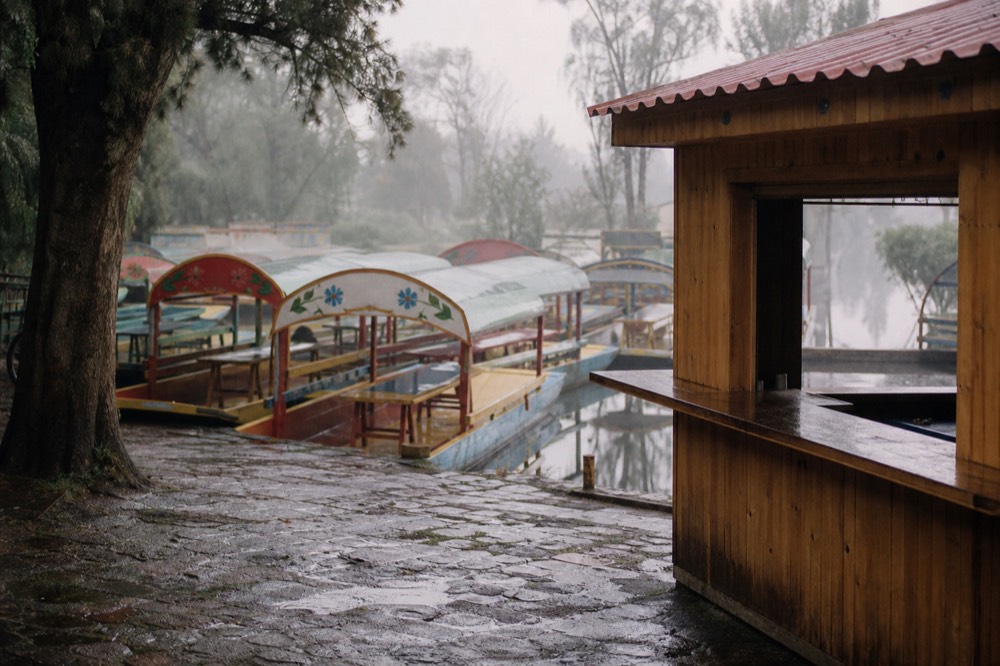
On timing: mornings are cooler, emptier and better for photographs, and the vendor boats have not arrived yet. Saturday afternoon is the full Xochimilco experience, mariachi, micheladas, boats rafting up alongside each other, which is wonderful and completely wrong for a doll island. Rain runs May through the autumn and usually arrives late in the afternoon, another argument for an early departure.
Cash matters. The dock, the landing fee, the vendor canoes and the musicians all work in pesos, and card readers are rare on the water even though the booked tours themselves are paid online. Take more small notes than you think you need.
Getting there is straightforward: the light rail from Tasqueña runs to the Xochimilco terminal for 3 pesos with an MI card in about 36 to 42 minutes, covered step by step in the light rail route from Tasqueña. Several of the doll trips include pickup instead, which is worth the difference if you are staying north of the centre. If you are wondering whether to lock anything in ahead, whether you need to book ahead answers it for both walk-ups and online bookings.
For context on the water itself, the boats, and the wider network you are crossing to get there, see how a trajinera is built and named and what is left of the old lake. And if you want the whole picture before choosing, every bookable boat compared sits on the front page, doll trips included. If the small-group version is the one that fits, you can see live availability for the capped boat.
Do the booked doll-island tours visit the real island?
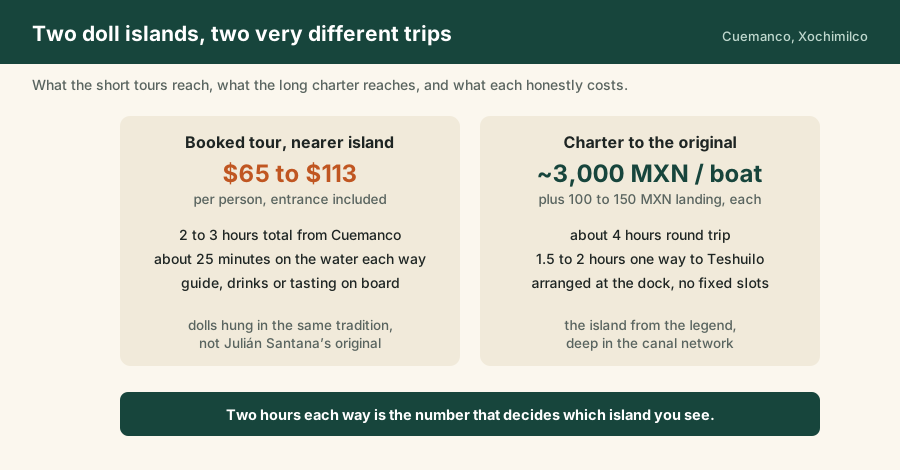
No. All three bookable trips run 2 to 3 hours in total, and the original island in Laguna del Teshuilo is 1.5 to 2 hours away by boat each way. They visit a nearer doll island maintained in the same tradition, usually the one near Cuemanco. Reaching Santana's plot needs a charter of about four hours.
How much does it cost to get to the original Island of the Dolls?
Around 3,000 MXN for the boat round trip, based on the official tariff of 750 MXN per hour per boat, plus a landing fee per person reported at 100 MXN for Mexicans and 150 MXN for foreigners. The boat price covers the whole boat, so a full group of ten or more pays very little each. Full costings are in the canal price breakdown.
Why are there dolls in Xochimilco?
Julián Santana Barrera, who lived alone on a chinampa from around the 1950s, said a girl had drowned in the canal beside his plot. He began hanging dolls he found in the water and the rubbish as offerings to calm her spirit, and kept doing it for roughly fifty years until his death in 2001. Visitors have added to the collection ever since.
Is the Island of the Dolls safe to visit?
Yes, in daylight and with a boat you booked or hired at a proper dock. The canals are shallow, the boats are stable and the doll islands are ordinary farm plots with a walkway. Standard city sense applies: carry cash discreetly, agree prices before anything is served or played, and do not swim. The dock window is 8:00 to 18:00.
Can you visit the Island of the Dolls at night?
Not on a normal booking. Embarcadero service runs 8:00 to 18:00 and night rides happen only by prior arrangement, which the doll trips do not offer. Evening on the canals means a lunada arranged in advance or the La Llorona show at Cuemanco, both of which are different experiences entirely.
Did Lady Gaga film on the real island or a replica?
The real one. "The Dead Dance", directed by Tim Burton, was shot on the original Isla de las Muñecas and released in September 2025. The "curse" stories that followed came from internet memes after she handled the dolls, and the show she later cancelled had a stated medical reason.